
Translated material
Orban Territable
Right rhetoric, friendship with Putin and the desire to destroy democracy in the country: Hungary checks for the strength of the values and principles of the EU
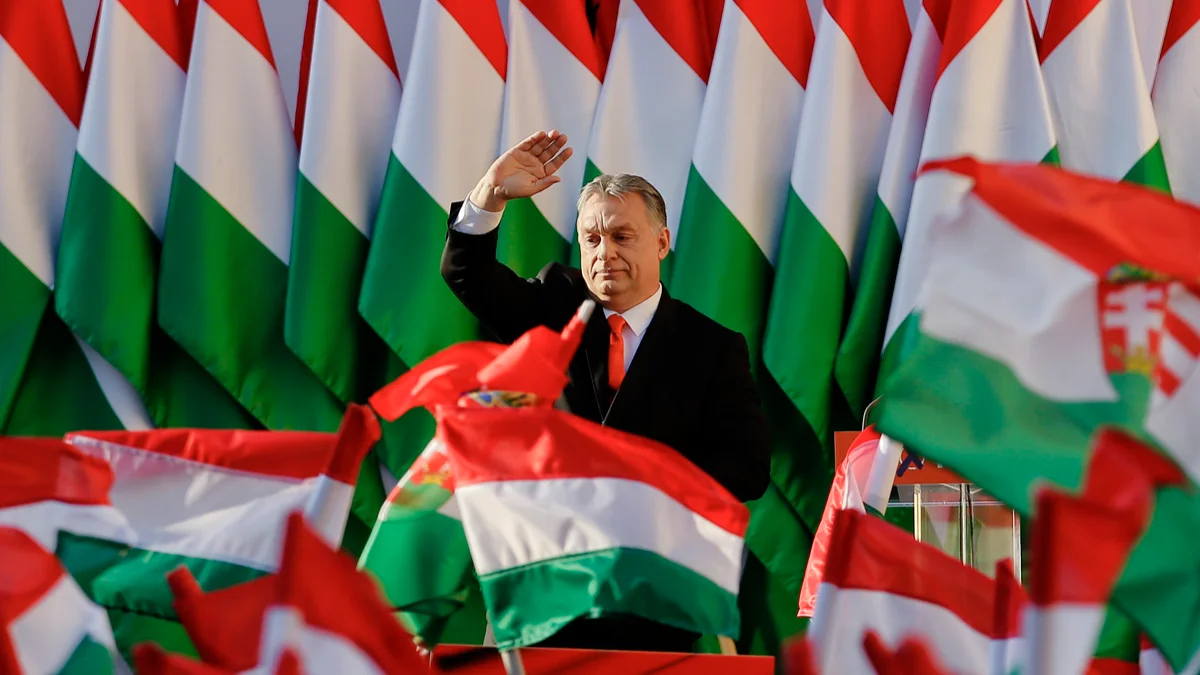
For Moscow, Prime Minister Viktor Orban is almost an ally in the enemy camp. From Brussels, this “riot” is seen much deeper and affects the main declared values. The European Parliament called the regime in Budapest “electoral autocracy”, and by the end of the year Hungary can benefit seven and a half billion euro -graders from the EU funds. Not for sympathy for Russia, no, but for violation of the internal principles of the Union.
I remember that in Brezhnev times, Hungary was called "the most funny hut of the socialist camp." The gloomy backdrop of that scenery was the history of the invasion of the Soviet troops in 1956 to suppress the anti -communist uprising. General Gennady Obaturov, whose tanks broke through the crowd along the streets of Budapest, then, in 1980, told me that he saved the fraternal people and socialism from the Nazis and NATO.
And the Hungarians remembered this page of history differently, for more than 30 years they kept the figure in their pocket and were one of the first to quickly run into NATO. At that time, Russia did not "save" them.
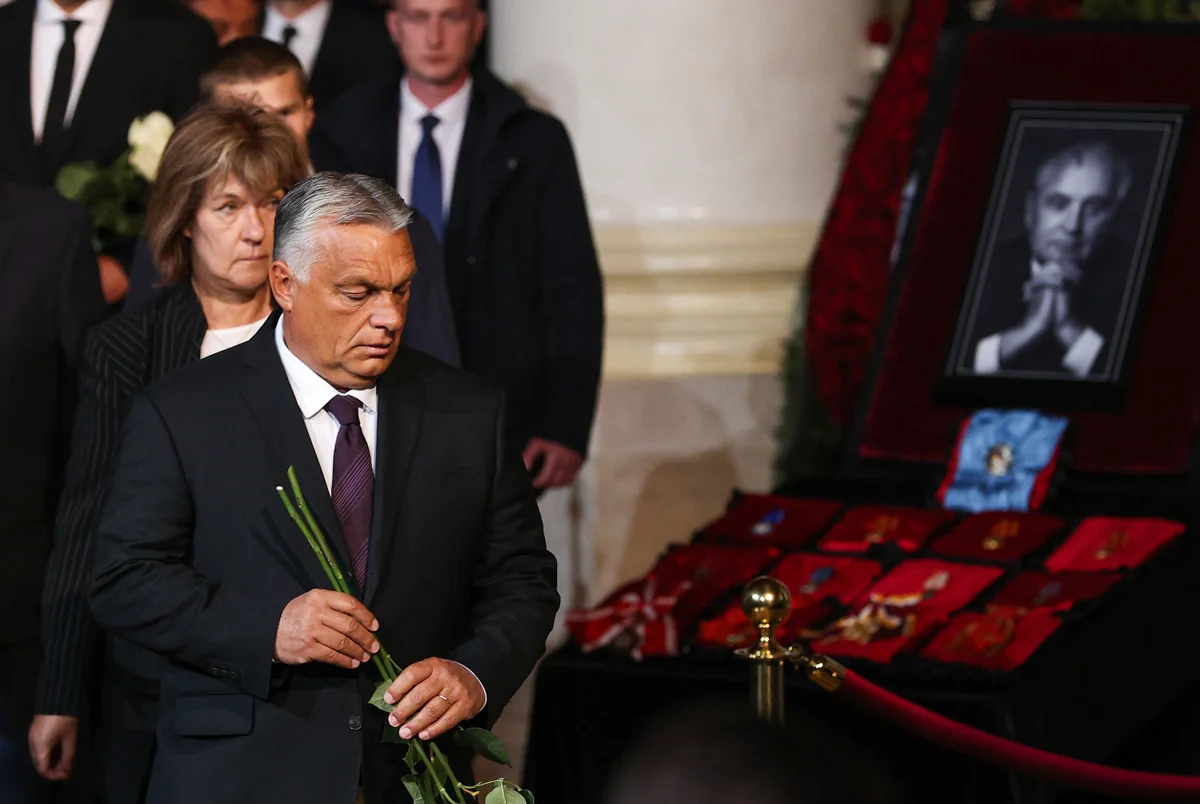
When, in 1999, the young Prime Minister Viktor Orban in Brussels in front of the NATO headquarters looked at the Hungarian tricolor rising along the flagbook, before his eyes I saw the same tears of happiness. During the sunset of Eastern Bloc, he was an ardent anti -communist. Even when the front line in Ukraine lay between the EU and Russia, he was the only Western leaders flew to Moscow to the funeral of Mikhail Gorbachev, who, according to him, helped Central Europe "get rid of communism peacefully, without human victims and blood."
Orban was not a fan of New Russia.
Being in the opposition, he constantly criticized the policy of Moscow. In 2007, he still reasoned that "oil could come from the east, but freedom always comes from the West."
When the Russian troops entered the Tskhinvali next year, the leader of the Hungarian opposition Orban immediately condemned Russia and warned the government about excessive dependence on Russian energy resources. Orban's tone began to change in 2009, and significantly - after his victory in the 2010 elections.
It is difficult to say exactly what kind of game Orban plays with Russia. Pro -Russian social trends in Hungary are much weaker than among its Slavic neighbors. The narrative about the Slav brothers, historical roots and common faith does not work here. This is far from Serbia or even Bulgaria. Experts and diplomats are looking for objective and subjective reasons, offering options.
Undoubtedly, there are objective motives. Some of them inherited from the time of the “socialist camp”, mainly dependence on Russian oil and gas reserves. But this was the problem of almost all the former satellites of the USSR, including those that Moscow has now credited to the list of “notorious Russophobes”. Among subjective motives, they have arisen relatively recently: the image of Russia as a nonliberal state.
When in 2014 Orban declared Hungary a country with a “non -liberal democracy”, Russia was mentioned as a model of government.
Apparently, there is a combination of objective and subjective factors. The dual position of Hungary is the inevitable result of the synthesis of internal political influences and its complex relations with Russia, Ukraine and the West.
About 80% of natural gas and 65% of oil enters Hungary from Russia, so Budapest is seriously concerned about the fate of supplies. But Orban for years deliberately increased dependence on Russian energy, despite the statements that his country will work to get rid of excessive energy attachment. In 2014, a transaction was concluded on the expansion of PAKS NPP, the attitude to which in the country and the EU was ambiguous and the circumstances of which are very opaque. The deal was not exhibited for auction.
From the first hours of the Russian military special operation against Ukraine, at the end of February, Budapest condemned her, but avoided direct criticism of the Kremlin.
Orban and his Party "Fides" opposed sanctions against Russian energy. As, however, they did this earlier, after the accession of Crimea to Russia in 2014.
In May, Orban suspended the sixth package of EU sanctions, until he achieved exceptions to import Russian pipeline oil supplied to central Europe. In August, the Hungarian government also announced the start of the construction of two new nuclear reactors in cooperation with Rosatom.
In the European Council, the leader of Hungary consistently played the role of a spoiler in decisions on sanctions against Russia. He increasingly stated that sanctions are useless, harm Europe and certainly the national interests of Hungary. This caused more and more serious concern in Brussels.
In the summer, Europeans were engaged in the search for alternatives to Russian gas. Everything except Hungary. At the end of July, the EU member countries agreed to a voluntary 15 percent reduction in gas consumption before the winter season, which promises to be difficult. The only opponent was Orban, who called this decision "another step towards the military economy." And his foreign minister Peter Siyyarto paid an unexpected visit to Moscow to ask for Russian gas.
“In the current international situation, the most important thing for us is to ensure the energy security of Hungary,” he said after a 90-minute meeting with Sergey Lavrov.
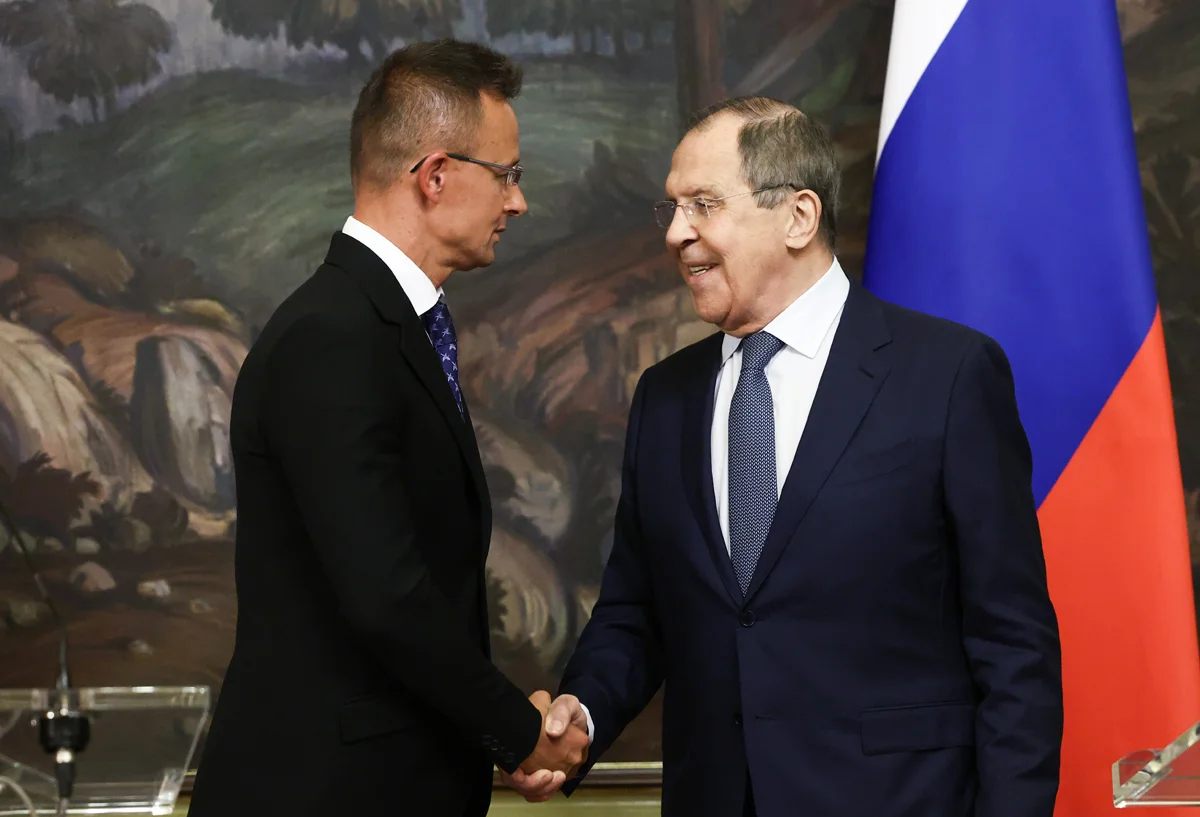
This visit secured the place of the only ally of Russia in the EU for Hungary. After it, Gazprom delivered a additional 2.6 million cubic meters of gas per day to Hungary in August, and in September and October, as Siyyarto said on his Facebook*page, daily deliveries were increased by 5.8 million cubic meters.
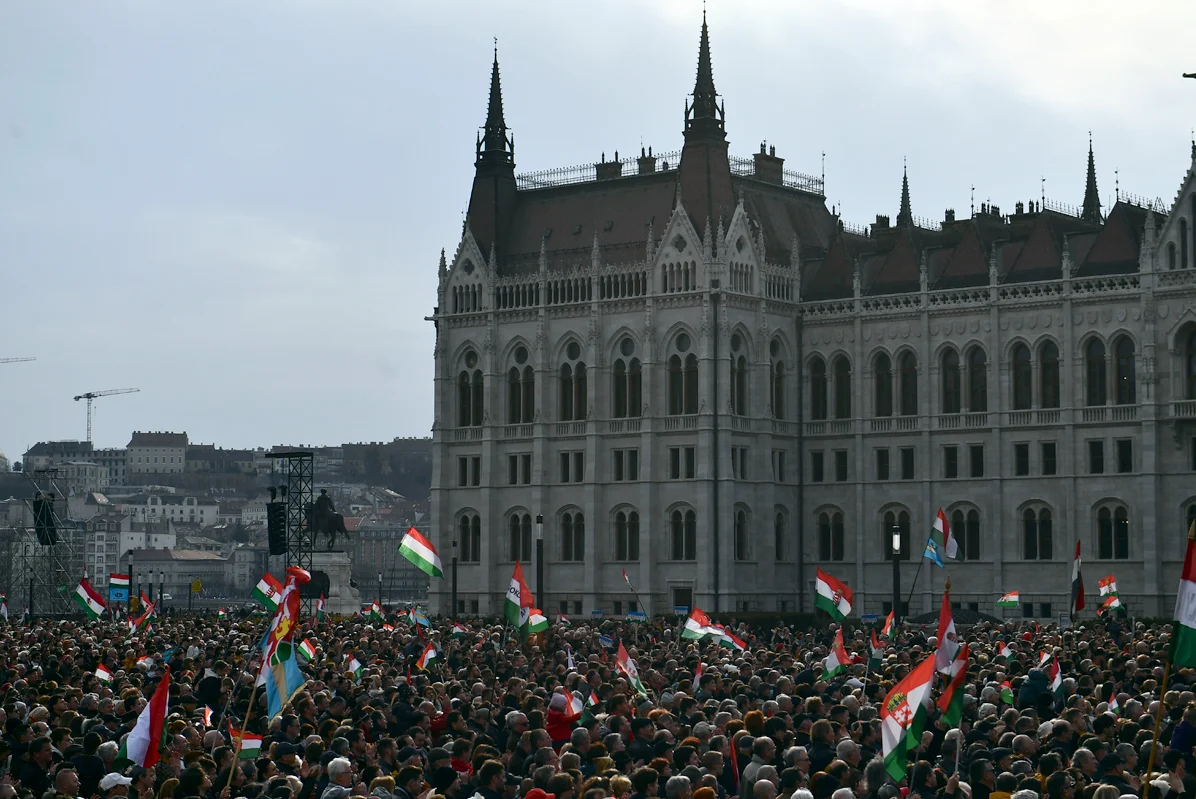
Not only oil and gas bring together the Hungarian leader with Russia and Putin, but, as it turned out, ideological proximity. Orban from the opposition returned to power in 2010 with a triumph. His right party “Hungarian Civil Union” (“Fides”) won with the overwhelming majority and received two -thirds of the vote in parliament. The electorate was disappointed in socialists who were "famous" with numerous corruption scandals. The right ones promised to fight this evil.
This allowed Orban to begin the dismantling of Hungarian democracy in the European sense.
Already one of the first laws granted the authorities the right to control the media, to fine them for "offensive content", as well as materials that "are not sufficiently balanced."
The Central European University (TSU), which has been working in Budapest since 1993 with the financial support of George Soros, the sworn enemy of Orban, was expelled from Hungary, which was regarded in Brussels as an infringement of academic freedom. Changes in the judicial system led to the loss of its independence from the executive branch. The discriminatory policy regarding migrants and minorities intensified.
All this was justified by the national interests of Hungary. On April 3 of this year, the Fides party won another, even more triumphal victory in the parliamentary elections.
Orban felt for nostalgia for a hard hand and national isolation in society, and instead of suppressing European values in line with European values, he began to encourage her.
The shock in the international community was caused by the vocabulary of the appeal of the head of the Hungarian government to ethnic Hungarians in Romania on July 23. Such an appeal to “compatriots” in a neighboring country, a kind of “Hungarian world”, is an annual event. But for the first time, Orban burst into a frankly racist tirade. He argued that his supporters "do not want to become people of a mixed race." One of his long -standing advisers Zhuzha Khegedus resigned, calling the chief’s speech Nazi text worthy of Goebbels.
The accelerating drift of one of the EU members towards the removal from the principles under which he signed, entering the Union, has long been seen. European Parliament and the European Commission - the Executive Collegium of the EU, which should monitor compliance with the fundamental contracts. In 2018, the European Parliament launched the investigation procedure under Article 7 of the EU Treaty, which, in theory, even implies sanctions against the apostate and depriving his vote in the EU Council. The deputies asked the EU Council for now only to determine whether the risk of Hungary violation of the fundamental values of the EU. The council, which presents the governments of the Member States, is the most conservative body in the system of branches of the union authority. But behind him is the last word.
So, members of the European Parliament expressed a number of fears about the functioning of democratic institutions in Hungary, including problems with the electoral system, independence of the judiciary and compliance with the rights and freedoms of citizens. But the EU Council was in no hurry to deal with problems of this kind in one of the countries of the Union. And then there is a Covid. Russia involuntarily pushed this process in Ukraine with its military operation in Ukraine.
At the plenary session of the European Parliament in Strasbourg, on September 15, 2022, the deputy commission led by Gwendolin Delbos Corfield presented the report "The explicit risk of a serious violation by Hungary of the values on which the Union is based." It stated in it
That since 2018 the situation has deteriorated to the point that the country has turned from democracy into an “electoral autocracy”.
That is, the constitutional system in which elections occur, but democratic norms and standards suffered by history are not observed. If it is extremely simplified, then this means that a autocrat rules in the country, based on the crowd organized by him.
From the performance by Delbos Corfield: “What would you do to fill your own pocket or enrich your environment? To enter the government, to promote the very blurry rules of public procurement, which are also not necessarily strictly implemented, to send the EU money, say, to your son -in -law. He will build something with this money, and part will put in his pocket. And you will shut your mouths to bold journalists who report this. And so legalize decades of theft. ”
Other participants in the discussion noted that corruption and misuse of funds are the organic part of the Hungarian management system.
The court of obedient power is an inevitable path to corruption. Elections cannot justify the arbitrariness of power - how many times and no matter what majority of Orban is elected or re -elected. European democracy is based on the supremacy of law and should protect this supremacy.
Indeed, as soon as it comes to the personal interests of the ruler, his relatives or the immediate environment, so he is increasingly beginning to recall state sovereignty, fixed by the overwhelming majority of votes in the elections, which he himself organized and prepared state propaganda, plugging his mouth with a free press and suppressing the opposition. The latter is defenseless: the longer the ruler is in power, the deeper the trial is in his pocket. In democracy, institutes are rule, and in the "electoral autocracy" - the leader and its people. Autocrat glues the labels of real institutions on the simulacras created by them.
The deputies made Budapest claims in the "non -European behavior" on a whole list. This is both the functioning of the constitutional and election systems, and the independence of the judiciary, corruption and conflicts of interests, and freedom of expression, including pluralism of the media, is academic freedom, freedom of religion, freedom of associations, the right to equal appeal, including LGBTI rights, the rights of minorities, as well as the rights of migrants, aschers of refuge and refugees.
The European Parliament suggested that part of the EU funds be frozen until Hungary fulfills the recommendations of Brussels and decisions of the EU court. The report after a stormy discussion was adopted by 433 votes “For”, at 123 “Against” and 28 abstained. The European Commission reacted and on September 18 proposed freezing Hungary payment of 7.5 billion euros from the EU funds. These are not just principles, but money, and the process acquired a new acuteness.
We are talking about the protection of the Union budget and the EU financial interests from corruption, to which the growth of the rule of law and the independent judicial system automatically leads to the growth.
In order to reassure Brussels, Budapest agreed to make concessions, designed to show that he was taking measures against corruption, cums and concentration of economic power. For example, he pledged to establish a share of tenders for public procurement with the participation of a single company below 15% (now this share is 17% for tenders for receiving money from the EU budget and 34.6% - in the competition for money from the national budget), increase the time of public consultations before the adoption of laws, limit the adoption of laws under the accelerated procedure, and send funds received from the EU, to achieve energy independence.
In theory, these measures should reduce the likelihood of distributing budget money among “friendlies”, relatives and a business close to the government, ensure a wide discussion of bills of civil society, protect from hasty pushing of laws, prepared executive authorities, to use the funds that Brussels gives, in the interests of not only Hungary, but of the whole union.
In the European Parliament, deputies, including from Hungary, considered concessions to which the Orban team is allegedly ready to go, not only insufficient, but also obviously crafty against the background of Hungarian realities (and not only Hungarian, however).
Most of the speakers are concerned that the “measures” proposed by the government will actually be not reforms, but only “empty promises”.
The disciplinary procedure under Article 7 of the EU Treaty as a kind of mechanism for protecting the values of the Union was introduced by the 1997 Amsterdam Treaty. In 2020, the European Parliament approved the situation known as the "mechanism of the conditionality of the rule of law." Respect for the rule of law and other values is a condition for receiving funds from the budget and EU funds. The "mechanism of conditionality" is first involved in applies to Hungary. The second candidate is Poland (by the way, occupying a sharply excellent position in Ukraine).
In fairness, I must say that the mood expressed in the debate in the European Parliament, as, obviously, in non-public discussions in the EU Council, have changed compared to the 90s and zero years. There is a shift to the right and towards “national interests”. If the majority in the European Parliament in October warned the European Commission and the EU Council against the game of gades with Orban,
Some accused the institutions of the Union of “attacks on the conservative governments of Europe”, of imposing “Brussels ideology” to the Hungarian people and the democratically elected government of Hungary.
How consistently the EU will defend the declared values and enshrined achievements of European democracy will show the coming months.
The very existence of EU institutions and its rules plays an important role in this story. Budapest needs European money, and he is forced to take these requirements seriously, unlike unlimited “sovereign” rulers outside the EU. Hungary is among those who are especially weakened by the crisis that gripped Europe. Inflation is close to 20% - the price of bread jumped by 66% per year, Forint has lost 8% of its value in relation to the euro since the beginning of the year. The Central Bank was forced to raise rates to almost 12%...