
Translated material
"He is very sick"
The trial of Bukovsky was postponed on May 22 due to the deterioration of the health of the dissident
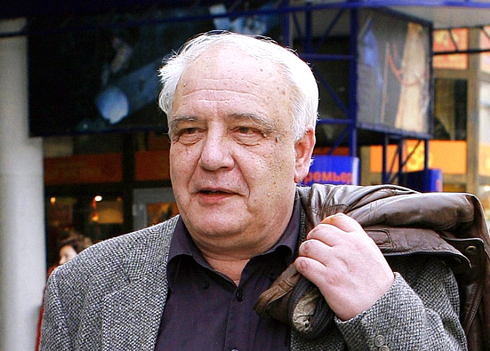
Soviet dissident Vladimir Bukovsky did not appear in the court of the British city of Cambridge, where on May 5 the first hearings were supposed to be held on charges of the manufacture and storage of children's photographs of a pornographic nature. In a statement issued by Bukovsky on April 27, immediately after the public announcement of these accusations, the dissident categorically denied any contacts with children and the possession of children's images. Bukovsky also said in this document that he was seriously ill.
The representative of Bukovsky told the court on May 5 that the 72-year-old dissident flew to Germany for treatment in a private hospital due to kidney failure.
“He is certainly very sick. I do not think that we can move somewhere now. He feels too bad to clearly express his thoughts, ”the lawyer of Bukovsky Jackie Baldwin told the judge, adding that it is not clear how long he will have to stay in the hospital.
The Cambridge Magrastry court postponed the consideration of the case until May 22, when the situation of the dissident is cleared up.
The first hearings in this case are technical in nature: the judge must make sure that the accused and his representatives are familiarized with the essence of the accusations and determine the deadline for the beginning of the hearing on the merits.
The Royal Prosecutorial Service at the end of April put forward against the Bukovsky accusation of the manufacture of five “obscene” photos of children, storing five “obscene” photos of children and storing one “prohibited” photographs of children - only 11 episodes.
“On the basis of the results of the Cambridge Police investigation, we came to the conclusion that there are sufficient evidence for prosecution of Vladimir Bukovsky in connection with the production and ownership of obscene images of children ... The decision to bring to criminal liability was made in accordance with the Code of the Royal Prosecutorial Service,” said Jenny Khopkins, chief prosecutor of the Royal Prosecutorial Service of Great Britain in Eastern England. According to her, we are talking about five pictures that were taken and stored until October 28, 2014.
“I would like to remind everyone that Mr. Bukovsky has the right to an impartial court. It is extremely important that materials and comments that could question the legal proceedings before the court or on the Internet, ”the representative of the royal prosecutor’s service said at the same time.
A few hours after the charges, Bukovsky made a categorical refutation.
“I categorically deny the production of obscene or prohibited photographs, pseudo -photographs or videos of children. In fact, I had no contacts with any children at all for many years, ”says his statement written in English.
“These shocking accusations caught me during a serious illness, when my chances of survival are unknown. Nevertheless, I intend to strongly protect myself. For health reasons, as well as in connection with the need to consult with lawyers, I will not be able to give any interview and comment on the course of the case up to the further notification on my part, ”says the dissident.
Bukovsky is one of the ancestors of the dissident movement in the USSR. In Soviet times, he spent 12 years in prison and on compulsory treatment in a psychiatric clinic. In 1976, the Soviet government exchanged him from the US government for the leader of the Chilean Communists Luis Corvan. Since then, Bukovsky has been living in Britain, in Cambridge. Thanks to him, the world first learned that the Soviet government is using psychotropic drugs against dissidents.
In 2008, Bukovsky, who spoke with a sharp criticism of the Russian authorities, tried to nominate his candidacy for the presidential election as an alternative to the successor of Vladimir Putin Dmitry Medvedev, but was not allowed to elections. At the same time, his main document was the Russian passport issued to him at the Russian Consulate in London in 2007 for a period of five years.
At the end of 2014, two years after the expiration of this passport, Bukovsky was refused to receive a new Russian passport in return. The Russian Foreign Ministry then referred to the inability to find documents confirming the presence of Russian citizenship from the dissident, and said that the previous passport was issued to him “unreasonably”.