
Translated material
How not to lose the future
In the economy
 How not to lose the future
June 16, 2011 Evgeny Gontmamer
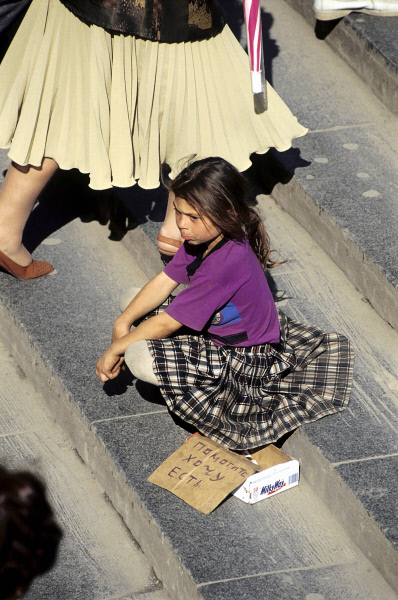
Now it is very fashionable to criticize the existing political regime - and there is nothing. But for some reason, the discussion is spinning mainly around the election procedure, party construction, judicial system, freedom of assembly and media positions. In fact, with all the importance of the problems of the Russian life listed above, another one falls out of the field of view - and in fact the most important thing is: as a result of the policy that has been pursued for the past years, Russia has been put on the brink of social disaster.
It would seem that such a statement is of an excessively Alarmist nature: there is no hunger, mass unemployment or other similar cataclysms in the country. But in the conditions of the 21st century, a social catastrophe can become a consequence, for example, unfulfilled hopes and loss of life prospects, as well as leaving (unfair, from the point of view of the majority) at least part of the fact that the old fashioned can be called social conquests. This type of disaster is very relevant for current Russia.
The fact is that our economy, having frozen in its archaic, already in the medium term (and this is 3-5 years), is unable to ensure even the low standards of living standards that are now characteristic of the majority of the population . If during the years of oil well -being, due to a small part of the obtained GDP, it was possible to throw crumbs to pensioners, state employees, officers, creating a sense of positive dynamics of welfare, now, with more than $ 100, there is no longer enough money to maintain this dynamics.
Even according to official figures, the real incomes of the population in the first months of this year decreased compared to the figures of a year ago, there is an increase in dissatisfaction with the work of health and education (especially school). But the main thing is in another: people lost faith that they will ever live better, everyone is waiting for any catch from the state. For example, in the form of raising the retirement age, a sharp expansion of the payment of medical and educational services and further accelerated growth of housing and communal services tariffs.
The authorities, despite the attenuation of even scanty economic growth, in the same time during the pre -election fever, begins to act as an old, almost Soviet method - to distribute the next handouts. Here, teachers were promised to increase the wage fund from September 1 by 30%, and from January 1, 2012, money allowance will increase by 2-3 times, etc. etc. As woefully noted in the Ministry of Finance, if all these promises are fulfilled, then to receive a deficit federal budget next year, the average oil price should be $ 147 per barrel. More recently, this parameter was at 90 dollars. I want to recall that according to the forecast of the Ministry of Economy in the next 10-15 years, oil will cost $ 100 per barrel.
But besides purely macroeconomic risks that are huge, it is also important: people, of course, will not refuse the handouts offered by them, but they perfectly understand: how this money was given, they will take it back, for example, through inflation, the creeping of the payment of those social services that have recently been formally free, manipulations with the arithmetic accrual of pensions. And these expectations are not without reason.
A characteristic example: chemotherapy, which is used to treat cancer patients, is excluded from the list of high -tech medical care. What does it mean? Exactly the fact that now for this sometimes very expensive procedure, not the federal budget should pay, but the regional authorities, which, with rare exceptions, have no money for this. So the patient will have to pay a tidy amount himself if he or his family will find. And if this money is not?
Another completely fresh initiative comes from the Ministry of Health and Social Development - to revise the so -called “pension formula”, or, more simply, the rules for determining the amount of pensions. It is proposed to return to the rules acting until 2002. Then they used a tough invention of the late 1990s, when an acute lack of money led to many months of delays in the payment of meager pensions, an “individual pensioner coefficient”. With his help, relatively large contributions from high salaries were actually redistributed (which means that the future relatively high pensions of these employees were expropriated in favor of the most poor pensioners who literally fought for survival.
In addition, the Ministry of Health and Social Development proposes to introduce an additional limiter reflecting the demographic and macroeconomic features of the situation. As for demography, no one builds illusions: Russian society is aging, and the ratio of the number of pensioners and working is changing in favor of the elderly. Therefore, the Ministry of Health and Social Development (read between the lines) actually proposes to create the government in operational regime to even limit the growth of pensions. But the link to macroeconomics is extremely important. If in the late 1990s all circumcision was made from despair (I remind you that the price of oil then did not exceed $ 20 per barrel), then offer it now, with more than $ 100 per barrel, an obvious sign of impending systemic economic troubles.
I will not go into details of the prospects for the development of our economy. The actual consensus process of experts is unequivocal: if you do not urgently start full-scale institutional reforms in almost all areas of our lives, including the political and judicial system, then there is nothing good to wait. The declarations of another attempt to doubling GDP - this time until 2020, relying on the current "stability" - a purely election move. In 2012, when the new president and the new government will begin their duties, a dilemma will face them:
- Real, not feigned reforms, the success of which only gives a chance to at least preserve, and then an increase in the standards of life of the vast majority of Russians,
or
- Stability, equivalent to circumcision of social obligations for the sake of maintaining the stability of the rickets of the budget system, plus massive propaganda equalibrics such as "nothing happens" or - in extreme cases - "it is necessary to temporarily tighten belts for the sake of a bright future that will occur in 2020." And also, of course, the resuscitation of various “orange” threats.
Those who wish to get acquainted with the author’s point of view of details of the first script can go to the website of the Institute of Modern Development and read the report “Futting the future. Strategy 2012 ". Let us dwell in more detail in the second scenario, especially since it is much more likely than the first.
I won’t talk about propaganda - we went through and we can’t come up with anything new “our political strategists”. But there is something to say about the circumcision of social obligations. It in one form or another, creeping in a way, will go in almost all social directions.
I already mentioned the pensions. It remains only to add that their growth will not keep up with inflation, rapid alignment (obviously in the direction of real reduction) of the size of the pensions paid will occur. At the same time, the local elderly people will pay extra to the regional cost of living, the magnitude of which will also be artificially frozen. At the same time, society will regularly remind that poverty among pensioners is liquidated.
The requirements will sharply tighten, the already considerable bureaucratic and the murals will increase to obtain the status of a disabled person and, accordingly, a pension for disability and social benefits for housing, providing drugs, and a passage by social transport.
In healthcare, a set of available free services due to chronic underfunding of the real cost of medical services will be reduced to purely symbolic things. The rest is on the principle: pay or do not claim. First of all, this trend will spread to the most expensive segment of healthcare - high -tech medical care (I have already given one of the examples). Without waiting for 2012, the process of the so-called optimization of the network of medical institutions has already begun: small hospitals and feldsher-midwife points in rural areas are closed. Thus, villagers often cannot even get even the most elementary assistance. In the future, this process will also spread to cities under the pretext of the need for concentration of primarily specialists and corresponding hospital beds in specialized centers, in which the possibilities of improving the quality of service supposedly appear. This would be socially justified if specialized centers were created in addition, and not instead of the current medical facilities, and everywhere.
In education, one should expect the same “network optimization”, which will affect, first of all, of small schools and small schools in cities, as well as the actual freezing of the size of per capita financing standards. Perhaps the situation will be relatively better with universities, where almost half of the places are already paid.
In the housing and communal sphere, we can’t get away from the steady growth of housing and communal services tariffs and the introduction of burdensome for most real estate tax.
How will the population behave in the event of such a development of events? The first signs are already evident. This is, first of all, an increase in emigration moods and, as already mentioned, a loss of confidence in the future.
Will this be poured into open political speeches against the authorities? I don’t yet believe in their massiveness: there are so much fatigue from the shocks of the last 20 years that irritation and discontent have accumulated in the pouche of society in apathy and household degradation, minor nasty things in relation to the hated state-to break or steal something likely to write a word of three letters on the fence or, in fact, show the phallus to the local FSB. But this vandalism, coupled with the massive sensation that the authorities are taking away the most pressing from you, may well be used by some kind of undergrand with a charismatic who will arrange first in his city, and then in other places a new arena. For the current government, which, carried away by its own business, has actually lost almost all public administration skills, this can be an insoluble problem. The further course of the development of events is unpredictable - and this is the most alarming.
So what to do in order that this scenario did not take place?
Firstly, do not give up and not lose heart.
Secondly, do not be silent and look for like-minded people and allies.
Thirdly, to think and offer specific steps that, if they were implemented, can help change the vector of Russia's development in the direction of progress.
Author - member of the board of the Institute of Modern Development
Photos of RIA Novosti