
Translated material
This is absolutely not an "anti -Russian summit"
About some details of the Eastern Partnership, Novaya Gazeta, said by Sweden Prime Minister Stefan Leven
About some details of the Eastern Partnership, Novaya Gazeta, said by Sweden Prime Minister Stefan Leven
On May 22, the two -day Summit of Eastern Partnership ended in Riga, to which representatives of 28 countries of the European Union and 6 countries of the post -Soviet space - Georgia, Armenia, Azerbaijan, Ukraine, Belarus and Moldova. The delegations of many countries were headed by their presidents. During the summit, all 34 delegations signed a final joint declaration.
“It was an important summit,” Donald Tusk, President of the European Council, said at a final press conference. - We have outlined positive steps for the future. We are going to build a special format of relations with Azerbaijan and Belarus, we continue to work with Armenia, which also has its own model of interaction with the EU. We have good, close contact with her. As for Georgia and Ukraine, we are waiting with great hope to complete the process of their European integration. ”
Despite the optimistic statement of Donald Tusk, the negotiation process was difficult. So, the President of the European Parliament Martin Schulz, who went to reporters a little earlier than the end of negotiations, expressed fear that the final statement would not sign Azerbaijan. And on the eve of the summit, Belarus refused to sign the statement, disagreeing with the wording of the "illegal annexation of Crimea."
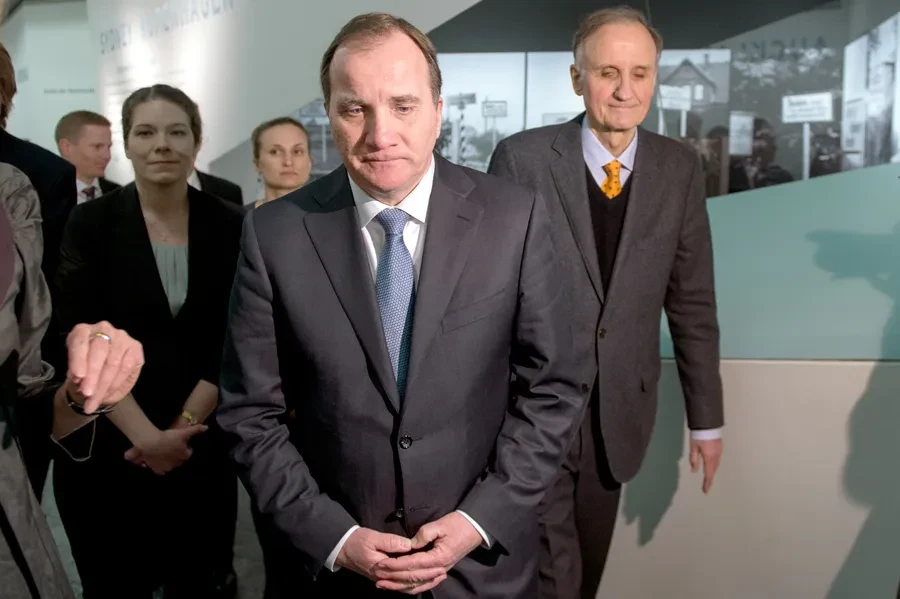
The Prime Minister of Sweden Stefan Loven spoke about some details of the morning negotiations of the NEW countries.
- Why did the negotiations on the final declaration go longer than the planned?
-It happened because of Azerbaijan-they did not want to sign one of the paragraphs.
- Which one?
- The fifth paragraph, about the situation with the Nagorno -Karabakh ( in the text of the document there is a phrase that the summit participants “fully support the efforts made by the leaders of the Minsk group to resolve the conflict in the Nagonian Karabakh” - approx. )
- Did you manage to agree?
- Yes, President Tusk called the President of Azerbaijan Aliyev. The two of them reached a compromise - which is very good.
- What did they decide as a result?
- The joint declaration remains in the same form, but Azerbaijan will publish separately its own interpretation of the fifth paragraph.
- As for Belarus? Before the summit, Belarus said that she would not sign the final declaration ... were there problems there?
- Yes, there was such a statement. But all 34 countries decided to sign the declaration. With Belarus, the same situation as with Azerbaijan - agreed that they will also publish their own version of one of the paragraphs.
- The one that contains a phrase about the “illegal annexation of Crimea and Sevastopol”?
- Yes.
- Another question about these countries. Mr. Tusk said that a special approach should be developed for Belarus, Armenia and Azerbaijan. What did he mean?
- First of all, we are talking about regular bilateral negotiations with these countries. But this scheme should still be developed.
- Why does the European Union, in principle, develops a special format for Belarus, Armenia - countries, allied Russia, which often do not support the EU policy? What is the goal?
- We agreed to create this partnership. And this is important both for them and for us - this is, in principle, good for the region. Each country can choose its own path and way to develop international ties. We have a flexible model of relations within the partnership - this is good.
- The Russian Ministry of Foreign Affairs feared that the rhetoric at the summit would be anti -Russian. Was it in vain fears or not?
- This is absolutely not an “anti -Russian summit”, I listened to a huge number of assurances from different people that they are not tuned against Russia. This forum is about something: it is an international cooperation useful for our countries. But we also want to develop cooperation with Russia, many countries have a long -built relationship with it. Today's negotiations are definitely not directed against Russia.