
Translated material
Free swimming
After arriving in Russia, the Cousta teams promised to close the “whale prison” and release its prisoners
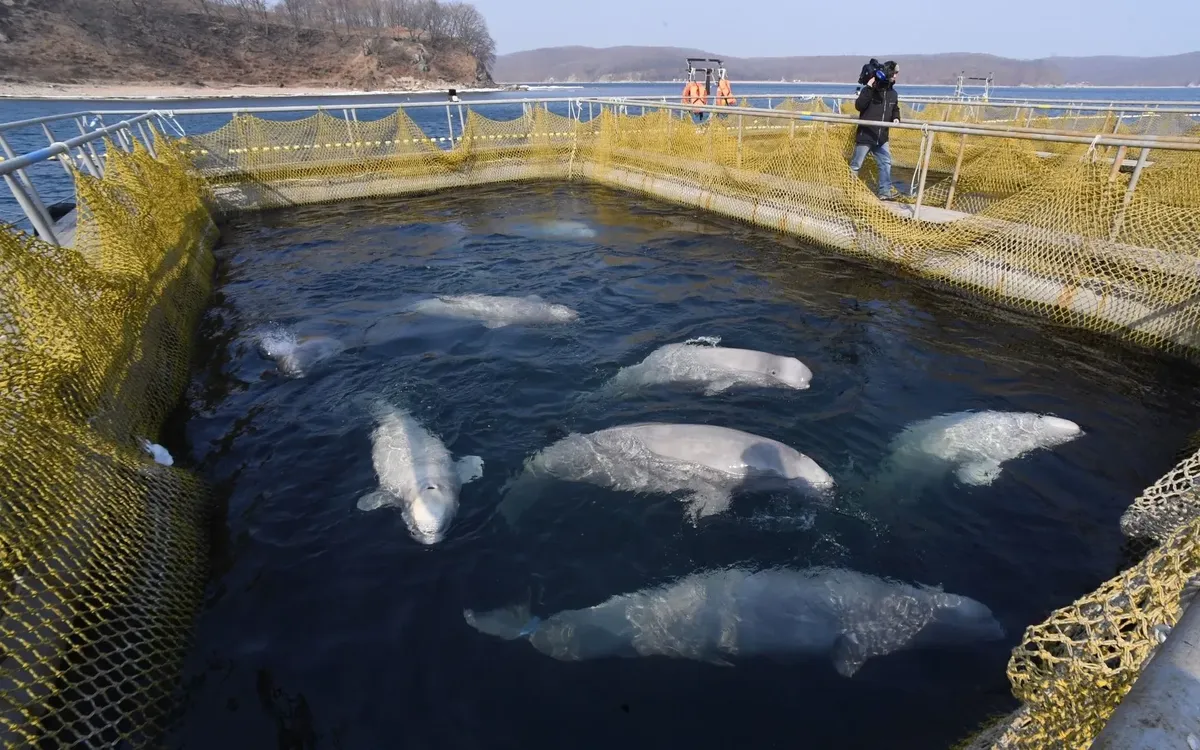
On April 8, the governor of Primorye Oleg Kozhemyako announced the news, which for several months has been eagerly awaited by ecologists, scientists and simply people who were not indifferent to animals. All braids and Belukh from the “whale prison” in the average bay will finally release to freedom-to the ocean. However, this will not happen momentary. Representatives of the All-Russian Scientific Research Institute of Fisheries and Oceanography (VNIRO) say they will study the state of each mammal and transport them to the place of further habitat. Individual plans for the liberation of each killer whale and beluga will be developed by early May. Well, in the summer, as expected, mammals will be released in free swimming.
The consultation of scientists, created under the leadership of NIRO, now confirms that one of the killer whales has a problem with the tooth, and a few more belugs have problems with the skin. But in general, for animals who have experienced wintering in captivity, they are in fairly good condition. For each of them, scientists will develop an individual treatment and rehabilitation scheme. According to Kozhemyako, the decision on when and whom to release, scientists from the team of the French oceanologist Jean-Michel Kousto together with Russian specialists will make. Until then, conditions that are closest to natural will be created in the bay.
Meanwhile, in early March it was reported that part of the animals from the “whale prison” can still be transferred to the oceanariums.
Based on the results of the examination, the experts considered that not all killer whales and belugas would be able to survive in the wild.
There are now 98 individuals in Kitov Prison - 11 braids and 87 Belukh, the oldest of Beluh - no more than six years (with a life expectancy - from 40 to 80 years).
Last year they were caught in the Sea of Okhotsk; Later, the detectors admitted that they mined animals by order of foreign companies, primarily for sale to China.
Ecologists, in turn, found that animals in a “whale prison” suffered from cold, snow and ice. In winter, three Belukhi and one killer whale disappeared.
The detectors said the animals "fled." However, environmentalists do not believe in this and are sure that the animals died.
A check is being conducted on this fact. A criminal case of illegal extraction of mammals has also been instituted. At the end of February, the FSB started administrative affairs at Afalin, White Kit, Oceanarium DV and Sochi Dolphinarium due to the poor conditions for the content of the killer whales and Beluh. In March, the Sakhalin Court recognized the capture of the wanders illegal.
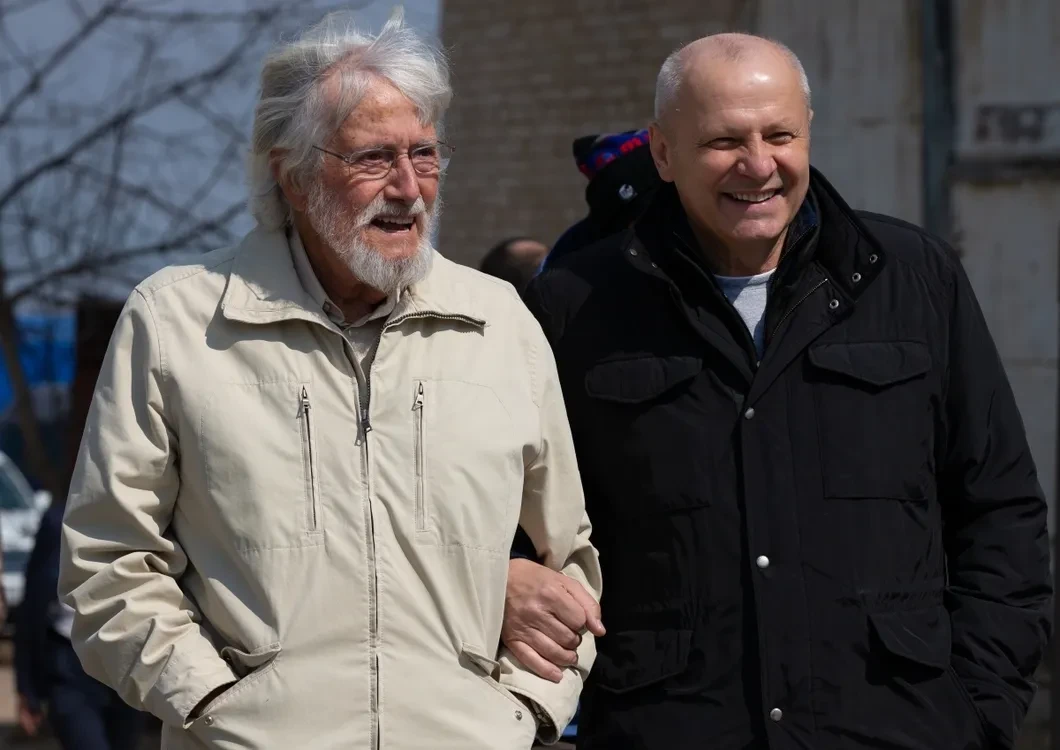
After the story of Kitov Prison received a wide public outcry, they paid attention to the situation in the Kremlin. President Putin instructed to decide the fate of animals until March 1. However, the officials did not meet in time, and only now the Primorye authorities finally decided to put the point in this scandalous business. It is noteworthy that this happened after the arrival of the team of Jean-Michel Kousto, the son of the famous researcher Jacqua-Ivan Kousto, in early April, in early April. At the invitation of the Ministry of Natural Resources, the Coustlene advised Russian scientists in matters of rehabilitation and liberation of animals. French experts signed an agreement on cooperation with Russian scientists and said that they wanted to create an international fund for rehabilitation of animals in the wild in Primorye. The Primorye authority rehabilitation was promised to equip the Middle Bay.
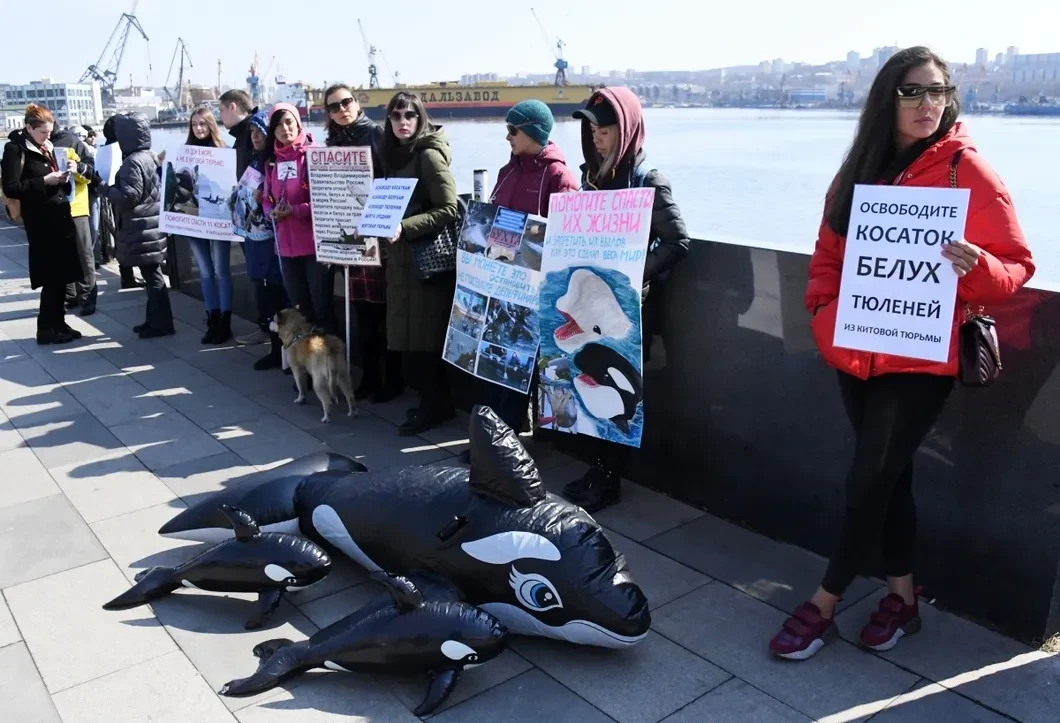
According to the latest estimates, the release of mammals from the “whale prison”, acting “in the interests of the country”, will cost 200-300 million rubles.
“We are not looking for the guilty and are not trying to figure out how this could happen. Law enforcement agencies are engaged in this, ”the head of the Ministry of Natural Resources Dmitry Kobylkin told the media. According to him, it is planned to create a regulatory framework so that “whale prisons” in Russia no longer happen.
- We are very grateful to the Kousto team, which is intensively and hard all these days in a “whale prison” in order to assess the condition of animals and justify their production on the environment. But we expect from state bodies of a documented decision on the seizure of animals from illegal possession of prisoners and release them to the natural habitat, representatives of the environmental coalition summed up in a conversation with the “new”.