
Translated material
The death of the empire
How the Georgian-Swigoosetian conflict flared up
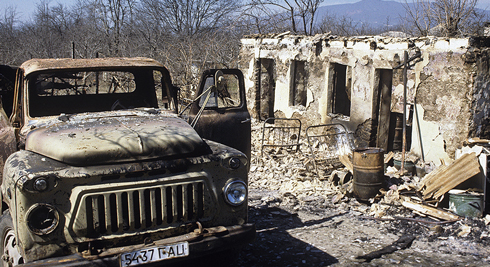
After shelling , the death of the empire after shelling. In January 1991, he moved to the acute stage of the conflict between the South Ossetia and Georgia, which led to the local “parade of sovereignty”, armed clashes, human victims and the actual “divorce” of the neighboring peoples revived the national liberation trends in the republics of the Soviet Union, and the struggle for freedom from the Union Center began. This led to an increase in separatism in national entities within the Union republics themselves. In Georgia - one of the first.
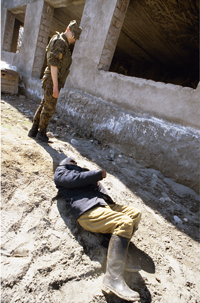 |
| South Ossetia, the village of Helchua. One of the victims of the night attack. March 1991 |
The background in the late 80s Georgian national movements advocated the elimination of autonomies as part of the republic. In response
On November 10, 1989, the South Ossetian deputies decided to transform the autonomous region into an autonomous republic. It was canceled by the Supreme Council of Georgia.
On November 23, from Tbilisi to Tskhinvali, under the leadership of the leader of the Georgian Independence of Georgia, Zviad Gamsakhurdia, a crowd of thousands of people moved (according to various sources, from 30 to 60 thousand people). The city was blocked for four months, during the confrontation, killed and wounded appeared.
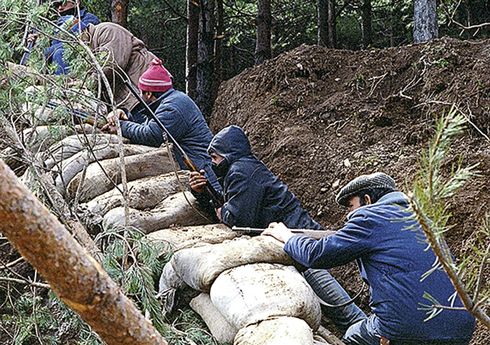
Self -defense squad. October 1991, in response to the movement of Georgia to the sovereignty in relation to the USSR, South Ossetia announced its sovereignty, explaining this by the fact that until 1922 its territory was not part of Georgia. Zviad Gamsakhurdia, elected by the Chairman of the Armed Forces of Georgia
November 14, 1990, proclaimed a course on a unitary state.
On December 9, in South Ossetia, the elections of the Council of People's Deputies were not authorized by Tbilisi, and on December 10, the Armed Forces of Georgia abolished the autonomy of South Ossetia.
This was the impetus for the riots in Tskhinvili and the introduction of a state of emergency and commandant.
The beginning of the war
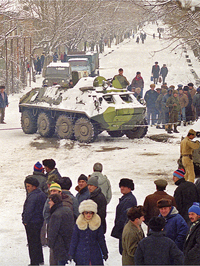 |
| In Tskhinvali - a state of emergency. January 1991 |
On January 5, 1991, in the Tskhinvili, in addition to the detachment of the Georgian police, which ensured a state of emergency, additional forces of 2.5 thousand people were introduced. Ossetians created self -defense units, armed clashes with human victims began.
On January 7, the President of the USSR signed a decree on the withdrawal of all armed groups from the territory of the autonomy of all the autonomy, except for the units of the USSR Ministry of Internal Affairs (a detachment of internal troops). The Armed Forces of Georgia expressed a sharp protest in connection with this.
On January 11, a crowded rally took place in Tskhinvali in support of the decree of the President of the USSR.
On January 16, Rafik Nishanov, Chairman of the Council of Nationalities of the USSR, came to Tbilisi to resolve the conflict. He proposed a compromise: the endowment of the leadership of the Georgian SSR by the right to make decisions on the status of its territories in exchange for the recognition of the Ministry of Internal Affairs of Georgia by a division of the Ministry of Internal Affairs of the USSR. This mission did not have practical significance.
On January 25, in the Tskhinvili between the Ossetian side and the Minister of Internal Affairs of Georgia, Khabuliani, an agreement was reached on the ceasefire and the withdrawal of units of the Georgian police.
On January 26, the detachments of the Georgian Ministry of Internal Affairs left Tskhinvali, remaining at the entrance to the city and partially in neighboring villages.
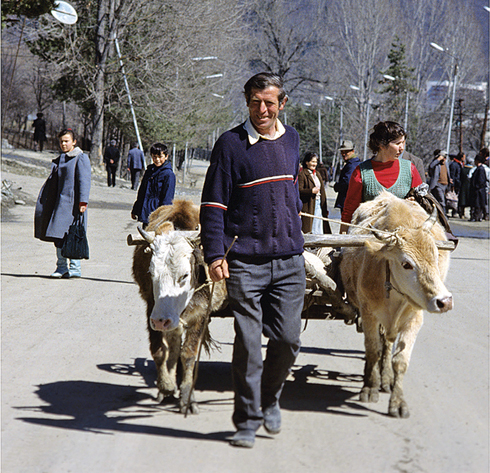
Refugees on January 29 of the Armed Forces of Georgia adopted a law on prefectures - to prefects appointed by the parliament of the republic, the local management crossed. On the same day, on January 29, the chairman of the Supreme Council of the self-proclaimed South Ossetian Republic of Kulumbegs was arrested, according to some sources-taken by the military commandant of Tskhinvali and sent to him to the capital of Georgia, who arrived in Tbilisi for negotiations with Georgian leaders (released in December 1991 after the intervention of AMNESTY International).
On January 31, there was an armed clash between the Georgian and Ossetian detachments near Tskhinvali. It was followed by a further escalation of the conflict, as a result of which from January 6 to September 1, 1991 the number of victims exceeded 200 people, several hundred were wounded and went missing, 70 Ossetian villages were burned, many Georgians were forced to escape from South Ossetia.