
Translated material
Rent in the air
What made Aeroflot the main aviation brand - real modernization or special relations with the state?
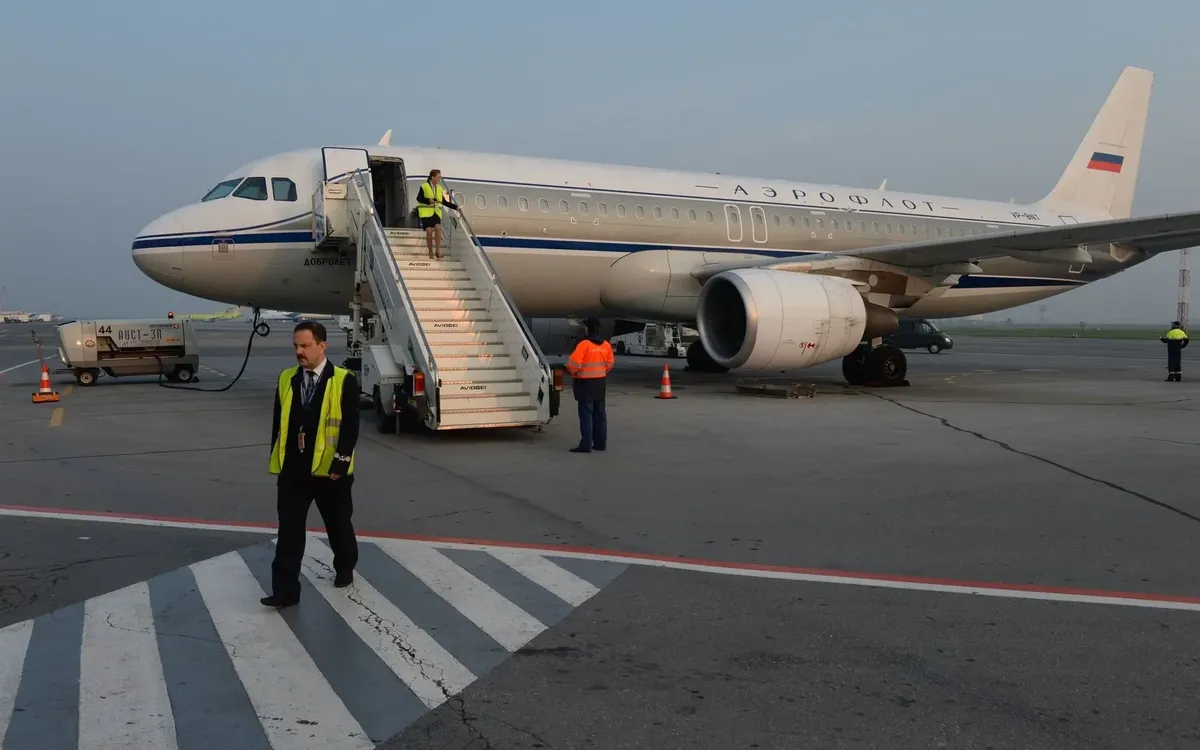
In February, the British consulting agency Brand Finance recognized Aeroflot the most powerful aviation brand in the world. Analysts evaluated large airlines for a number of parameters: recognition, reputation, marketing, domestic market position, air park size - only more than 30 factors. In the final ranking (defined as the brand’s contribution to the company's profit), the National Carrier of the Russian Federation took first place by overtaking American Airlines and Emirates.
The differences between Aeroflot and other Russian state -owned companies, in respect of which the phrase “effective management” has long become a abusive meme - are really striking. But the important question remains: are Brand Finance experts right when they argue that the success of the national air carrier is in no way connected with his special relations with the state? For verification, these special relations turn out to be one of the most valuable Aeroflot assets.
Difficult industry
The Aeroflot group (the owner of 51% of the shares - the state), which also includes Airlines "Russia", "Victory" and "Aurora", received 38.9 billion rubles of profit last year, recovering 6.5 billion rubles after a loss in 2015. The cost of state -owned shares since January 2015 has three times.
The overall picture in the market looks much worse: minus several large companies, the aviation industry in Russia generates losses for many years, says Fedor Borisov, a leading researcher at the Higher School of Economics of the NRU. Last year, with a general market fall in plus, more than half of the players could go out, but this is only a rebound after a deep failure. “You can carefully assume that we pushed off the bottom,” the expert says. “But the positions of 2014 are still very far away: the market has fallen rapidly for the last two years.”
The main positive factor for Russian aircraft market in 2016 was the bankruptcy of Transaero and the subsequent section of the carrier's assets. “It is no secret that about 100 Transaero aircraft and almost 100 more aircraft of other companies took the market,” says Oleg Panteleev, Executive Director of the Aviaport analytical agency. “This allowed the leaders to take advantage of the temporary shortage in the industry, increase their share and raise prices for tickets.” By the end of the year, air transportation was supported by the strengthening of the ruble exchange rate, thanks to which foreign trips have become a little more accessible to Russians.
In 2017, experts do not predict comparable in terms of favorable circumstances in the air industry - only the most successful players will be able to get into profit again. Aeroflot will remain the leader of the market: in difficult times, preferences received by the national air carrier from the state can play a decisive role.
Trans -Siberian royalties
To date, Aeroflot is the only recipient of royalties that foreign air carriers flying through Siberia are paid for the use of Russian airspace. This practice appeared in the USSR in the 1970s. At that time, the entire state “Aeroflot” was the only airline in the country, so there was no question of injustice in the distribution of payments.
But for many years now, the Royalti Tramyan Royalties have been talking about the need to cancel the Trans -Siberian Royalties: the EU countries, European airlines and the internal competitors of Aeroflot have been dissatisfied with the situation. At the same time, most Western countries are participants in the Chicago Agreement on the principles of airspace freedom, which prohibits them to charge a fee for the flight over their territory.
“This system ( Trans -Siberian royalties - A.Kh. ) is archaic, the question of its cancellation has been raised many times, but everything was stuck in place, Aeroflot continues to receive money literally from the air,” says Fedor Borisov. - Moreover, the amount of these payments is estimated at about $ 600 million every year. Of course, this greatly affects the competitive position of the company. ” The annual volume of royalties is approximately equal to a third of the aggregate turnover of his closest pursuer - the S7 airline, adds an expert.
In different years, Aeroflot directed part of the royalties to develop air navigation and to prepare personnel for the entire industry, says Oleg Panteleev, director of airport. Plus, in the last decade, he was not the only recipient of payments - part of the royaltia went to the airlines Transaero and Volga -Dnepr. But today, royalties no longer go to the technical equipment of the industry and almost completely settled at Aeroflot, Borisov emphasizes.
Royalti is a compensation for lost benefits to Russian carriers, says Avia.ru editor Roman Gusarov. “It would be fair if the recipient of this money was a Federal Air Transport Agency, but foreign companies would not go to revise agreements - they will only agree to the full cancellation of payments, and Russia is unprofitable,” the expert said. Borisov proposes to abandon royalties, and in compensation to increase aviation fees for foreign carriers.
A step away from the monopoly
According to world standards, the aviation industry in Russia is characterized by a high market concentration, that is, the dominance of a small number of companies. “In Europe, a sufficient number of leading companies compete in a relatively small geographical space-this is a completely competitive market. In the USA there is a tendency to concentrate the industry, but there are 3 leading companies and several more catching up players-this is a good oligopolistic system, ”says Fedor Borisov from the Institute of Economics of Transport of the Higher School of Transport.
In Russia, where until recently there was also an oligopoly, today there are all the prerequisites for the monopolization of the market, the expert believes. In addition to Royalti, the Aeroflot group receives the most favorable frequencies from the state; State Field is an absolute leader in international flights of flights. There are also almost monopoly routes in the domestic market - long -range transportation, flights to the Far East. In the whole market of Russian air transportation, the share of Aeroflot already exceeds 50%, says Borisov.
The situation began to deteriorate after the bankruptcy of Transaero, which was the main rival of Aeroflot on international flights. Together with the obligations in relation to passengers and former Transaero employees, the state -owned company received the most commercially attractive routes (in 2016, Aeroflot Group received the right to 56 Transaero routes from the Ministry of Transport - more than all other airlines combined), as well as part of the air park.
These three non -market factors - royalties, the most favorable frequencies and a huge air park - determine the dominant position of the company in the Russian market. “In the horizon of 2-3 years, we can get new Russian Railways, only in the field of aviation transportation,” warns Borisov. - The market power of Aeroflot is such that, if he wants, he can quite calmly squeeze any Russian airline from the market. "
To call Aeroflot a monopolist incorrectly objects, Panteleev objects. “Firstly, such federal players as“ S7 ”,“ UTair ”,“ Ural Airlines ”are flying from Moscow. Secondly, it must be borne in mind that Aeroflot is positioned as an international company and competes in the global market. In almost all international areas there is some kind of foreign company that flies to Moscow, ”the expert notes.
The uniqueness of the Aeroflot case is that its management managed to competently dispose of the rent and his own income, directing them to the company's deep modernization. “Yes, the airline enjoys comprehensive support of the state, but we know examples when it, on the contrary, has bared: we take at least a domestic auto industry,” says Gusarov. Over the years, Aeroflot managed to master new technologies and standards for organizing the production process, and also almost completely updated his air park.
Aeroflot's viability is a consequence of the presence of competition in the aviation industry, albeit weakened by powerful non -market intervention. However, the situation is in a very fragile equilibrium: the degree of market concentration in the hands of Aeroflot is approaching a critical threshold every year, after which Royalti will begin to pay already domestic consumers in the form of monopoly ticket prices.
Carrier of goodwill
The response to this criticism proceeds from the fact that the mission of Aeroflot is associated with the solution of a number of social problems that do not fall on the shoulders of other air carriers. “You can recall the story with the stuck passengers of Transaero, which Aeroflot had to be exported at their own expense, or minimal“ flat tariffs ”, which are used in 5 directions (the Far East, Kaliningrad and Simferopol) and make flights unprofitable for the carrier,” says Panteleev.
Aeroflot contains the Lawcoster "Victory", for the existence of which there is no economic reason in Russia, adds Alexander Friedland as director of the Scientific Center for Economic Monitoring of Civil Aviation Research Institute. “In the West, low -cost airlines fly through peripheral airports that offer cheaper services, and also receive cheap equipment and preferential bank loans. We don’t have all this, ”the expert says. Finally, Aeroflot is engaged in the development of new domestic aircraft - Sukhoi aircraft.
These measures (especially “flat tariffs”) have political attractiveness, but distort market incentives and kill the commercial potential of some routes.
Aeroflot himself, represented by investors and management, regularly expresses discontent with social burden: the state’s influence on tariff policy and coercion to fulfill social tasks are considered the main risks for the company. “If we take all our social obligations, then the state will have $ 5 million to us,” complained the general director of Aeroflot Vitaly Savelyev.
But the state distributes its preferences with the help of extremely opaque mechanisms, so it is quite difficult to clearly define the winners and losers. The best way to verify the statement of Savelyev is to offer royalties to the other market participants; Perhaps in return they will want to take on part of the unbearable "social functions" of the state -owned company.
Today, antimonopoly services are closely observed in Russian aircraft market: the FAS has repeatedly opposed the strengthening of Aeroflot, accusing him of overestimating the prices for tickets and monopolizing some directions. The head of the regulator Igor Artemyev said that such a policy - “the most delicious and interesting routes” to give one player - leads to collapse, but the FAS, apparently, does not. The privatization of the Aeroflot control package, which could change the market structure, is also not planned in the near future.
We can say that the industry is kept exclusively in the goodwill of the state -owned company. Aeroflot has not yet abused its position, although it has all the possibilities for this, ”says Alexander Friedland. In the absence of a competitive environment, the transformation of this possibility into something more tangible is only a matter of time.
Under the text
Heavenly sexism
At the end of February, a public scandal erupted around Aeroflot: the stewardesses accused the company's management of sexism and labor discrimination. This happened after all the flight attendants of the state -owned company were divided into several groups on the basis of physical data - weight, age, and the size of clothing. As a result of the mass “measurement” of 400 stewardesses over 40 or with a clothing size of more than 46th, it was allegedly removed from highly paid international flights due to “new standards” established by the Aeroflot management.
The official reaction of Aeroflot was a refutation of the fact of discrimination of stewardesses and the accusation of the media of the spread of unverified information. The personnel policy of the carrier “implies categorical rejection of employees discrimination according to external data, age, racial and gender principle, political and religious views, etc.,” the Aeroflot website said. However, the parties failed to achieve a compromise. Several injured employees who jokingly call themselves the STS group - “old, thick, terrible,” they filed it on the air carrier to the court.
The incident was also written in the Western press, where the problems of sexism regarding the stewardesses are discussed much more often. However, American legislation protects enough employees of any sphere from discrimination against appearance, so such cases are more characteristic of Asian or Middle Eastern carriers (the most high -profile scandals were associated with Qatar Airlines, whose flight attendants could not marry without the permission of the authorities, and with Airindia, which, under the threat of dismissal, had prescribed 600 Stewedses lose weight for 6 months).