
Translated material
Binding and hot
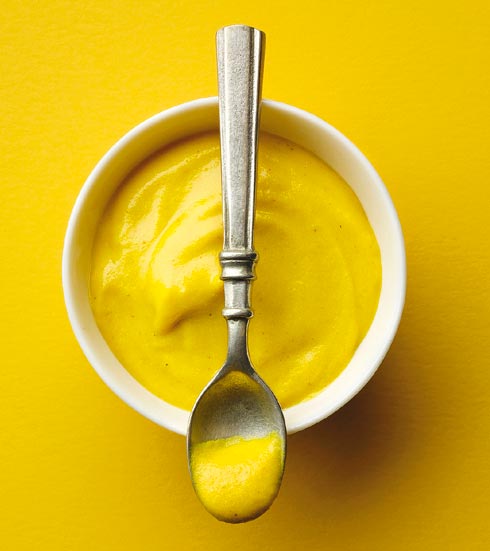
Ancient Aesculapius said that mustard is useful for teeth, heals a cough, soothes the intestines, removes toxins, and also accelerates blood and enlightens the mind. The genealogy of one of the most beloved seasonings was studied by The New Times
Pantagruel inquired on which subject and for what therapeutic purposes the monster dropped so many mustard. The queen replied that mustard is their sacred gran and livestock balm, and that if at least slightly lubricate the wounds of defeated sausages, then in the very short time the wounded will recover, the dead would be resurrected.
Francois Rabelais.
"Gargantua and Pantagruel"
In the novel, “obsession” from the Gaidaevskaya “Operation“ Y ”, there is a scene when Shurik and Lida, not looking up from reading the abstract, are smeared with mustard not sausages, but cakes. The domestic store mustard of those times was so sharp that the insensitivity of the heroes to this acuity caused laughter.
In the Soviet dumplings and dining rooms, the mustard on the table was certainly present - as a rule, in a faceted glass with a stuck wooden stick, which usually applied to glasses with ice cream. Some lovers smeared it with a thick layer on a thick piece of black bread. The severity of this affordable seasoning redressed the appetite and diversified the taste of rather boring dining rooms. The vigorous was a mustard - a tear knocked out! And we thought that the real mustard should be.
A relative of a turnip 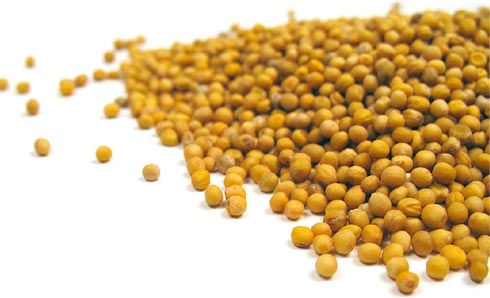
Mustard grain is mentioned in the Gospel as an image of the smallest size: "If you have faith with a mustard grain ... nothing will be impossible for you." (Matt. 17, 20)
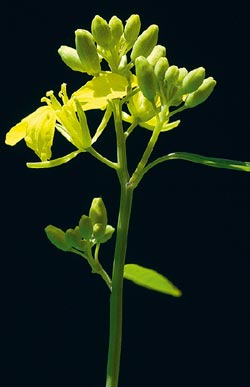
Strictly botanically speaking, mustard is a vegetable, belongs to the cabbage family (Brassica), among its closest relatives - Ogorodnaya cabbage, turnip and trough. In many countries, juicy dark green mustard leaves with a piquant pride are boiled steamed, in boiling water or slightly fried in oil with onions and garlic and served as a side dish to ham, solonin and bacon. For the preparation of spices, exclusively seeds are used.
Two minutes later, Nastasya returned to the soup and announced that now there would be tea. Two spoons, two plates and the whole device appeared to the soup: a solo, a lobby, mustard for beef and so on, which, before, in this order, had never happened for a long time. The tablecloth was clean. -Not bad, Nastasushka, that Praskovya Pavlovna bottles of two brewers will second. “Well, you, a well -being!” Muttered Nastasya and went to fulfill the command.
Fedor Dostoevsky.
"Crime and punishment"
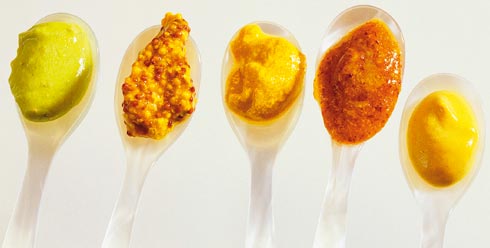
There is not recommended mustard with spoons. But you can season with it: meat, fish, vegetables, pasta and even fruits
Black mustard seeds, Brassica Nigra, were cultivated in ancient Greece and ancient Rome. According to one of the legends, when the Persian king Darius challenged his sworn enemy Alexander Macedonian, a bag of sesame seeds was sent to the opponent: they say, how great the army of the Persian king! Alexander, without thinking twice, sent a small bag of black mustard seeds in response, thereby making it clear that although he had less soldiers, but they are hot in battle. And the "mustard grains" did not let the great commander.
The first documented recipe for preparing a mustard mixture is described by Roman Columello in the 1st century AD Then the now adopted name of the Mustum Ardeum plant appeared, which translates as a "burning, baking, plumping brain." Of these two Latin words, the English mustard was composed - mustard.
Small black mustard seeds are very much appreciated in the east and are especially widely used in the Bengal cuisine of North India for the preparation of universal mustard oil. Black mustard seeds are also used as a spice, and their severity completely disappears during heat treatment, so they are added at the very last moment for the preparation of spicy and sharp dishes. Nevertheless, Indian chefs must first fry the seeds in ghee or vegetable oil, as a result of which they acquire nutty and aroma, not comparable to any other spices.
Only a small part of the global harvest of black mustard goes to the manufacture of seasonings, since its sharpness is unstable: fresh is too sharp, but then it quickly “exhales”. Therefore, to stabilize the severity of the seasoning of black mustard, for example, the German Lowensenf (“Lion's Lion”), which is produced in Dusseldorf, is usually used by a large amount of vinegar. 
A variety of black is considered the Indian mustard of Brassica Juncea, which is usually called “brown mustard”. Her seeds are almost round, without smell, with a sharp taste. The likely homeland of the Indian mustard - the Himalayas, has been cultivating it long ago in India, and from the 18th century - in Russia and Poland, where it is better known as the Saptic mustard, named after the city of Sarepta in the Volga region. The oil from the saptsky mustard, along with soy, cotton, arachics and sunflower, is one of the five most common vegetable oils in the world and is characterized by high taste: it is used in cooking, bakery, confectionery and canning industries. In France, Turkey and some other countries, it is generally considered the best seasoning for salads, sauces, marshmallows, beans, peas, meat.
Another popular type of mustard is white, or English mustard Brassica alba. It is from the Mediterranean, widespread in Europe and North America. Her light yellow or brownish seeds, almost round, without smell, with more acute than that of a sipper taste, is used to prepare seasonings in the USA, Germany and England. White mustard seeds are consumed in mixtures for vegetable, mushroom and meat marinades, they season salads and herring, hot fish and meat dishes. Distributed seeds are called salad mustard and usually added to green salads to give them sharpness and burning piquant taste.
European fantasies
The technology for preparing mustard seasonings over the centuries has not fundamentally changed: the powder of dried and worn seeds of mustard is brewed with boiling water and a special marinade is added to the swollen mass. But the variety of marinades creates all the many types of mustard today. The marinade should be at the heart - vinegar, lemon or wine, all other additives - a matter of taste and fantasy of cooks.
By the XVII century, the city of Tuukesbury became the recognized center for the production of English mustard, where mustard balls were produced. Before use, they were mixed with apple juice, sidr or vinegar. The most famous brand of powder mustard “Colman's” (Colman's) is associated with the name of the Norfolk Melnik, who began to massively produce it at the beginning of the 19th century. But the championship still belongs to Mrs. Clemens from Darem, who at the beginning of the 18th century came up with gritting grains and sift them through the fabric. She healed the resulting mustard powder in the cities, advertising her product as Durham Mustard. Today, the British add to mustard powder (a mixture of relatively soft white mustard and more acute black) wheat flour, the ground root of the turmeric, which gives a seasoning yellow, and dilute the resulting burning mixture with water.
The French have the most famous mustard - the bright dijon (Moutarde de Dijon), the production technology of which is based on the traditions of the XIV century. A mixture of black and brown mustard powder is diluted with wine vinegar or “verjus” - acidic juice of immature grapes, or even white wine. Mustard from Dijon was so popular that the French kings necessarily demanded her to their table.
The Digon residents managed to save their favorite seasoning, even when the stream of spices from the West Indies went. In 1634, the special royal edict of Louis to the XIII city of Dizhon was given the exclusive right to production of mustard, after which the corporation of producers of mustard and vinegar was organized. In 1747, some kind of dijon (his story did not preserve) dawned on that it was possible to make mustard with various additives, and capers and anchovies were used.
In the 19th century, the manufacturer of Dijon mustard, Alexander Barnibus, translated the case to Paris, where he became famous thanks to the “ladies' mustard” - soft mustard seasonings with the scent of the stage, sold in exquisite pots of expensive Sevres porcelain under the advertising slogan “The contents are worthy of packaging”. Even the great Gourmet Dumas has repeatedly stated that it was his favorite mustard. In 1937, a government decree was released, which secured the controlled name of origin and protecting its production for Dijon mustard.
German mustard is usually softer in taste than French. The Germans use mustard in a huge number of dishes, apparently because of the love of pork, with which mustard is in perfect harmony. Potter is very beloved in Italy, and it is used in a rather unusual way. The famous Italian fruit mustard (Mostarda di Frutta) is coarsely chopped fruits (apples, lemons, oranges, tangerines, pears, etc.), prepared in acute sauce from powder mustard, white wine, honey and spices. Such, so to say, “mustard” is considered an excellent seasoning for meat stew, classic Italian dishes from different varieties of boiled meat, sausage, stuffed pork legs with vegetables, and even some types of pasta. This product is the main gastronomic attraction of creamy (pawnshop). In neighboring Mantua, “Pumpkin mustard” (Mostarda Zucca) is produced, which can also be safely called “pumpkin in mustard”. The pumpkin is cut into large pieces, long, for a long time with sugar, and mustard grains are added at the end. It is ideal for ham, parmesan and many Italian smoked cheeses.
Simple and angry
Mustard is valued for improving the taste of the finished dish, without overshadowing the advantages of the main product. It suits boiled, fried and baked meat, especially pork, rabbit and boiled beef. In Poland, mustard is even served with potato dishes, but in Sweden it is most popular as a seasoning for fish, since the Scandinavians have a less acute mustard and is prepared quite original: mustard, honey and vegetable oil (there is another option - chilled dumped cream, mustard and lemon juice).
... from vinegar - they dough, from mustard - are upset, from the bow - they are cunning, from wine - they blame, and from muffin - they are kindly ...
Lewis Carroll.
"Alice in Wonderland"
The inhabitants of the New World are also able to make mustard, but they do not have it as acute as, say, our Russian one, and is most often prepared from the seeds of white mustard with sugar, vinegar (less often with wine) and a powder from the root of the turmeric, which gives it a peculiar bright yellow color and the corresponding name-American Yellow (yellow American). It is thinner and sweeter than all other species, and Americans often call it Ballpark Mustard. Americans often use the word Ballpark as an adjective in the names of those products and dishes (for example, hot dogs), which are sold from trays at mass sports events.
In Russia, the first mention of mustard appeared in 1781 in the work of the famous agronomist Andrei Bolotov "On the Beating of mustard oil and the usefulness of it." Mustard oil was also recommended for rubbing with hinges and legs cramps. Even then, mustard plasters were well known, which, if necessary, prepared in every family. In the old days, Russian cooks, trying to achieve the heights of the preparation of French mustard, also experimented with different additives, invented a wide variety of compositions. Especially famous is the national variety of the dining room of mustard, infused on the brine.
Today, our idea that mustard should be bitter is a thing of the past - like the general -tortite faceted glasses. But amateurs to spread it with a thick layer on bread, by golly, are found today. Maybe this is nostalgia, maybe gastronomic extreme. It is difficult to say that it is tasty, but - a tear is knocked out ...
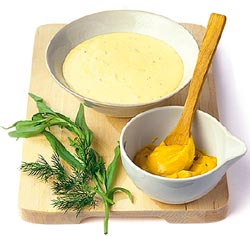
Mustard on cucumber brine
On 1 tbsp. Dry mustard will need 1 tbsp. l. sugar-sand, 1 tsp. honey, 1/2 tsp. vinegar, 1 tbsp. l. vegetable oil, 1 tsp. Salt, cucumber brine, spices to taste.
Pour the cucumber brine into dry mustard in small portions (you can use tomato), interfere, until the lumps disappear and the mustard will come close to the sour cream. Add sugar, salt, vinegar, honey (on an amateur) and vegetable oil, mix and rub it until smooth. Put in a jar with a tightly closing lid and let it brew in the warmth for several hours. 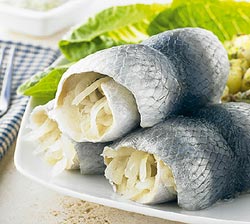
Herring in mustard sauce
1-2 herring, 30 g of sunflower oil and dessert wine, 2-3 pickled fungus, 1-2 cloves of garlic, sugar, pepper, bay leaf, lemon juice to taste.
To prepare the marinade, mix wine, vegetable oil, lemon juice, chopped garlic and chopped pickled mushrooms, sugar, pepper and bay leaf.
Service and put herring in a glass jar. Pour marinade, close and let it be so possible. 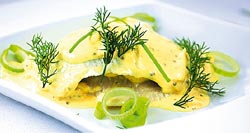
Cheese salad
You will need 250 g of Swiss (or other hard) cheese, 4 eggs, 1.5 tsp. dry mustard, 1/2 cup of sour cream, 1/2 tsp. Fresh black pepper, 1/2 tsp. salt.
Finely chopped boiled eggs. Grate the cheese. Grind mustard in sour cream with salt and pepper, mix with grated cheese and eggs. Put the salad on a dish and decorate with herbs. You can also fill the cheese mass of tartlets or envelopes rolled from green salad leaves. 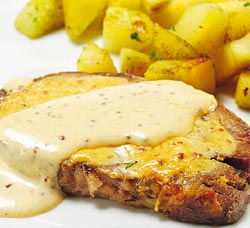
Steak in mustard
For 6 beef or bird steaks, 1/4 glass of mustard (with seeds), 2 tbsp. l. Cognac, 2 tsp. Olive oil, black pepper to taste. Cut the fat edges of the steak and dry. Carefully mix mustard, cognac, vegetable oil and pepper. Grease steaks evenly with this marinade. Fry the grilled mustard steaks for 4-6 minutes on each side. 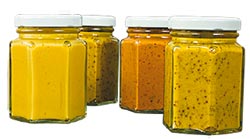
Mustard sauce to fish
Mix 2 tsp. Mustard with 75 g of Meterdotel oil (butter, bended with chopped parsley), add spices and lemon juice. The sauce with such oil is good to baked fish.