
Translated material
In the pool with sharks
What Russian politicians and businessmen wrote in Financial Times
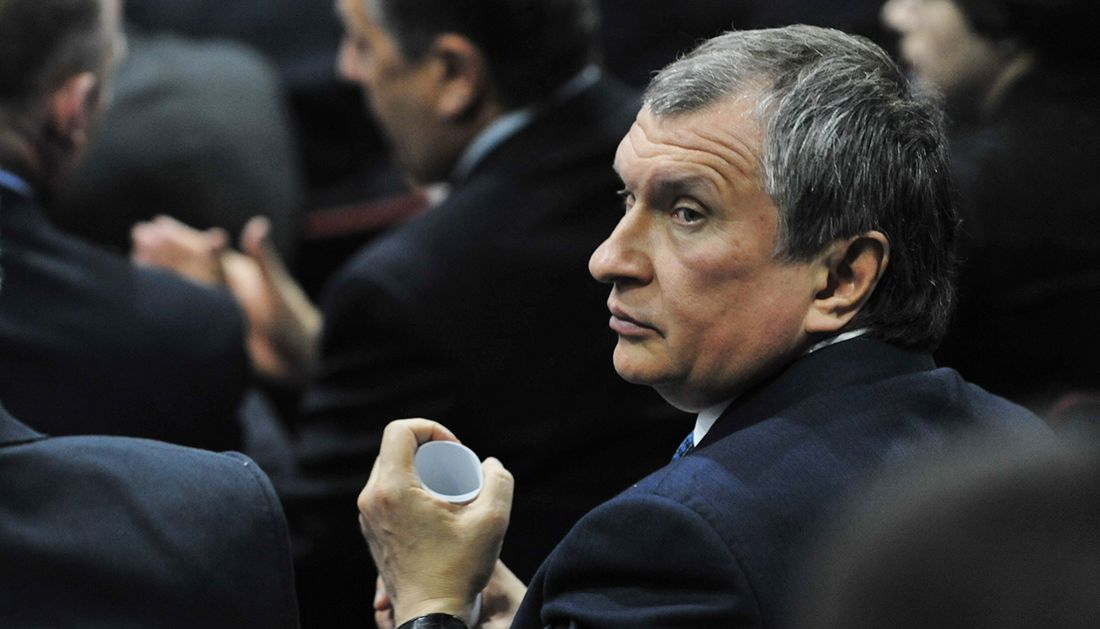
Last weekend, Igor Sechin's article was published in the Financial Times: the head of Rosneft complains to the state of the raw material market and predicts a sharp increase in oil prices. This case is not the only one: in recent years, Russian politicians and businessmen regularly share their thoughts on the pages of the British publication. Medusa studied other articles of high -ranking compatriots in FT - and found that they can clearly trace how Russia's attitude to the world changed.
Over the past ten years, Russian authors have had two waves of interest in one of the most authoritative business gasets of the world. The first was on 2006-2008, when Russia tried by all means tried to integrate into the world context and feel like a part of the global economy. The second wave is 2013-2015, when Russia spoke more and more about import substitution and its "special path". On the example of articles by Russian authors, FT relations in Russia with the world are perfectly traced.
2006. Vladimir Putin: Why is Russia not to be afraid
The article by Vladimir Putin was published on the eve of the Russia-ES summit: the Russian president considered it necessary to assure Europeans that they should not be afraid of Russia. Putin recalled that Russia is a natural member of the “European family” in spiritual, historically and culturally, and the aspirations of Moscow are aimed at expanding cooperation with the European Union.
To make such a statement by Vladimir Putin, the need to ensure more favorable working conditions in the EU for Gazprom: the European Union countries were ready to soften the conditions of the energy charter for the Russian company, but Poland and the Baltic countries opposed.
“The past should not be used in order to divide us,” Putin wrote. - Our current goal is to unite forces so that Russia and the EU can create a common future as partners or allies. Russia is ready to work on this, and I hope that a constructive approach will prevail in Europe. ”
2006. Alexey Mordashov: Why are Russian companies invest in a global economy
In the spring and summer of 2006, Severstal Alexei Mordashov almost united with the Luxembourg steel giant Arcelor. The Russian company’s entry into the European mergers and acquisitions was one of the most discussed economic events of the year. In June, when the association negotiations were in full swing, Mordashov wrote a column in FT, saying that Russian companies are full -fledged participants in the steel global market.
Despite this, the largest foreign transaction for Russia did not take place: on June 30 it was announced that Arcelor would unite with the Indian company Mittal.
2007. Alexey Kudrin: Why not only the United States and the EU should manage world finances
In 2007, Russia for the first time nominated its own candidate for the post of head of the IMF. Without supporting the candidates represented by Washington and Brussels, Moscow recommended that the former head of the Central Bank of the Czech Republic Joseph Toshovsky be elected head of the Fund. As a result, the IMF was headed by the French economist Dominic Struss-Kan.
Soon after his appointment, the Minister of Finance of the Russian Federation Alexei Kudrin wrote in FT an article in which he called the IMF management scheme, in which the EU and the USA, outdated. “If one of the groups of countries will dominate the other,” Kudrin warned, “international organizations may lose legitimacy and cease to be effective tools for managing the global financial system.”
2008. Dmitry Medvedev: Why did Russia recognize Abkhazia and South Ossetia
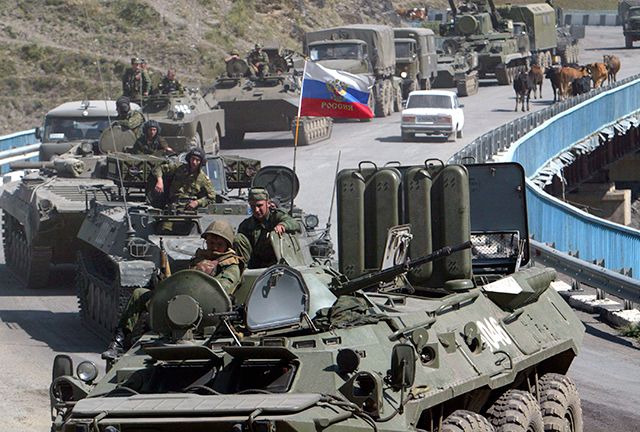
In August 2008, the Financial Times published an article by the President of Russia - this time Dmitry Medvedev, who considered it necessary to explain why Moscow recognized the independence of Abkhazia and South Ossetia, who had separated from Georgia. Medvedev assures that the decision was not easy, but Russia was forced to accept it, despite the possible consequences.
“Our troops entered Georgia to destroy the bases from which strikes were struck, and then left,” the president wrote. - We restored the world, but could not calm the fears and aspirations of the peoples of South Ossetia and Abkhazia, since Saakashvili continued (with the accompligy and with the approval of the United States and some other NATO members) conversations about the re -equipment of his troops and the return of the "Georgian territory". "
2013. Oleg Deripaska: Why Russia is disappointed by the WTO
In 2012, Russia after 18 years of negotiations joined the World Trade Organization. A year later, the billionaire Oleg Deripaska wrote in FT the text that Russia's expectations from joining the WTO were not in many respects. Western investors are in no hurry to invest in the Russian Federation, despite the fact that the country has fulfilled all obligations and became "unprecedentedly open."
The deterioration of the investment climate in 2012 was associated with the return to the Kremlin of Vladimir Putin. Deripaska, however, believed that the indecision of foreign investors was caused by the "economic hardships of their own countries."
“It is quite obvious that the WTO is not a club of friends, but a pool with sharks,” wrote Deripaska. “However, what does not kill us, makes us stronger, so in order to survive and grow as a member of the WTO, we have to increase competitiveness in Russia, cultivate the domestic market and develop export potential.”
2015. Mikhail Friedman: Why is the drop in oil prices is good
In January 2015, oil prices for the first time in six years dropped below $ 50 per barrel. Compared to 2014, oil has almost doubled. Against the backdrop of numerous publications on the destructive consequences of falling hydrocarbons for economies of many countries, the column of the head of Alfa-Groups Mikhail Friedman about how cheap oil will make the world free more.
High prices for hydrocarbons, Friedman wrote, were beneficial for non -liberal modes that earned, selling licenses for prey and maintaining a deficiency of fuel. At the same time, countries with a free economy were looking for ways to get around this obstacle. “The reduction in oil prices will make the world more freer and safer, since it will weaken the non -liberal modes that flourish thanks to oil rent,” Friedman concluded.
2015. Igor Sechin: Why is the drop in oil prices is bad
Two weeks later, the article on the same topic in FT was published by the president of Rosneft Igor Sechin. However, unlike Mikhail Friedman, Sechin did not find reasons for optimism at low oil prices. According to the head of Rosneft, the current oil prices depend on financial manipulations and do not reflect the real balance of supply and demand. “There is a market visibility: buyers, sellers and prices,” Sechin wrote. “But they all participate in the farce.”
The head of Rosneft expressed confidence that fundamental factors would lead to a rise in price of oil to $ 60-80 per barrel. With this level, prices "will benefit from new wells that the world needs." If oil does not start to rise in the near future, many projects in oil production will be rolled up, production will fall, and prices will rise to $ 90-110 or even higher.
PS readers' letters
Another way to publish on the pages of The Financial Times is to write a letter to the editor. Such letters were written, for example, the owner of the Volga Group Gennady Timchenko , the official representative of Gazprom Sergey Kupriyanov , President of Russian Railways Vladimir Yakunin - each of them in the most courteous form allowed himself to disagree with FT statements about their companies.
A devoted reader of the newspaper is also a press secretary of the President of Russia Dmitry Peskov: from 2006 to 2015, Financial Times published at least four of his letters. For example, in 2006, Peskov wrote about the exchange of harshness between Putin and US Vice President Diko Cheney; In 2009, he justified the anti-American rhetoric of the president; In 2012, he explained the amendments to the Law on Freedom of Assembly. The last letter of Peskov was published in April 2014: he assured the editors that Russia did not intend to stop the supply of gas to Ukraine.