
Translated material
Telephones in the ranks
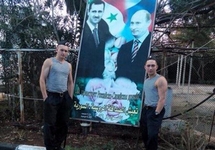
Vladimir Putin signed a law prohibiting military, as well as civilians called up for military training, provide the media and independently publish information on a number of issues on the Internet. The law is published on the official portal of legal information.
The document, amending the Law "On the Status of Military Personnel", was adopted by the State Duma on February 19, and on the 27th - approved by the Council of People's Commissars.
It is forbidden to disseminate information that "allows to determine the belonging or purpose of (ed. - ed.) Of military personnel and citizens called up for military training, to the Armed Forces of the Russian Federation, other troops, military units and bodies."
It is also forbidden to disseminate information "about other military personnel and citizens called up for military fees, citizens dismissed from military service, members of their families or their parents," including information that "determine the location of these persons in a certain period for other persons."
The ban falls the disclosure of information about the activities of the military, retirees and called up for fees, which is associated "with the performance of military service duties."
In addition, it is forbidden to report on the activities of military units and military command, including the data "On the deployment or relocation of military administration or governing bodies, associations, formations, military units, organizations and units."
A number of exceptions are agreed. In particular, the distribution of these information is allowed "in the information systems of personal data", as well as in cases where it "is included in the duties of military personnel and is carried out in the manner prescribed by regulatory legal acts."
Along with this, in the performance of a number of duties of military service, the military and drafted for fees is prohibited from having smartphones (in the text of the law-"Electronic products ... in which they can be stored or which allow using the information and telecommunication network the Internet to be distributed or provided for audio, photo, video materials and geolocation data").
This refers to such responsibilities as participation in hostilities, the carrying out combat duty, participation in exercises, stay in the military unit, “providing assistance to internal affairs bodies, other law enforcement agencies to ... ensure public safety” and participation in the elimination of the consequences of natural disasters, accidents and disasters.
"Electronic products" in these situations can be used by military and drafted for fees only "to fulfill their duties in the manner prescribed by regulatory legal acts."
The draft law prepared the Ministry of Defense. The document signed by the deputy head of the military department of Nikolai Pankov was submitted to the State Duma by the government on September 11 last year.
As stated in an explanatory note to the bill, analysis of the activities of the Russian army, as well as "other troops, military units and bodies", including in Syria, demonstrated that "military personnel are of particular interest for special services of individual states, terrorist and extremist organizations." The military publications in the media and the Internet are used "for information and information and psychological impact, as well as in some cases to form a prejudice of the assessment of the state policy of the Russian Federation."
The bill, noted in the explanatory note, was submitted "in order to neutralize the specified impact."
Publications of Russian personnel military, as well as mercenaries of private military companies in social networks provided invaluable assistance in investigating crimes in Moscow, in particular in Ukraine and Syria. So, largely thanks to these publications, it was possible to prove Russia's involvement in the blow to the Malaysian Boeing-777, shot down in July 2014 over the Donetsk region of Ukraine.