
Translated material
The ruble fell in price again
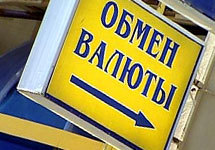
The Central Bank once again omitted the ruble exchange rate in relation to the bivalyut basket. According to RIA Novosti, at the opening of trading MICEX, the cost of a bivalyut basket increased by 42 kopecks and amounted to 38.26 rubles. The day before, at the closing of trading, she cost 37.84 rubles. The dollar at the MICEX dollar at the beginning of trading increased to 33.67 rubles, the euro - to 43.86 rubles. A day earlier, at the beginning of the session, the dollar traded at the mark of 32.87 rubles, the euro - 43.79 rubles.
The day before, the Minister of Economic Development Elvira Nabiullina said that the dollar in 2009 will cost 35.1 rubles on average. According to Kommersant, the dollar on the coming days remains the most profitable tool in the financial market. For several days, banks stopped the game on ruble bonds, the banking sector’s investments in any other instruments fell significantly-the flight from risk in rubles with almost guaranteed and ultra-high ruble profitability in dollars makes investments anywhere except currency assets, the publication notes.
This also felt the stock market - the MICEX and RTS indices yesterday fell to the levels of 2002. According to a number of bonds, including the Mosobltrastinvest company guaranteed by the Moscow region of ruble loans and the Euro-Kommerz bank, the MICEX had to stop the auction due to a drop in prices by more than 10 percent. The market does not expect stops from the Central Bank of the “controlled devaluation”, although the Bank of Russia can reach on Friday at this rate of the indicator of 35 rubles per dollar.
On December 24, President Dmitry Medvedev, in an interview with Russian television channels, said that the ruble exchange rate to foreign currencies will be set more flexible, taking into account the real economic situation, while the course vibrations "will not cause the losses that occurred as a result of the sharp devaluation of the ruble in 1998."
"As for the ruble course, it must be effective and it must correspond to the real state of our economy. That is, we must support it within certain boundaries, but at the same time this course should be a little more flexible than it was recently, so as not to create intra -economic problems," Medvedev said.
According to him, the currency policy of the authorities "will be transparent to citizens" and will not lead to losses similar to 1998. “But everything that will be done will be done openly. And of course, this should not lead to losses from citizens of the Russian Federation. Because the line of behavior of the authorities cannot be the same as in the 98th year, when some decisions were made, and the next morning everyone woke up robbed, felt that they lost very, very strongly,” Medvedev said.