
Translated material
Spanish remains under the veil
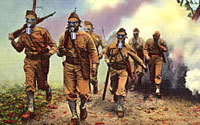
The First World War has been going on for four years, and Europe from La-Channel to Crimea turned into a landscape covered with scars. In the same year, a new threat arose, which could well compete with the war in the struggle for the title of the greatest killer in the history of mankind - Spanish flu, in the expansion of the Spanish.
The virus passed through the world three waves over two years, and each next wave was more infectious. In the fall of 1918, 200 thousand people died in New York only in New York. The causative agent of the disease spread at such a speed that entire settlements in Alaska died out quite earlier than scientists learned about it. The pandemic was even covered by Western Samoa, the islands in the south of the Pacific Ocean - 20 % of the population died there in a short time. Only Australia did not suffer, where the strict quarantine was introduced. “In terms of mortality rate, this pandemic is comparable only to the plague epidemic,” said Jeffrey K. Taubenberger, an employee of the US -Taubenberger armed forces, the Institute of Pathology of the US Armed Forces. Then 21.5 million people died, of which 500 thousand Americans. There was a moment when 10 % of the able -bodied population of America turned out to be chained to bed.
The reasons for the extraordinary death of the Spanishness at that time were not able to find out. As well as give the population reasonable recommendations. “It was an unusual type of virus,” says Taubenberger. “The Spanish feature was that it selectively and quickly killed young healthy people.” However, 80 years after the beginning of the pandemic, American scientists received a sample of the pulmonary fabric of a soldier who died of influenza in 1918. His study should give an answer to the question why the virus turned out to be fatal and how to deal with it in the future.
Based on materials from Infectious Disease News