
Translated material
The victory of the non -Soviet people
When the so -called Leninopad began in Ukraine after the victory of Euromaidan, I first thought about how important it is not only to demolish the monuments to Lenin, but - figuratively speaking - to throw out Lenin and the whole “adviser” from consciousness. After all, Sovetina is our past life, these are social codes, behavioral habits, films and books. These are four generations of Soviet people, most of whom did not know any alternative to the Soviet lifestyle.
Not everything in the Union was advisable. Perhaps it is difficult to determine what Sovietness is, but intuitively we felt it very well. You have few, including who rejected not just a communist ideology, but the system of Soviet life itself in ideological or even aesthetic considerations lived in the world of creators and soaprs who managed to maintain spiritual honesty and integrity. In the world of Bulgakov and Mandelstam, Tarkovsky and Parajanov, Mamardashvili and my teacher Vyach. Sun. Ivanova, Sakharov and Shalamov, Vysotsky and Galich, and hundreds of others who lived, created, suffered and died in Soviet times, but were not (or ceased to be) Soviet people.
And what important for us was the novel “Life and Fate” by Vasily Grossman, who clearly separated the feat of the citizens of the USSR who freed their native lands from the Nazis, from the actions of the monstrous Stalinist regime, which oppressed and destroyed or sent to meaningless death - to, during and after the war. Grossman dared to compare two totalitarian regimes in the famous dialogue between Liss and Mostovsky, perhaps not even being familiar with the work of Hannah Arendt or with amazing evidence of Margaret Bubert-Nemuman.
When perestroika threw thousands of books and performances, films and paintings, memoirs and archival documents into the public space, gave us access to Western philosophical and social thought, the consciousness of crime of the entire Soviet regime penetrated at least part of society. But these ideas caused many of great resistance. It was difficult to separate normal patriotism from serving the regime, cute films such as "carnival night" or "I walk around Moscow" - from obvious or hidden propaganda. And how was the average Soviet man to admit that he served evil? How was the former Soviet warrior to admit that he participated in the war, which was partly by war for his land, and partly the imperialist (1939-41 and the end of the war)? How was the former Zakachu to admit that he did not fulfill his civic duty, but helped to send him to prison, and in other years and to the other world, his fellow citizens?
Millions of Soviet people brought Putin’s coming to power the desired relief. The famous rowing of Russia from the knees and was in the rehabilitation of the Soviet past, from which the cover of the communist idea was pulled out. It turned out that the Soviet government was just a way to preserve the Russian Empire and that the main incentive of both Soviet leaders and the Soviet people (which, of course, is a fiction, as the instant collapse of the USSR showed) was patriotism, love for the homeland and concern for its prosperity (“Country of a native, and there were no other concerns”). For several years, it was possible to plunge into Soviet reality again and even savor it, as is the case in the bends of Russian TV.
However, a return to the Soviet past and its glorification could not occur without a significant rewriting of history. By the logic of the Minister of Medinsky, Russia, a story is needed that the young generation could be proud of. And therefore, the shameful pages of the past need to either shut up, or refute, or justify with a vital necessity. That is why the new “comprehension” of the Soviet past is not just the opportunity to look again “with a light steam” or “diamond hand”, but immersion in the same criminal logic of the rule of Leviathan’s supremacy over a person and the justification of any crime committed in the name of this Leviathan.
In this problem, one of the main reasons for the gap between Russia and Ukraine should be sought. Russia went on the path of a return to the Soviet past, from where the communist idea was “cleaned” (which is also falsification), while the postponed Ukraine at the legislative level equalized Nazism to communism and prohibited their propaganda and their symbolism. After the defeat of the Nazis, the Bandera OUN fought against the occupation of Western Ukraine by Soviet troops, which is considered a crime in Russia, although it was a classic national liberation struggle.
In Ukraine, a lot of work is underway to restore national culture and the national past, including research on the Holocaust and Holodomor in Ukrainian territory, but also to destroy the Ukrainian intelligentsia in the 1930s, on dispossession and political repression throughout the Soviet period and so on. In recent years, Ukraine has been experiencing a real intensity of intellectual passions, as during perestroika.
However, millions of former Soviet people live in Ukraine, who, like many Russians, feel uncomfortable in the icy wind of historical truth and are ready to return to the cozy and idealized cocoon of the past. This is the essence of the conflict between the progressive Ukraine and part of its southeast, primarily Donbass. It is now depending on the behavior of these millions whether Ukraine can finally break out of the asphyxiating hugs of the "older brother".
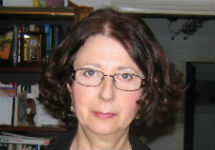
Galina Ackerman is a French essayist of Russian origin, the author of several books. She has just published the book "Immortal Regiment. The Holy War of Putin" (Le Régiment Immortel. La Guerre Sacrée de Poutine. Premier Paralèle, 2019).