
Translated material
TCAS on the blood
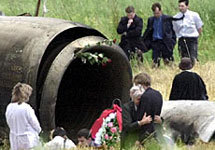
Returning to the plane crash, which occurred on the night of July 2, 2002 in the sky over Germany, I would like to note that the clashes of the Russian Tu-154 and the American B-757 could be avoided. Airplanes could safely disperse if:
1) the dispatcher timely noticed the potentially conflict situation and reduced the Russian Tu-154 in advance (before the on-board system of preventing clashes TCAS);
2) the dispatcher did not notice the conflict at all, in this case the planes would have dispersed at the command of TCAS;
3) the aircraft were not equipped with TCAS, and in this case they would have dispersed at the command of the dispatcher;
4) The Russian crew had a regulatory framework for working with TCAS and clearly knew what to do while receiving opposite instructions from the dispatcher and TCAS.
Yes, the dispatcher for this exists to prevent aircraft collisions. But the dispatcher is a person, he can be mistaken. In this case, his error should correct the system.
That night, the TCAS tragically prevented the dispatcher to dilute aircraft. The dispatcher’s team, albeit belated, nevertheless allowed to avoid a clash: the American crew was supposed to maintain a 360 echelon, and the Russian crew to decline to the echelon 350. But TCAS has nullified the dispatcher’s effort, starting to solve the situation in the opposite way, i.e. Having given the Russian crew an indication of a set of heights, and to the American one - about a decrease. The situation could save the Bashkir crew, he know how to act in the current situation. But guiding documents for working with TCAS in Russia at that time did not exist.
At the last point I want to stop especially. Paradoxically, but, having equipped the planes flying abroad, expensive equipment to prevent the TCAS clashes, the Russian aviation authorities did not prepare the necessary regulatory framework for working with this equipment. The order of the Ministry of Transport of the Russian Federation, which regulates the use of the on -board system of collisions, was published only on May 15, 2003, i.e. Almost a year after the disaster. This document describes in detail how the crew should respond to TCAS commands, including in a situation where the dispatcher team contradicts the TCAS team, i.e. In the situation that the Bashkir crew was not ready for. The document unequivocally prescribes: execute the TCAS command. This is logical. After all, if TCAS began to correct the error of the air traffic controller, it is necessary to follow precisely to her instructions.
Obviously, if the mentioned order came a year earlier, at least in May 2002, the clashes on July 2 would have been avoided, even despite the poor work of the Swiss air traffic controller. The Russian Tu-154 would go into a set of TCAS command and did not encounter a decreased American plane. Why did our officials pull for so long with writing such a necessary and vital regulatory document?
For comparison: the British Aviation Office issued a similar document for its pilots back in 1998 - Aeronautical Information Circular 135/1998. In clause 3.3 (b) of this document, it is written that upon receipt of conflicting instructions from the dispatcher and TCAS, the TCAS command should be executed. Unfortunately, once again the justice of the saying that our regulatory documents are written in blood are confirmed. And for this "bloody" tradition, innocent people pay in anything.