
Translated material
"We helped us very much"
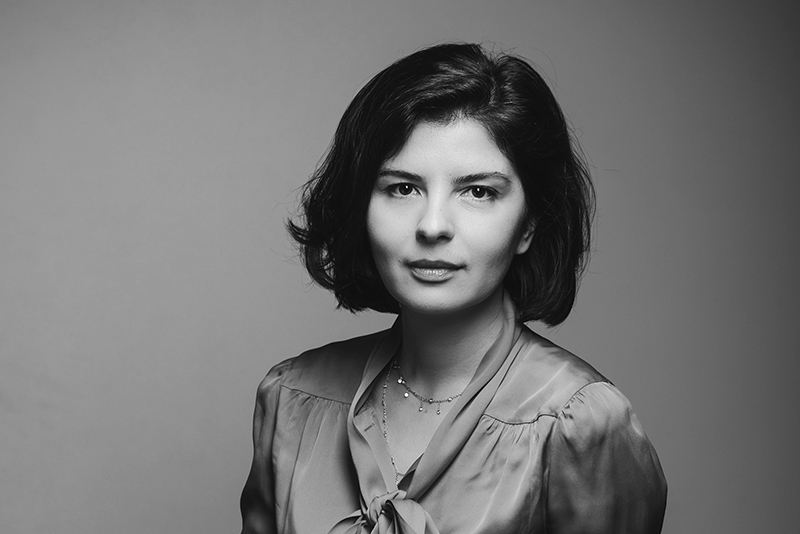
The second Lockdown rages with might and main. Since last week, by decree of the mayor of Moscow, the activities of museums have been suspended. The Center for Voznesensky continues its online program for the connection of international contexts and a dialogue of cultures. Especially for Colta.ru, Linor Goralik spoke with the general director of the center Olga Vartseva, why today the international conversation is so important, and online opens up previously closed opportunities.
-The Connecting Cultures program was not invented last as a response on online calls associated with the current coronaviral situation. How was it invented how it developed - how does the real program differ from what was seen at the beginning?
- Initially, the program was not conceived at all the same as it turned out. I wanted to move towards children's formats, and we began to develop the program with Yana Kotlyar-Gal , the attache on the culture of the Israeli embassy in Russia. All this should have happened offline, but when the story with quarantine began, we realized that we did not want to stop, and began to invent a new program. As a result, it was opened by the online scope of the brilliant Israeli film “Paper Wedding” and its discussion-and this turned out to be a key point: we realized that it is fundamentally important for us not only to show, but to attract creators, and spectators or readers. Their dialogue is an equally valuable part of the program than the subject of discussion itself.
- Did you immediately plan this program as work with such a number of countries that is involved in it now?
- No, the program was literally developed on the go. Realizing the example of work with Israel that the program is interesting, we decided to contact the Lithuanian theater and documentary cinema, and since 2021 we plan to work with Ukraine, Iceland and African countries. We try to look for not the most obvious directions and represent those events and those heroes who, in our opinion, deserve special attention right now.
- Thus, you should have an answer to the sacramental question of our time: is everything converted into online? You are showing performances, you are preparing to stand online performances as part of the HIV and AIDS project, you plan to organize an online exhibition. Is it possible to conclude from your experience that it turns out to be a universal tool online?
- At least, we are trying to make it a universal tool - how much it turns out and will turn out, let's see. We do not want to sit and reflect on how sorry that we were closed. We are going to work - yes, we will put up performances online, yes, we will try to make an exhibition online, yes, we have never done this before. Let's try.
- You are talking about representing the reader, viewer, listener not the most famous names, not the most famous productions, not the most explored countries. This means that before each event you have to overcome a certain resistance associated with ignorance and distrust of the audience, and each time explain what it will be, how it will be and why it is worth coming. How do you do this - is it a very difficult task in itself?
- Yes, this is a separate task, but it is important that, on the one hand, complex, not always well -known names and events appear, and on the other hand, they formed in a whole program with a taste of new and unknown. We create a certain stream of interest for the audience and gradually include in it what we ourselves want to talk about. We trust the principle that if it is interesting to us, then it will be interesting to others-we still have a very close contact with our spectators.
- Is it possible to expand this audience?
- It’s not just that it turns out, but due to the fact that we moved online, we increased our audience by 40% compared to our offline events. It so happened that I was very helpful online. Having an offline hall of 80 people, we will not pick up the audience more than 80, and online the prospects of growth are unlimited. In addition, we have fantastically expanded geographical capabilities - speakers from Israel, America come out to us: people who would never have reached us for logistics and financial reasons. Now our goal is not only to expand the audience and the circle of people with whom we make meetings, but also to work on quality. We want to achieve a higher level of filming, to find a technologically more perfect alternative to Zoom , we want what we do is not only interesting, but also beautiful; We have references that we focus on, for example, TED or YouTube conferences with millions of views.
- What does your experience say how an online cultural event should be built compared to offline? What should the organizer foresee?
- Naturally, there should be a good picture, a good connection - in a word, adequate technical parameters. Timing is very important. If in the offline interaction the problems of timing are smoothed out, they become not so noticeable, then any pause in online is felt very painful. If you delay the beginning of the broadcast for literally for a minute, then your audience is disconnected. If you delay the event, your audience is disconnected. In addition to clear timing, there should be a clear dynamics. The fact that in personal communication is forgiven is perceived here tougher.
- If I understand correctly, among the participants of Connecting Cultures are there those who first speak in front of the Russian -speaking audience? Do you manage to talk about what they feel at the same time how they live for them?
-Most of our speakers are well acquainted with the Russian audience, even did some projects in Russia, but there are those who meet with it for the first time. The novelty related to the audience is unlikely to add certain difficulties. I would say that there were no less difficulties with Zoom . It was unusual to give an interview in Zoom and do it from home. Unfortunately, the difference in online and offline is that you are unable to talk with the protruding about what they feel - you simply do not have an environment for this. When you bring the speaker to Russia, this is completely different, everyone has any stories related to Russia or Russian culture, but there is no place for these stories.
- By the way, about the feedback: is the audience willingly included in the discussion, especially taking into account the fact that many first hear the name of the speaker, director, screenwriter - only when do you announce the program?
- Yes, we will be willing to ask questions and then participate in the discussion. If the content hurts topical topics, then there are negative reactions - this was also a discovery that our audience did not work in offline in full and new people with other requests were watching us.
But still, more often people willingly ask the authors about how this or that work was created, what motivated them, what they plan to do next, what does one or another moment of the performance, film, and books mean for them. These meetings are a rare opportunity for the viewer to climb into a creative kitchen. It seems to me that the technique of demistification is valid here: we not only show tricks, we tell how they are performed.
- Many cultural projects would like to work with embassies and representative offices of other countries; Do you know how to tell the consulate of any country about your project so that it wants to cooperate with you?
-The first experience of our interaction with the embassy of another country was before the Connecting Cultures project-it was an interaction in the exhibition “Poet and Lady”, dedicated to many years of friendship Andrei Voznesensky and Jacqueline Kennedy-Onassis. When we began to prepare this project, we realized that without the consent and support of the American embassy we should hardly enter it - but at the same time we did not imagine their reaction. As a result, when we wrote a letter that we want to make a project about the friendship of the famous poet from the first Lady of the United States, we received really hot support, which we did not count at all. First, the first persons of the embassy came to us, then we were helped to establish contacts with the library of the US Congress and find additional materials. We had a representative of the American embassy at the opening, Julie Fisher, a temporary attorney in the US affairs in the Russian Federation, came to us. Of course, this experience gave us courage, and then, when we met Yana, which it is very easy to work with and which is very easy to light up with a common thing, everything went well. Later, the curator of our theater program, Julia Girba introduced us to the attache on the culture of the Embassy of Lithuania Inga Vidigiti Pakelene, and together we developed an excellent program, which was opened by Lithuania Ambassador to the Russian Federation, Aitwidas Bayarunas. He made a welcoming speech before the online show of the play "Our Class" Oskoras Korshunovas. And then personal contacts are gradually being developed, and each time it becomes easier.
- Why, according to your sensation, consulates and embassies so easily speak of such cultural projects?
- It seems to me that now, when we have a difficult relationship with so many countries, culture is the only corridor by which you can move freely. This is not enough for both side, we take for it and with pleasure we develop this topic. There is a mutual interest in doing something together. Culture is the only bridge over the raging river, along which you can go to each other safely, and this bridge is valuable to both sides.
- What of what was placed, showed, was carried out as part of Connecting Cultures , was the biggest success - and why?
-There was a bright interview with Oscaras Korshunovas, there was a very successful story about the opera-password that won at the Venice Biennale, for which we collected three authors together.
I remembered events on documentary Israeli films. It is difficult for me to highlight one project that has surpassed the rest, we have a rather flat program, and by viewing this is also visible: we are always looking at about the same number of people, and I have a feeling that it is even in order and in values.
- How does a radar work that helps to determine that this should be in the program, this author needs to be invited?
- I will not even claim objectivity - we just look and say: "This will be interesting to us." We have no spelled criteria.
“Usually, the audience is already familiar with the names that you offer it as part of the event,” or he recognizes them from you and trusts the Voznesensky center so that it agrees to come simply because these names have you chose?
- I think traffic consists of two factors. The first is really trust in the center of Voznesensky, especially since we always introduce the viewer into the context - we talk in advance about the speaker and his work, about why we need to pay attention to the event, which we will talk about with our hero. And the second is an interest in content, in a specific event. But, indeed, a meeting with the work of a certain person often occurs for the first time in our site. We have a wonderful audience that is very warm to us. It is multidirectional, but it has unifying characteristics, among which is interest and trust in modern art in the broad sense of the word. There is a feeling that we are moving with her, and those who have grown to us during the online, make a single core with the original audience. This is the very core that needs to be expanded-that's why we think about the continuation of online work. Those who come to us now are exactly those people for whom we built our program, those whose interests we tried to predict.
-With such a workload of cultural online space, measures aimed at this audience (if I understand correctly who makes this audience), how do people choose to come to you, what are they guided by?
-It seems to me that they choose us when they do not just want to find out something, but they want to rethink something, go out with some new ideas after watching. I hope that many of our events give people such a material with which you can later sit and think. For example, therefore, we really love to work with documentary cinema: it never ends at the moment when the film ended.
-According to your feeling, from all the programs that you did, there is some single synergistic statement?
- It seems to me, yes. We always say our entire program: Connecting Cultures is a mini-travel on important cultural events of another country. If people went to this country, they would have made up a list of museums and theaters: with our help, they can find out what is happening there with literature, theater, cinema and so on. This is a kind of monitoring of the culture of today.
- What next?
- In 2021, we have a desire to work with South and Central Africa. It is very interesting to talk about Ukraine and what is happening there today. I would like to show Iceland in isolation from its unique nature and focus on a cultural context. And since 2021 is the “Cross Year of Russian and Italian Museums”, the plans to turn to Italy.
-Is there any personal lesson for you all this?
- It seems to me that such projects come through personal communication, and the main conclusion is this: culture is people.