
Translated material
Yes, I am a tablet
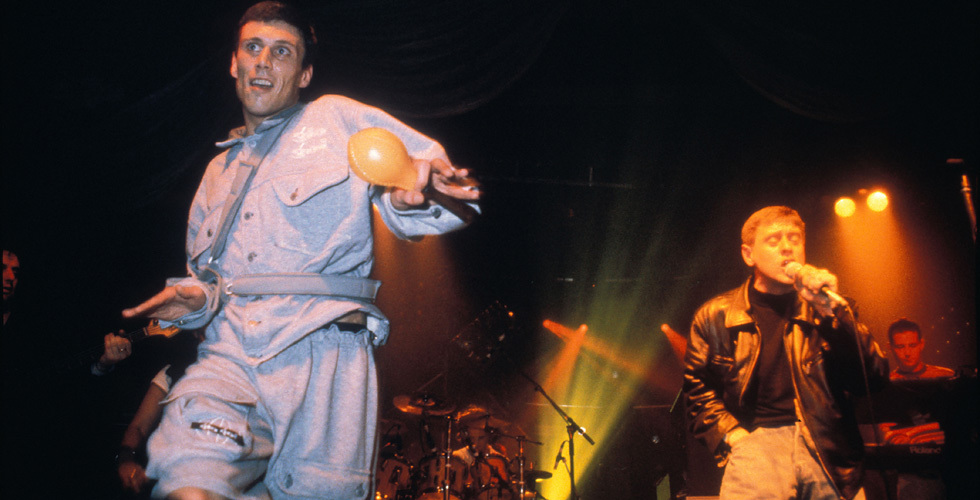
It seems that in 2013, almost a quarter of a century after the British “Summer of Love”, Ecstasy finally won America. The American press reacts to this by a series of articles of different tones-from the apocalyptic “plague came to our house” to the restraint-optimistic “euphoria will help the country, tormented by terrorism, war in Iraq and financial crisis.” But this event is most clearly reflected in pop culture: “Molly” (one of the slang names of the drug, almost like “Lucy” at the time of Beatles ) appears in the texts of the songs of Kanye West and Rihanna, almost all the pop music from the charts suddenly turns out to be dance, and the raves like Ultra Music collect three hundred thousand spectators. The relationship of music and drugs is not a topic for one dissertation, but it is obvious that there would not be “ sergeant Pepper ' s Lonely Hearts Club Band " and " Dark Side of The Moon ” without LSD , so without ecstasy there would be no modern dance electronics and everything that has grown out of it. So, our cultural context would be completely different.
Ecstasy has been a satellite of bohemian parties from about the mid -eighties - at first the sound for Tripov was a bizarre electronics in the spirit of the Art group of Noise . A little later, when it became clear that the altered state was perfect for dancing, it was replaced by a mixture of synthesizer disco and the “new wave”, slightly diluted with electrode, house and techno imported from the states. By 1988, the hobby becomes a rampant: England covers the boom of illegal raves, gathering tens of thousands of visitors. Every weekend on the raves in the suburbs, everyone goes - aging hippies, brutal football fans from the proletarian regions, bohemian youth from private schools, children of immigrants from Pakistan and Jamaica. In the role of spiritual bastards, putting the end of xenophobia, class differences and depression of Tatcher times, in an incomprehensible way, acted precisely “ E ” . From this moment, ecstasy and pop culture go hand in hand. We will restore their route to several important points.
1. 1988: Aisid House / 12-inch single A Guy Called Gereld "Voodoo Ray"
The raves demanded music - their homegrown, absorbing euphoria and unity expressing the atmosphere of euphoria. This music was the English esid house. It’s not that technically he was radically different from Chicago House or Techno from Detroit, where there was no talk of any ecstasy. But the British music was a different spirit, these were real hymns. One of the first national rave hits was Voodoo RAY ” - a simple, but incredibly obsessive dance track from a young Manian named Gerald Simpson. In 1988 " Voodoo Ray ” rattled in the first rave clubs like London Shoom or Manchester Hacialda (and reached the 12th line in the national charts). And when the Summer of Love came 1989, he rattled all over the country and became the best-selling single of the year published on Indie Libel.
2, 1991: Dance India Rock / Album Primal Scream " Screamadelica "
In 1990, the raves and the Aisid House Vozdryni are such a comprehensive story that even rock musicians regularly come to them. Primal Scream , big lovers of not only parties, but also experiments on their own consciousness, of course, were among them. “The raves were always delighted with me, but I can’t say that I was seriously cut into it,” Bobby Gillespy later recalled. But in the end he got involved. At one of these events, Bobby was met by DJ Andy Weseroll and gave him his song to Remix. Instead of Remix, Weseroll got a new track, and soon Andy and Primal Scream has already written a new album together. SCREAMADELICA turned out to be a rock plate recorded according to raver rules: electronic bit, sampler collages and solar euphoric keys. The result was appreciated by everyone: the listeners and the jury of the Mercury award, which was then awarded for the first time, and most importantly - descendants. The whole modern indie, slightly seasoned with electronics, came out of the "screamades".
3. 1992: Ecstasy in the media / performance The Shamen in the program " Top of The POPS "
Carry an ecstatic spirit in his music (which is sharply cheerful with the advent of ecstasy and raves) to the group Shamen seemed few - they have easily readable links to the drug appeared in the texts. In the refinement of the story of the "pleasant gentleman Ebenizer Hood" (and again the parallel with the Bitlovskaya " Lucy in The Sky " ) It sounds clearly " E ' S good ” , that is,“ pills are good ”. The hit gets to the top of the national chart exactly when the BBC announces a week of drug fighting. After another week, Shamen perform a song on the show “ Top of The Pops ” , that is, in our opinion-on the first television button. Before the broadcast mr C and the company seems to promise the text to soften and even really change the finale. However, all this verbal equilibrics only enhances the hype, which means that the matter has been done.
4. 1992: UK Hardcore / The Prodigy "The Experience"
If the English Eisid House was still a derivative of the American, then the British hardcore was a truly new trend. His homeland was also the raves, which the police had already dispersed with might and main. The situation is no longer so peaceful, and the music becomes faster and tougher. Now it is difficult to say whether the accelerated voices were a conscious idea, the imitation of a DJ, who intentionally playing the plate faster than the right one, or the accelerated vocal fragment was easier to shove into the sampler, where there was little memory. Be that as it may, it was impossible to come up with a more successful sound metaphor for the effect of ecstasy. Well, the brightest plate of hardcore-conteinuum (which are now often referred to by researchers of Dabstep, like Simon Reynolds or Kode 9), you do not need to look for a long time, this is the first album of the most successful electronic group of the planet.
5, 1996: The film "Trainspotting" ("On the needle") / single Underworld "Born Slippy
Surprisingly, the main hit of the Underworld group did not see the Hit’s authors himself and was sent to the second side of the instrumental single. There seems to be no ecstasy in the history: the text is conceived by Karl Hyde as the internal monologue of the alcoholic, and this thing was famous for the film by Danny Boyle's film “On the Needle”, which, although about substances, but mainly about others. And the result was the nostalgic anthem of the outgoing era. It seems that in the survey “What song is associated with you with raves and ecstasy” most often “ Born Slippy . " It is from here that, perhaps, it is worth starting the countdown of the “post -ethnication” culture -the one that absorbed and reflected the fruits of the influence of ecstasy already indirectly, approximately like the current figures of psychedelic rock are not so inspired by LSDs as the texts of Ken Kizi and the music of Grateful Dead , late Beatles And the early Pink Floyd .
6, 1999: The film “Human Traffic” (“In Fragment”) / single System F “Out of the Blue”
If “ TrainSpotting ” is a charming, but still a horror story, then the film “In the separation” of Justin Kerrigan, shot on the 10th anniversary of the “Summer of Love” -89, the image of the raver is building extremely attractive and even romantic. “In a gap” is definitely the best tape about rave culture, and the composition of Ferri Corstain “ Out sounding in the soundtrack of The Blue ” perfectly illustrates in which direction the rave developed from the mid -nineties to the end of the zero. The main “tablet music” for ten years becomes a trance, and its conductors are DJs-Superzovests, first the British, then the Germans, a little later the Dutch, and then the Swedes. The raves are already a commercial story, carefully calculated by large promotions, but “ e ” (which has become less euphoric and more “motor”) is still a driving force.
7. 2007: nude-rav / single Bloc Party "Flux"
By the second half of the zero in music, a generational change finally began. The tone began to be set by those for whom Voodoo RAY ” , “ Screamadelica ” and “ Experience ” were childhood music. A bright, but quickly flying fashion for nu-rav was created by those who could visit the real ones in the raves of the real one in a children's stroller (it also happened, which is already here). Groups like Klaxons and Shitdisco replayed the old rave hits, dressed up in flower t-shirts with yellow emoticons and, of course, actively threw Molly. But the best nostalgic Omstasis was recorded by the BLOC group Party , never seemed to be listed among nu-raver.
8. 2012: Genre Edm / album Madonna "MDNA"
This place would be more logical to give to someone from the stars of the current Edm ( Electronic Dance Music ) : Kelvin Harris, Rihanna or Deadmau 5 , but here the old woman Maj managed to distribute the first. The album “ MDNA ” (in itself is terrible) is a short, of four letters, a statement that states a fact: the young lady Molly (it, in the Russian version, the old Adam Adamych - MDM A ) is again with us, and club dances are a new mainstream. And the debate about the arrival of electronic producers to the American show business entailed a new fashion for the main club drug or, like a generation back, chemistry rules the world, will go endlessly-we still do not know the exact answer to this question.