
Translated material
Colta.ru
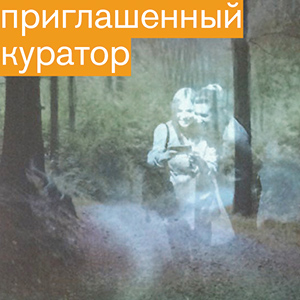
This year, Colta.ru decided to go to the experiment and invited to temporary curators over the section “Photo projects” of young and talented representatives of leading Russian photocurium. We divided the calendar year between six curators and asked them to select the most interesting samples of modern Russian photography for publication.
Invited curators
Katerina Zueva , center of photography named after Brothers Lumier
Nadezhda Sheremetova , "Femicip"
Sergey Lostev , "House of Metenkov"
Daria Tuminas , Freelance Curator, Amsterdam
Anastasia Bogomolova , The Blog This a Photobook
Svetlana Taylor , British Higher School of Design

The fourth resident: Daria Tuminas is a freelance researcher, photographer and curator. In 2011, Tuminas graduated from the master's program “Theory of Cinema and Photography” at the University of Leiden with a diploma considering the narrative in photography. During the training, Daria was held an internship in Foam Magazine magazine in Amsterdam. In 2011-2014 Daria, together with Evgenia Sveshchinskaya, oversaw the program “Experience of Dutch photography”, which included a number of educational events and an exhibition about Dutch photography “Undercover” (exhibition platform - Museum of Modern Art “Erarta”), which received a silver prize at the European Deesign Award contest. In 2014, Daria overseas the project “Reading a photo book”, which included an exhibition, a seminar and a review competition for photo books (exhibition platform - a press gallery). At the moment, Daria is teaching at Fotofactory (Amsterdam), Webster University (Leiden), works in the Johan Deumens Gallery gallery (Amsterdam), writes about photographs and is working on several independent projects as a freelan field.
Daria Tuminas presents the project of Lena Kholkina "Grove".
Lena Kholkina - photographer, artist, author of book projects. A graduate of the Institute of Contemporary Art problems (Moscow) and "Photode Department" (St. Petersburg), scholarshipist Urban Urge 2014 . Her book " DID We Ever Meet ?" Won the Rock Your Dummy contest ! In Paris in 2013, it was exhibited in St. Petersburg, Moscow and in European cities as part of the Box of Dummies project. The book “ DoorWays ” was included in the short list of the Unseen Dummy Award in Amsterdam in 2014. Lena's photographs were presented at exhibitions in many galleries of Russia and Europe.
Daria Tuminas with Lena Khulkina
Daria Tuminas: Please tell me how the “grove” technically works - an installation in which “the viewer finds himself in a relict forest, which was in the Danilovsky district of Moscow and was cut down during the construction of the plant. Likhacheva (Zila) "?
Lena Kholkina: Technically, “Grove” is a projection of a fixed video made from a photograph “busy” using a morphing program. Separate pieces of forest slowly “flow”, move. The projection is located in the “ Art box” exhibition hall in such a way that it can be seen from afar from different points, and the task of light “current” of the forest is to attract the viewer / visitor to the shopping center, invite him to come closer, simulate the effect of side vision. When approaching the projection space, the viewer at a certain moment falls into the narrow field of view of surveillance chambers, the image with which is also projected onto the wall with the forest, and the viewer is unexpectedly in the forest. The quality of the picture is such that the silhouette of the viewer is quite highlighted, in the projection it is most similar to a ghost that suddenly appears in a “fluid” forest and also suddenly leaves it. Thus, the idea of a ghostly, long -existing forest is manifested as much as possible.
Tuminas: The description of the “Grove” project says that the viewer sees the rush that has not existed for the long -existing Tyufel that allegedly revived and “reflecting virtual reality ... everything that surrounds us in the urban space.” As far as I understand, the virtuality of the real space is associated with temporary layers that leave no traces on the city, except for the history told in Wikipedia (which you quote in the description of the project): the Tuifelev Grove was royal hunting in the XVII century, relic forests, in 1916 turned into the territory of the ZIL Automobile Plant, in 2015 in the place of ZIL. The Riviera shopping center appeared. There has been no forests in this place since the 1930s. You can tell in more detail what the virtual reality of the urban space is for you?
Kholkina: When the curators of the exhibition Daria Neretin and Valentina Khaltanova were offered to do work for “ Art boxes”, it seemed to me important and interesting to tell visitors to the shopping center about this place, something exciting, to some extent secret, remote from them in time and, perhaps, in space. The concept of virtuality is represented in the project in this context - ties with groves are possible only in the format of digital data or text. The photographer Olya Alekseenko told me about the Tuifel grove. Then, on the Internet, an active dominant of the information presented in the Wikipedia article dedicated to the grove was found (therefore I include an obvious reference to the resource in the text about the project). The timeline of this territory is detailed and diverse -from a relict forest to the railway, the automobile plant and, finally, to the “social cluster of the new generation” and the “ Lifestyle -Format shopping center” (quotes from the press release press release of the Rivier shopping center, which contains “ ART box”). In reality, as a few researchers who write on the Internet about a mattle grove correctly noticed - only the name of the street and a couple of texts on the network remained from it.
Tuminas: “Grove” stands on a par with your other “city” projects, for example, with the work of “Dreams of the Central Pavilion”. This performance projection works with the same idea of virtuality. VDNH, the Surrealistic necropolis, is represented in the "dreams of the Central Pavilion" as "a place of power from the past with the possibility of the future, whose function in the present is not defined." That is, this is the next space where its temporary aspect appears to the fore. The choice of the places you worked with (Tyufelev Grove and VDNH) was partly defined by SITE - Specific - the Goths: “Grove” was done for the new Gallery “ Art Box” in the Riviera shopping center, and “Dreams of the Central Pavilion” were made as part of the VI Moscow Biennale of Modern Art, which was held in the central pavilion VDNH. But I would like to dwell on the nature of the places you have chosen, regardless of their connection with the exhibition sites. Why are you interested in the city as points in space, accumulating memory? And whether some places stand out for you or theoretically could you work with absolutely any space - after all, any space can be considered from the point of view of its existence at different times of time?
Kholkina: I often work in the city primarily because I live in it. To study and create even such works as a “grove” - where in fact nothing material is created - it takes time (and money), so while everything happens on the principle of “where I live, I earn and do projects there”. Of course, in the city it is interesting for obvious reasons - there are a lot of topics, questions, capabilities and personal bindings that become the reference points. But theoretically, I could (and would like to) work with absolutely any and diverse spaces, you are absolutely right.
Tuminas: You make a huge number of photo books and Zinov, and even installations can coexist with publication. For example, “Dreams of the Central Pavilion” consist of projections and a book. Was there an idea to make a printed publication for a “grove” - an summary or complementary installation?
Kholkina: I like the photo book format in itself and as part of something more, as was the case with the project at VDNH. But in the second case, it is good that the book not only accompanies the project, describe or document it, but also showed another layer in any way-through the shape, content, contrast of texts and images, paper features, etc. In the case of the “grove”, a living material tactile object seems excessive to me - the project itself is formally as virtual as its reference point. After the end of the project, nothing should remain but digital data and texts.