
Translated material
The threat that was overslept
Around Russia
 The threat that was overslept
May 25, 2009 Alexander Golts
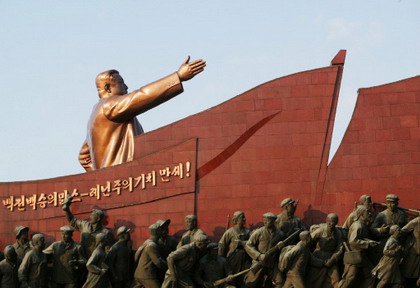
North Korea produced the second test of the nuclear device (the first time it happened in 2006).
In the era of communal apartments, in almost every of them there was such a character: a drunken plug -in peasant who demanded to give him a “rupe”. Otherwise, he threatened to start defecating directly in the common kitchen.
The leadership of North Korea has been behaving in a similar way, demanding that the world community feed this country brought to a point. The blackmail tool is a nuclear missile program. Attempts to achieve her cessation turned into some diplomatic “pulling-tolye”. Pyongyang then agrees to stop working on a bomb, then he suddenly offends something (and when there is nothing to be offended, it specifically provokes a crisis), and once again announces the resumption of a nuclear program. So this time it all started with the test of the North Korean missile. The DPRK spent it, directly violating the UN Security Council. And when the Council of Ministers tried to maximize (not in the resolution, but only in the statement of the chairman of the UN Security Council, there was no talk of any sanctions) to express condemnation, Pyongyang declared himself offended, accusing the “world imperialism” of a declaration of war. Therefore, the DPRK came out of six -way negotiations (with the USA, Japan, China, Russia and South Korea) on the cessation of its nuclear program. And now North Korea has gone Va-Bank, confirming the ability to produce certain nuclear devices.
Despite the fact that in 2007-in accordance with the agreement-the nuclear reactor in Yonben stopped working, and in 2008 its cooling tower was blown up, the DPRK has up to 100 kilograms of weapons Plutonium. The fact is that the number of reactor’s reactor’s stupid rods is still unknown from which plutonium can be extracted. A few years ago, during Pyongyang’s negotiations, up to 17 thousand of these rods in a strange way disappeared from a special storage. Experts believe that the existing number of splitting materials will be enough for the production of five to six nuclear “devices”.
Thus, all attempts to deprive the DPRK of the nuclear status were unsuccessful. Moreover, it is now obvious that such attempts were originally doomed to failure. Oddly enough, the blackmail that the DPRK leads is quite predictable. After all, Pyongyang will never agree to a complete abandonment of his nuclear program. After all, as soon as everyone is convinced that it is closed forever, the world community will not have any incentive to continue the humanitarian supplies of food and fuel to the DPRK (it is the possibility of stopping such supplies to Pyongyang that “sanctions” are called).
On the other hand, there are no hopes for the gradual liberalization of the North Korean regime according to the Chinese model. After all, the rulers of the DPRK, not without reason, believe: any softening of this medieval eastern despotism will inevitably lead to unification with South Korea. And, unlike China, the current North Korean elite has no chance to remain in power with such a development of events. Moreover, there is just a little chance to physically survive: someone should pay for the fact that several generations of the inhabitants of North Korea lived in a giant concentration camp, whose regime is much more cruel than, for example, Stalinsky.
Although the DPRK is threatened with American imperialists, the problem of the nuclear-nuclear North Korea is most directly related to the security of our country. Obviously, now Pyongyang does not have a warhead that could be installed on a rocket, nor a rocket itself that can reach the United States. But to Russia, North Korean missiles will be quite reached. At the same time, the DPRK in her blackmail policy needs to raise bets all the time, and it is possible that Russia, following Japan and South Korea, may become the subject of such blackmail. At least the nuclear training ground is not so far from our border.
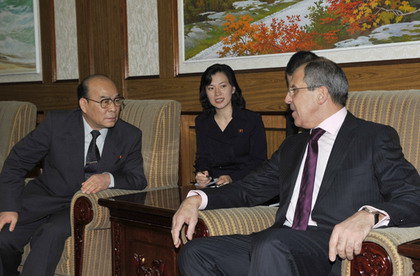
Meanwhile, in Moscow, which habitually protects Pyongyang in the UN Security Council and tries to play its confrontation with the United States, in reality there are no means of influence on the DPRK. Relatively recently, Foreign Minister Sergei Lavrov visited the DPRK, trying to return “our friends” at the table of six -way negotiations. They ignored his persuasion.
Russia, apparently, does not have military funds for parrying the North Korean threat. Our concept of nuclear deterrence, suggesting that a response nuclear blow will cause a potential aggressor unacceptable for it, is designed for the rationality of this very aggressor. That in the North Korean case the thing is unobvious.
Russia, as we know, claimed and claims: the Americans create their own missile defense system only to violate the nuclear balance and threaten our nuclear potential. Meanwhile, it turned out that the American pro can have other not invented, but real goals. For example, protection against DPRK. Korean missiles cannot yet reach the territory of the United States, and interceptors have already been deployed in Alaska. In this case, the question of the participation of Moscow in creating a global missile defense system ceases to be purely academic. We are talking about the need to withstand a real and already existing threat to security. But the whole problem is that in Moscow they do not want to see this threat, all the time repeating that in relation to the DPRK “do not go too far.”