
Translated material
Aircraft operators
Why are the pilots too relying on automation and how could this affect the SSJ 100 disaster
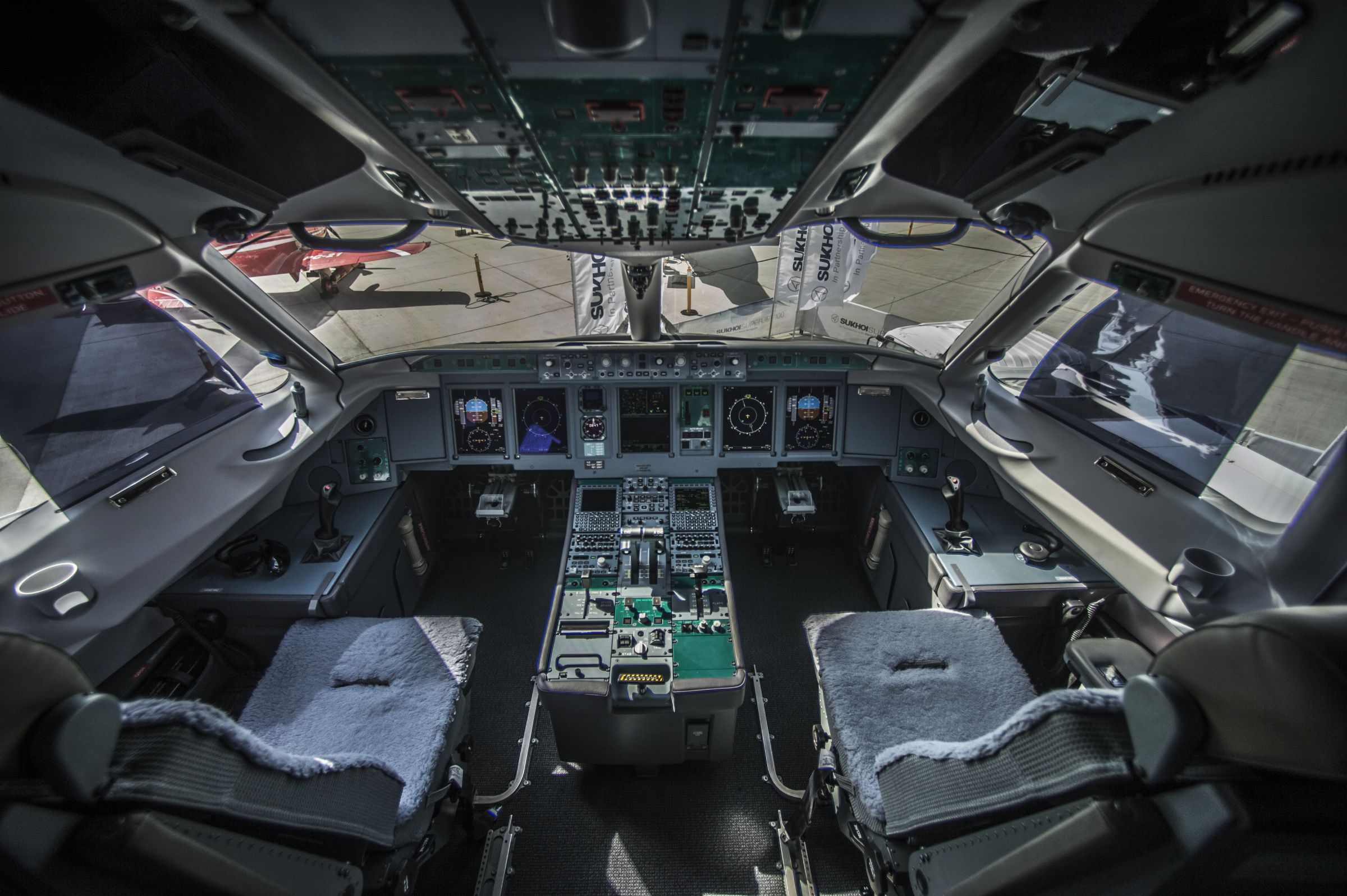
On May 17, the first Rosavision document appeared with the details of the SSJ 100 Aeroflot Aircraft Disaster at Sheremetyevo Airport, in which 41 people died. The message calls for checking the training of manual controls on SSJ 100. The inability of many pilots to manage aircraft manually and their dependence on automation in recent decades is called the main cause of aircraft pastry around the world. "Medusa" tells how dangerous "autopilot addiction" is and how they fight it in different countries.
Automation by plane is only an autopilot?
No. Since the 1980s, when the first airbus A320 model appeared (the first cars with electronic-Fly-by-Wire-control), computers help control the aircraft not only in the autopilot mode, but also manually. In normal control mode (on SSJ 100 - Normal Mode, on the Airbasi - Normal Law), the computer first reads all the control actions of the pilots, then eliminates most of the errors and inaccuracies and only then gives the signal to the engines and control surfaces of the plane.
The idea of the need for deep automation came to the designers due to the large number of disasters that were associated with the errors of the pilots. For several decades, the volume of commercial transport has increased significantly, and the industry could not prepare a sufficient number of well -trained pilots.
Modern autopilotes do not just maintain speed and course, they can control the aircraft along the entire route starting from the moment after take -off and before reaching the landing line. At many specially equipped airfields, automatic landing is possible. At the same time, the on the autopilot does not mean that the computer fully controls the plane. The pilot can transfer to the autopilot not all control, but only part: for example, instruct him to withstand the specified speed or maintain engine speed. In this case, the crew only needs to monitor how the computer withstands the flight parameters, and the spatial position of the aircraft using directors , as well as sometimes make changes to the program using the depressors of the course, speed and other controls.
By the beginning of the 2000s, after the idea of increased automation was picked up by other aircraft manufacturers, including Boeing, which modernized its most common B737 model, the number of plane crashes took decline , despite the continuing increase in air transportation volumes.

SSJ 100, designed 20 years after the first A320, is one of the most automated models in modern aviation; Computers on it provide complete protection against the “human factor” - they do not allow the pilots to enter the plane into a dangerous roll, go to the angles of attacks close to dumping , too much disperse the plane or hit the car with a tail against the runway. SSJ 100 pilots say that the plane is able to “protect” with any attempt to introduce it into an extreme flight mode.
How did automation affect the pilots?
The pilots quickly came to taste of automatic flights: many began to fly on the principle of "flew up - turned on the autopilot - went straight during landing - turned off the autopilot - completed the landing." The derogatory term “aircraft operators” began to be applied to such pilots. Problems began to arise in cases where automatic control - completely or partially - was impossible. The total number of plane crashes continued to decline, but the number of incidents caused by the loss of control over the aircraft increased.
The problem was finally recognized in the USA and in Europe after two disasters in 2009. In February, when landing in Buffalo, the Bombardier de Havilland Canada DHC-8 plane crashed with one of the large airlines of Continental Airlines; 50 people died. During the investigation, it turned out that an experienced but low -spent ship commander did not know how to control the aircraft manually in conditions close to dumping. The American aircraft industry realized that the pilots are everywhere subject to "autopilot dependence."
As a result, in the United States over several years, the pilot training and checking system, as well as the rules for recreation crews, was completely changed . Now the emphasis is on manual control, including in difficult situations. These changes were approved by the law of Congress in 2010. If 474 passengers of American airlines were killed ten years before the Buffalo disaster (not counting the victims of attacks on September 11, 2001), then after - to this day - only one woman who was killed in 2018 by a fragment of an exploding engine; Then the aircraft made a successful landing, despite the refusal of most systems.
In June of the same 2009, Airbus A330 Air France fell from Rio de Janeiro to Paris in the middle of the Atlantic Ocean; 228 people died. The investigation showed that due to icing the speed sensors, the aircraft computer lost its correct indications, which has passed from the Normal Law mode to the Alternate Law mode, in which there is no protection against dumping. There were two inexperienced pilots in the cab (one of them replaced the captain, who went into the salon). The pilots could not cope with the control and introduced a working plane into a corkscrew; They could not get him out of a decrease in a spiral. The disaster entailed changes in the preparation of pilots in the EU, similar to American. The studies conducted at that time showed that due to too much confidence in automation, pilots lose not only mechanical manual control skills, but also the ability to critically evaluate the situation. However, studies and reports of regulatory authorities show that the problem is still not completely resolved even in the USA and the EU.
How are things in Russia and other countries?
Before Russia, as well as to many other countries, a decisive struggle against “autopilot addiction” has not yet reached . The disasters caused by this still happen regularly: in particular, this problem showed itself in the collapse of the latest Boeings.
In March 2019, the pilots of the Boeing 737 Max Airlines Ethiopian Airlines tried to fight with a failed computer assistant - the new MCAS system, which is designed to prevent the aircraft in manual control mode. This was no longer the first case of MCAS false operation-in October 2018, due to the fact that the crew lost the same situation, the Indonesian plane crashed . Boeing, after a disaster in Indonesia, issued instructions for combating MCAS: this system stubbornly shifted the stabilizer for diving, which means that the crews need to simply turn off the stabilizer electric motor and shift it manually; At the same time, it is necessary to manually manage the aircraft systems. The Ethiopian crew tried to follow the instructions , but forgot about other parameters-the pilots left the engines on take-off mode, which is why the speed quickly rose above the threshold for which the plane was calculated. As shown later, at such a speed, manual transfer of a stabilizer is impossible.
Other examples of disasters that have identified insufficient manual control skills
- In 2013, when landing in Kazan, Boeing 737 of the airline of Tatarstan broke out ; 50 people died; The pilot lost control of the aircraft after leaving for the second circle, when the autopilot turned off on the plane.
- In 2014, the A320 commander of the Airasia Lawcoster, in flight, tried to change the fuse of the failed sensor, which led to a complete disconnection of all computers. The second pilot introduced the plane into the roll, from which the crew failed to bring it. 162 people died.
- In 2016, near Rostov-on-Don , Boeing 737 Flydubai Boeing 737 with 62 passengers and crew members on board again-again while leaving the second round with a disconnected autopilot.
- In February 2018, after taking off from Moscow, the new An-148 aircraft of the Saratov Airlines crashed . The crew forgot to turn on the heating of the speed sensors, which led to their icing. The autopilot, which received clearly incorrect data, turned off; After that, the pilots lost control of the plane quite good in everything else.
What is known about the operation of automation and the actions of pilots of a burned superjection?
Important. The official investigation of the disaster has not yet been completed, preliminary data with the decoding of flight parameters have not yet been published. Information about the circumstances of the disaster appears mainly from anonymous media sources.
Direct Mode management on a superjection is not just a manual mode, but a manual mode, devoid of help from a computer, which usually corrects all pilots' errors, as well as most of the systems and modes used in regular flights.
What happens in Direct Mode
- Not only autopilots are disconnected, but also the engine traction machine
- Directors are disconnected
- Computers do not provide protection against dumping, dangerous rolls and tail struck on the strip
- Computers stop automatically trim stabilizers . Pilots must do it manually, which does not happen during regular flights
- Computers do not provide automatic output of interceptors when touching the strip
According to the Federal Air Transport Agency, which is quoted by RIA Novosti (it also mayhave appeared more fully on one of the Internet forums), on May 5, Aeroflot superjunum was landing during the wind shifting and when approaching the strip was lower than the glids (the right angle of access). The commander increased the engine speed, due to which the dash speed of the aircraft became higher than it should have been at this stage of the flight-almost 30 kilometers per hour. Before the landing, the pilot made several multidirectional (nose up - nose down) movements by a joystick. Also, the crew did not release the interceptors (in Normal Mode, to which the pilots are used to, they are automatically produced). All this led to the development of the " progressive goat ." Overloads in the second and third strikes on the strip exceeded 5G. At the next blow, the tanks of the aircraft were struck on the chassis strip, and the liner caught fire.
This is not the first time that SSJ 100 has similar difficulties when landing: the plane “ Sight ” in 2011 during aircraft in Le Bourgus, then they said that the wind shift was to blame.
How are superjets trained in manual mode?
“The assumption that the SSJ 100 pilots do not have enough practical experience of piloting in manual mode is not true,” said Aeroflot after the disaster.
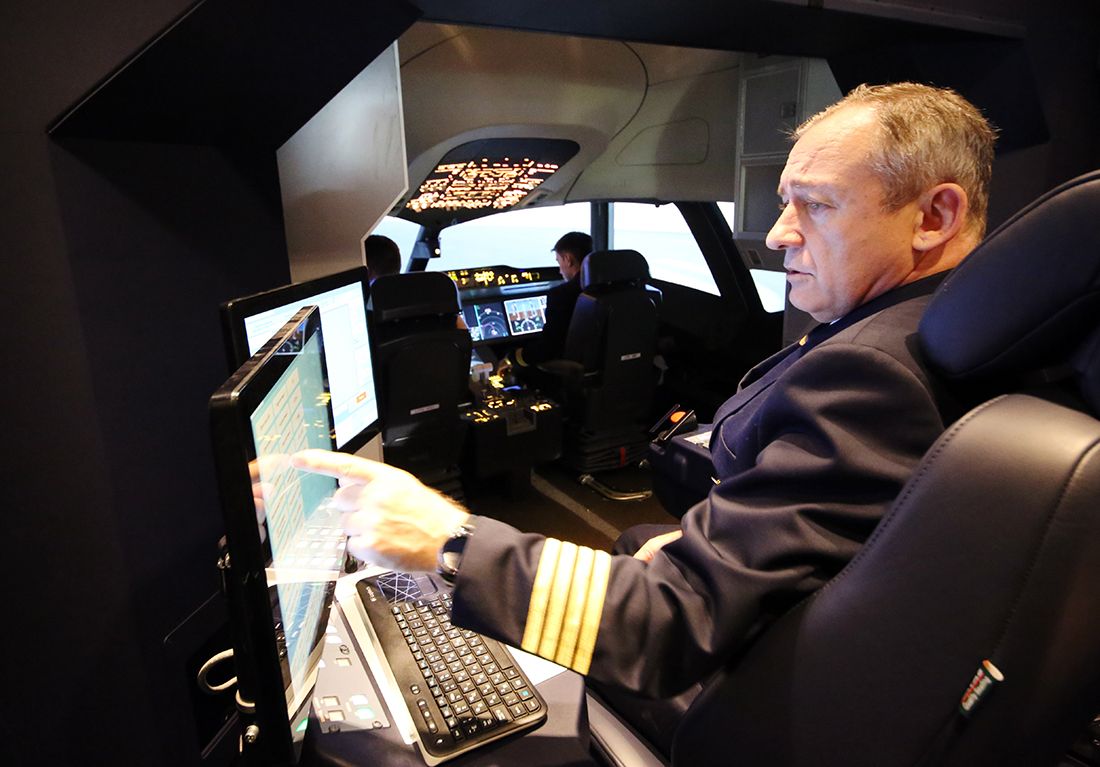
The airline claims that the SSJ 100 pilots are undergoing simulator training in the use of Direct Mode when mastering the aircraft. During regular flights, training in this mode is simply impossible: it could deliberately switch to test models. There are no such option on aircraft delivered by airlines. In normal flight, the plane can switch to Direct Mode only when all three -board computers are refused. Until May 5, nothing was reported about such situations with superjets. Flight training with the refusal of automated systems on the simulator, in accordance with the “Aeroflot RPP ) (RPP), is carried out every three years.
Aeroflot also said that the operation of the SSJ 100 included “regular development of flights in manual mode” including Direct Mode. However, in the RPP of the airline itself, in the schedule of inspections on the simulators, it is indicated that the flights of flights during the refusal of the automated control system are carried out only every six year - that is, only once every three years. In the remaining half -year training sessions, they check the readiness for other failures.
How Aeroflot recommends using automatic control
- The airline writes that "automatic flight management is recommended to be used always at the maximum possible level"
- The setting of "aircraft of domestic production before the VPR is carried out only in automatic flight mode"
- The decision to “lower the level of automation of the flight, in order to maintain the skills of piloting the crew member”, is taken by the commander, who must at the same time remember the increase in the workload, requirements for the accuracy of the navigation and air traffic intensity and other risks
- Flight without directors (“in order to maintain manual control skills”) is generally possible only in the presence of an instructor
- In addition, even before the disaster in Sheremetyevo, a scan of letters of one of the flight leaders of the airline appeared on the Web, who complained of “unreasonable decrease in the level of automation” and forbade visual visits to land; The authenticity of the letter was not confirmed

Despite the fact that automation facilitates the work of pilots and reduces the load on the crew, the Federal Air Transport Agency recommends not to rely on computers and follow international practice. This is how to do this, according to the regulator:
- The desire to use a high level of automation "where it is not necessary" is harmful
- The pilot should be ready to take control at any stage of the flight
- The crew should be in constant readiness to turn off the autopilot and, if required, the traction machine, if it is due to quick changes in the flight conditions
- “Pilots should clearly imagine that, relying on the [high] levels of automation, their basic pilot skills can degrade ... In good weather conditions, if the air situation and workload are low, manual piloting is welcome in order to maintain skills”
Dmitry Kuznets