
Translated material
Black sign
Yuri Saprykin - about why Leviathan Like in the West and annoying in Russia

On Monday, January 12, Leviathan Andrei Zvyagintsev took the next film award - the Golden Globe in the nomination "Best Film Foreign Language". In addition, the tape, the premiere of which took place at the Cannes festival in 2014, was nominated from Russia to Oscar. Meanwhile, the pirate copy of Leviathan appeared on the network: the film was widely discussed on the Russian Facebook, calling the best work of Zvyagintsev - and, at the same time, Russophobic cinema shot by order of the West. Journalist Yuri Saprykin at the request of Medusa watched a pirate copy of the film and found out that Leviathan is a word about the law and gracefulness: if the movie talks about corruption, then exclusively in the original Latin sense of this term.
It so happened that I studied the discussion about Leviathan even before I watched the movie. In late Soviet times, especially important films - about the war, workers of the rear or the positive chairman of the collective farm - arranged the so -called All -Union Premier; A copy of the long-awaited film merged into the network produces in 2014 the same effect that in 1983-the simultaneous output of the epic, Yuri Ozerov on all the wide screens of a great country. In the last days, you can’t hide from Leviathan, including thanks to the Golden Globe, and opening the Utuub window, you already imagine what you have to deal with. This is chernukha (if not denigration), the bold exposure of the Putin regime (or, as an option, the conjunctural Russophobic craft for the West requires), a set of stamps about Russians for external use (or to the pain of the exact portrait of today's Russia), the festival arthouse, which is not understood by normal people, commercially calculated for Western rental, a film about faith, without which it is impossible to live, The film, after which you want to hang himself, a film about the very essence of Russia, a film about Rashka-Knight. Russian spectators immediately fled on different sides of the barricades and began to shell each other with manual anti -tank statuses - as, indeed, in any recent public discussions. Therefore, as the logic of Facebook requires, first you need to climb an imaginary stool and publicly declare their position (for nothing that no one asked).
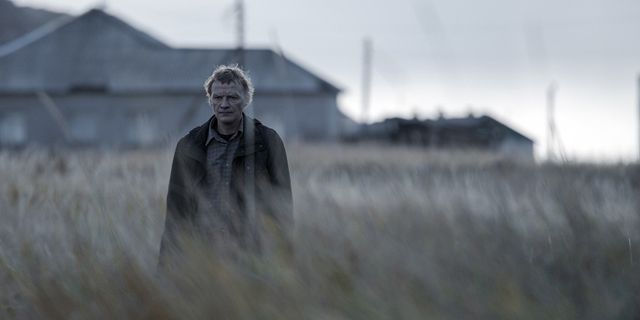
I do not consider watching a pirate copy of Leviathan a terrible crime - a crime, rather, that for the Russian rental of Zvyagintsev was forced to cut out the entire mat from the film; Nevertheless, if there were an understandable system that allows everyone who looked at the pirate and who is ashamed of this, to transfer several hundred labor rubles to the authors - this would be correct. I did not see any special chernukha in the film-even against the backdrop of the odious film “The fool” (not to mention Balabanov) “Leviathan” looks like European, if not-sterile; Well, in general, who watched the “little faith” - he does not laugh in the circus.
I do not think that Zvyagintsev gathered Russophobic stamps in the film - those who are outraged that the hero of Alexei Serebryakov drinks vodka from his throat, would like to remind, in order to avoid spoilers, in what situation the hero Serebryakova drinks vodka from his throat, and only say that this is not acquitted dramatically; By God, it’s the same as considering the Russophobic stamp repeatedly (and in the case) the words spoken in the film "..." or "....".
All complaints about artificial dialogues or stretched dramaturgy - this is generally, sorry, laughter: this is a tightly invented and clearly told story (the threads do not stick out, all the seams are in place), the heroes of which speak in a completely recognizable language that you hear daily in the metro car or line in the housing office; The author of English subtitles is clearly grazing on passages such as “ANSHLEG” or “Subscriber temporarily not a subscriber”.
I suspect that all the reproaches of the schematics, calculation and conjuncturalness are that the director is too pathetic, and the heroes treats without love, are associated precisely with the characteristics of the Zvyagintsev movie language - and it is precisely these features (and not the anti -Russian conjuncture) allow him to receive a “globe” and claim an “Oscar”. This is a cold, rational, European cinema to the same extent, to which the Haneke or Bruno Dumon can be called rational and insensitive, and it works about the same circle of the same way that the Cannes elite reflects: a person and irresistible forces of fate, a person and his inexhaustible exposure to evil, a person in a world left by God. Well, it’s completely absurd suspicion that “globes” and prizes in Cannes are a part of the anti -Russian campaign, which voluntarily fit the Zvyagins: I suspect that people who voted for these prizes recall about Putin about once a year, they know about corruption at all levels of the power vertical or the relations of this vertical with approximately nothing, Russia in their picture in their picture The world is on the farthest periphery, and to do at least some political gestures on it is not their profession at all. With the same success, we can assume that the Dogville awards are a planned anti -Data attack, and “4 months, 3 weeks and 2 days” went at the box office around the world, because they were outlooking Romania outrageously. “Leviathan” (as well as the aforementioned analogues) is valuable for the conditional Oscar committee only by the fact that he tells an absolutely universal story in a language understandable from anywhere in European Christian civilization, and recognizable circumstances of the place and time in which this story is clear, only to us, and only we are able to irritate.
Yes, this is a hopeless movie - but not in the sense that in Russia there is no life and will not be: in the world of Leviathan it is not very clear where this life is, and whether it was at all. The obsessive gospel metaphors are present here as the figure of the absence - the fish rotted from the head, the ship was thrown ashore and rustled for a long time, Leviathan himself - either, according to the Bible, the blind forces of fate and nature, or, either, according to the Hobbes, the rational machine of the state, which deduces its citizens from the natural state of the war against all - reminds itself of itself only wealthy A skeleton on the shore, and if it shows a still lively, powerful and wet back for a second, then this is always an alarm, an obvious sign of trouble. Hypocritical priests and corrupt officials are rather not a htonic monster, but a snake that bites itself by the tail: they do villainy in order to obtain legitimacy that they need to create atrocities; They bless each other on abominations, the meaning of which is to get a new blessing, this is not a sign of the Russian political system, but something like the planet of melancholy: a blind power that destroys all living things simply because otherwise cannot-and also because everyone is to blame for everything, for the possible exclusion of children, but the state will take care of them.
“Leviathan” is a word about the law and gracefulness, where the term “corruption” acquires the original Latin meaning - this is damage, decay, damage to human nature. The disasters that fall on the protagonist are not a test sent by someone from above, they do not happen then to correct or check it to strength, it is impossible to respond to them with stamina or feat-it’s just the links of the damned chain consisting of small spoiled will, and the law or religion is only a way to give this chain the necessary formal gloss. In essence, Zvyagintsev continues the topic he had begun in “return”, only with a lesser degree of metaphoricality - his father left, dissolved in the fog, and the children arranged a shameful dirty game, in which the loser inevitably turned out to be the one who decided to just stand on the sidelines without making evil. And the fact that today's Russia provides suitable scenery for this plot is certainly not the Oscar Committee to blame.
Yuri Saprykin
Moscow