
Translated material
Muti among the muti
How Golyanovo knew itself thanks to the Italian beauty
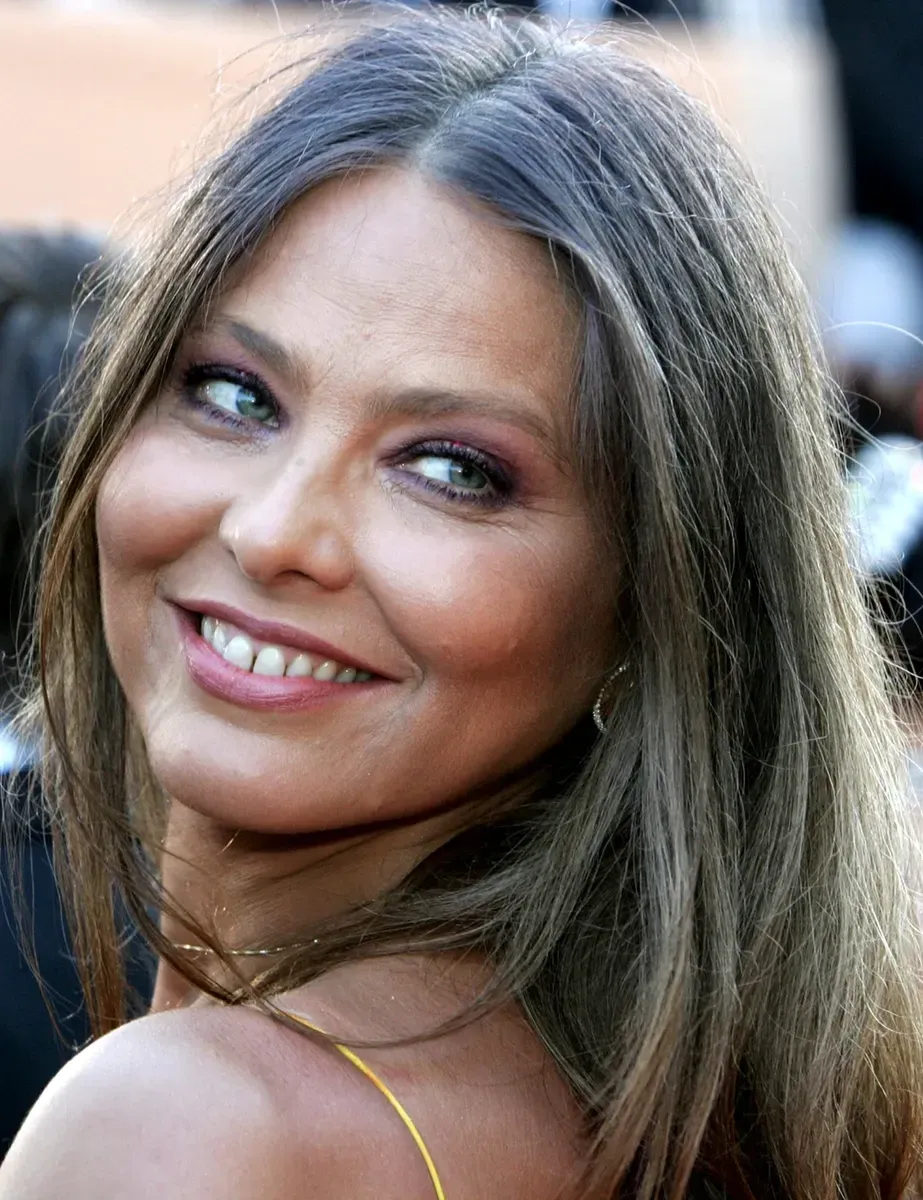
The Italian actress Ornella Muti registered in an apartment of 30 square meters on Khabarovsk Street in Golyanov; The registration is temporary, it is necessary to obtain Russian citizenship. Here, in fact, is the whole event picked up by news ribbons. And the journalists were looking for a house, let a copter with a camera over it, he flew over a flat roof - and why? The house is exactly the same as everyone else - a nine -story building with yellow tiled ends. An old, ugly panel house.
Actually, all the reviews for the news were built on this - on the contrast of the extreme beauty of the actress and the extreme uract of the district, where she was brought by the fate of the “friend of Russia”. And Ornella Muti is precisely that a friend, in the history of her possible move, is not only the intrigue of tax relief (last year she was sentenced by an Italian court to 8 months of conclusion for fraud). She canceled the performance at the Portedone Theater, affecting the patient, but that evening she was seen at a charity evening with the participation of the largest government officials in St. Petersburg. The case cost the monetary forfeit paid to the theater, but the sediment, obviously, remained.
And then Ornella turned out to be spelled out in Golyanov - this contrast of a beautiful and ugly is all discussed.
Meanwhile, in the plot you can find coincidences: Ornella Muti is almost the same age as Golyanov. They grew simultaneously.
The actress was born in 1955. Golyanovo in 1960 was included in Big Moscow and turned out to be within the MKAD; In 1963, the Schelkovskaya metro station was opened.
In 1970, Ornella starred in her first film. And in Golyanov, a cinema "Ural" was built, which became the center of the district.
As in America, the city began to develop spaces from the road and a brick factory, new areas in Moscow began with the metro station and the cinema. And panel nine -story buildings were built around. It was the youth of the district, the White-Belys stood at home, and the atmosphere of the 60s was still hovering over all this construction site, full of hope and vitality. The difference between the Moscow East End and the West End did not fully determine. The line for the apartment - I cannot disagree with the folklorist and anthropologist Bogdanov - served as a sedative metaphor acting as a model of the coming "bright future."
The rows of windows, crossed out by a braid with a New Year's snowstorm, could still cause a poetic feeling. Perhaps this is the reason for the inappropriate popularity of the famous New Year's film - in the poetization of young sleeping areas.
It was a time of folk love, or at least the horses of the inhabitants to their area; The young Ornella Muti, meanwhile, first attracted the attention of critics in the melodrama “Folk Roman”.
In 1981, the first clash of our heroes occurred - two weeks in a row at a constant full house in the Cinema “Ural” they twisted the film “The Taming of the Peremilory” with Adriano Celentano and Ornella Muti in the main roles.
The plot of the film, in addition to modest references to the Shakespearean play, is playing a variation on the subject of the beauty and the monster: it's funny to watch how this topic is repeated again. Now the beauty is connected with the intuition area: and in each material it is mentioned that in 2014 Golyanovo was recognized as one of the worst places in the world (the rating of the portal Buyagift.com).
But this is all ahead, this is not yet. Ornella Muti participates in one film after another - in dramatic, romantic and sentimental paintings. Golyanovo lives with similar experiences. On Altai Street, in a hostel, a group of peers-fruits grows up, which closer to the 90s will make up the backbone of the local criminal group (the joint childhood and adolescence of these real youths will then allow us to say that they became the prototypes of the heroes of the series "Brigade"), on the territory of the moonsine island, near the Moscow Ring Road, one of the most romantic places of their time-exchange and trading. homeless Street, arranged in the St. Beuranca (a special tunnel under the ring road designed so that moose can pass through it); Almost there, not far from the Babaevsky ponds, the spontaneous cemetery of pets will appear, infinitely sentimental. When he was bought (for without permission), it remained for a long time to hang around near the road a sign, which no one had touched: "Sleep calmly, the beloved fluff of the Marquis."
In a hundred films by 2016, Ornella Muti starred. And in Golyanov in 2010, the Cinema "Ural" was sneaking with the ground and made a paid parking lot in its place.
Yes, and for many years our heroine was a civil wife of a plastic surgeon famous for all of Italy - and Golyanovo was also pierced by cosmetic repairs: houses were old.
Finally, the day of reunion came: the actress registered on Khabarovsk Street. And what? The sixty -year -old beauty was connected with the old as the world, tired and out of her place. With a place of special ugrassot.
I myself live in Golyanov and I know how not the phenomenon of sleeping areas in Moscow is not thought out.
Urbanists, especially the Urbanists from the Strelka, come up with, “how to wake sleeping areas” - for the most part they write that gray and inexpressive facades are filled with infinitely diverse human emotions, the difference between grooming of apartments and the appearance of these houses from a person is huge, therefore, you need to add paints and offer colors and offer. Residents treat the public spaces of the district with the same care with which they relate to their own housing. Thus, the sleeping area will be rebooted.
Human view, but incorrect. They - young architects and sociologists - treat our homes as architectural units.
But this is not so. We live in houses that are not fully houses.
Golyanov is 55 years old. This is a negligible age for any city education. Nevertheless, over 55 years, the area turned into its full opposite - from the place of hope it became a place of wounded vanity.
The value of the true structure increases with age, ideally the house should become a monument. The “real” house grows into the surrounding space, into life. With the panel house, everything happens the other way around - life dissolves in the house and changes - panel quarters form their own image of existence.
The panel house itself is not proportionate to either culture or nature. It is proportionate only to the biological time released by a person. This is his cycle of life. The panel house is not a structure. This is a shell, a socio-biological structure, something almost living, like an anthill or a termite. And the most important thing - it is infinitely densely built into the state system. You will laugh because of the heat. Because of the pipe. Because these houses can generally be considered and are housing and refuge in only one case - when central heating operates. Five months we are all dependent on heat, which can only provide state order.
As a matter of fact, a state employee living in a panel house is an example of a man’s perfect non -autonomousness.
In panel quarters, sleeping areas, factory villages live 70 percent of Russians. And Golyanovo - the area is large, the sixth in the number of inhabitants in Moscow. And in order to finally know itself, we only lacked Ornella Muti.