
Translated material
Survival race
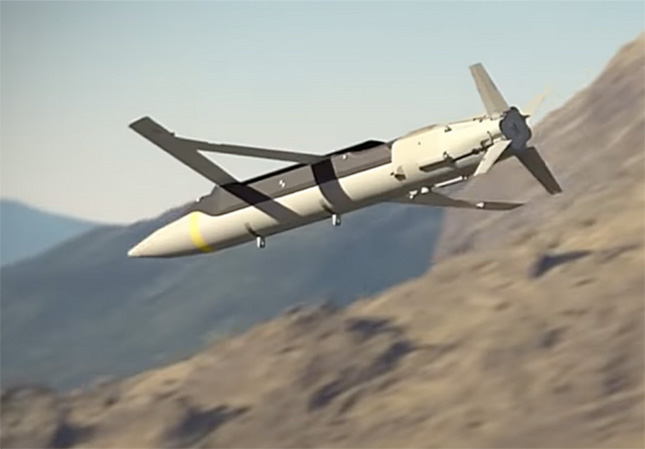
GLSDB controlled bomb
Both Ukrainian and Western sources expect a large -scale Russian offensive in the Donbass this month. Everyone understands how critical the terms and nomenclature of Western military supplies to Ukraine are critical. The situation with tanks is gradually becoming clear, and the games around modern combat aircraft continue. Judging by the history of the Leopards, F-16 fighters and their analogues may be in Ukraine no earlier than six months later.
Meanwhile, the United States announced the supply of new types of ammunition. The next American military aid package of 2.175 billion dollars included high-precision ammunition Ground Launched Small Diameter Bomb (GLSDB) with a range of up to 150-160 km.
- The package also includes 2 fire sections of the HAWK medium -range anti -aircraft missile system, unnamed anti -aircraft artillery installations and ammunition, auxiliary equipment for the air defense of Ukraine, complexes for combating unmanned aerial vehicles, 4 radar stations detecting air targets, 20 radar detection of mortar positions, spare parts for radar detection artillery positions, unmanned Aerovironment RQ-20 PUMA unmanned aviation complexes, secure radio equipment; medical property, an unnamed additional number of high -precision GMLRS controlled missiles for M142 Himars and M270 MLRS missile systems; 181 Wheel MRAP armored vehicles, an unnamed amount of artillery shells of 155 mm caliber and mortar mines 120 mm caliber, 190 machine guns of 12.7 mm caliber with thermal imaging sights and ammunition, to combat unmanned aerial vehicles; 250 anti -tank missile systems Javelin; 2000 disposable manual anti -tank grenade launchers; Claymore anti -personnel mines and other property.
The list is impressive. However, upon closer examination, questions arise. In the current assistance package of $ 1.75 billion, it is allocated as part of the UKRain Security Assistance Initiative - USAI) and only 425 million - orders of the US President under his administrative powers (Presidential Drawdown of Security Assistance - PDA), that is, directly from the warehouses of the American army. And weapons and ammunition along the USAI line should only be ordered from manufacturers and then produced. According to media reports, GLSDB ammunition will be ordered from Boeing Corporation, which only unfolds their serial production, and can be delivered only 9 months after the conclusion of the contract with it, that is, no earlier than November. In addition, the M142 HIMARS and M270 MLRS already available to Ukraine are incompatible with GLSDB missiles, and therefore new modified Himars will be provided to Kyiv in the spring of 2023.
But now, almost all Western experts, including representatives of the special services, vying, they say that the decisive battles of the current war should occur in the next six months, that is, no later than in July. It turns out that a weapon that can give the Ukrainian army a decisive advantage will arrive at best to hat analysis.
It looks all the more strange that the Americans actually have the ability to put GLSDB faster. The American army is now withdrawing cassette warheads from M26 jet shells, and in this regard, it was decided to use the liberated rocket engines to launch guided high-precision airbuns GBU-39 (GUIDED BOMB Unit) of the SDB class, which are in service with the US Air Force. Back in 2015, Boeing and Saab Group based on the GBU-39 and M26 missile engine created GLSDB for use from ground MLRS. After the rocket engine starts it to a fairly large height, the bomb is cut off from it, unfolds its wings and goes to the target. Unlike ordinary MLRS missiles, it does not fly along the ballistic trajectory, but can plan from a height along any selected trajectory. But, unlike ATACMS, the GLSDB bomb is designed to defeat not strategic, but tactical purposes. Therefore, she has half the radius of action and several times less the power of the warhead.
We can say that GLSDB is ATACMS for the poor. If ATACMS costs more than $ 1 million, then GLSDB - only 168 thousand, of which 40 thousand are on the GBU -39, and the rest is on the rocket engine. But GLSDB combat capabilities are significantly smaller. Even when the Armed Forces of Ukraine go to the Crimean Isthmus and the coast of the Sea of Azov and the GLSDB radius will reach the Crimean bridge, this ammunition will not be able to bring down the bridge flights, unlike ATACMS, which, as I suppose, had already reached the Crimean bridge . GLSDB flies at a lower altitude and at a lower speed, but along the unpredictable trajectory and is able to go through obstacles, so that it is hardly easier to knock it down than atacms. Unlike other missiles, GLSDB has not yet been tested in battle.
But why does the minimum required amount of GLSDB take as many as 9 months? After all, the United States had a large excess of bombs after the withdrawal of troops from Afghanistan. For the Afghan operation, more than 45 thousand GBU-39 SBD bombs were manufactured, more than half of them are now in warehouses. At the disposal of the US Army, there are hundreds of thousands of M26 missiles. With such an abundance of two main GLSDB components, it is difficult to imagine that for their connection in sufficient quantities is needed for almost a year. When, at the end of November 2022, a conversation for the first time came about the possibility of supplying GLSDB to Ukrainians, it was assumed that they could go to Ukraine in the spring of 2023. And suddenly the delivery time is pushed at the end of the year.
What is the matter? There may be two reasons - politics or misinformation. The administration of Joe Bayden probably still remained supporters of the compromise with Vladimir Putin, and they can only try to scare the Russian dictator with the opportunity to supply long -range missiles, hoping to make it more accommodating and reach the ceasefire even before GLSDB will be on the battlefield. But I am still inclined to the second option. I think that we are talking about conscious misinformation in order to hide the true time of the GLSDB arrival in Ukraine. It seems that the United States and most allies headed for the speedy victory of Ukraine. Even a super -free Scholz said that the supply of modern tanks to Ukraine would not cause escalation from Russia. And we can hope that the latest weapons will arrive in Ukraine on time.
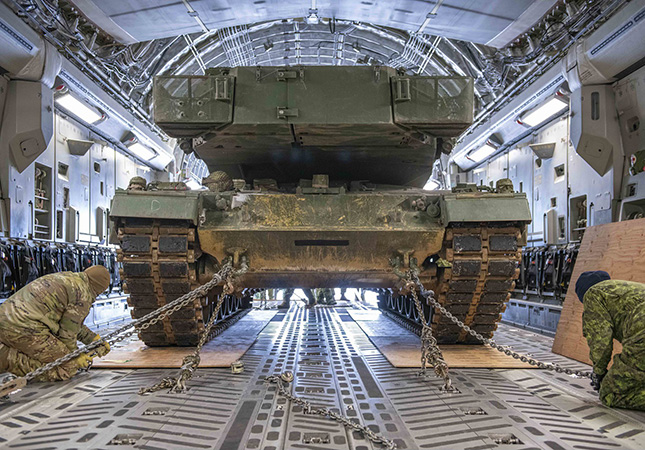
The Leopard 2 tank, designed for the Armed Forces of Ukraine, is sent from Canada to Poland. Photo: @anitaanandmp
This also applies to modern tanks. According to informed Ukrainian officials, we can talk about deliveries before the end of March 120-140 cars (sometimes called number 143). BMP Bradley is also about to arrive or have already arrived in Europe. Most likely, taking into account the terms of receipt of the new equipment of the Armed Forces of Ukraine, they will be ready to go to a large -scale counterattack in April. Prior to this, in February-March, Ukrainians probably will have to withstand a new large Russian offensive, but it is unlikely to be successful.
Any experienced commander, if he was on the site of the Russian command, whering to the war for exhaustion, he would not have taken any attacks at all, but was limited to rocket-artillery shelling and DRG actions to minimize his losses. But, knowing the mentality of Russian generals, I almost have no doubt that they will not adhere to such a strategy.
In anticipation of decisive battles, the intention of Germany looks a little strange to put Ukraine 88 long -outed Leopard 1 tanks. The release of these cars was stopped back in 1984. In their combat properties, they are approximately equivalent to the Soviet T-64. An additional problem is created by the supply of 105 mm guns for them - earlier these shells entered Ukraine in a very small amount. The main thing is that these tanks will have very limited use in Ukraine. They can be used to directly support the infantry, but only on those sections of the front where there are no newer tanks on the Russian side, starting with the T-72, against which Leopard 1 has almost no chance of winning a tank duel. This is not to say that "veterans" will be completely useless for Ukrainians, but it is important that this in no case shakes the supply of more modern tanks.