
Translated material
Secrets of the Moscow syndrome
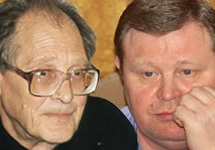
Listening to the case of the claim of the State Duma deputy Sergei Kovalev against the Prosecutor General Ustinov, which begins today in the capital's Tver court, is an outwardly inconspicuous event. The State Television State Television State Television States are silent about him. They are not trumpeted in newspapers. Political disputes do without this news.
Meanwhile, by common thought, this process is from the most important in our modern jurisprudence, and in the latest history of Russia.
The essence of the matter is simple. About two years ago, the Prosecutor General’s Office refused to judge people involved in the famous exercises in Ryazan, about whom so far our society is known little. The human rights activist Kovalev, who heads the public commission for the investigation of the 1999 terrorist attacks , requested a copy of the "refusal" resolution from the prosecutors. The answer was negative. After that, Sergei Adamovich went to court, insisting that Ustinov and his assistants poorly know the law. They do not have the right to ignore the deputy request and not provide it with the investigation materials.
In its own way, it is even curious how one of the most powerful law enforcement agencies in Russia will be twisted, because this is a legally absolutely clean matter: the prosecutor general does not have the slightest chance of making excuses in court. Reasoning in the same theoretical spirit, we note that in any normal country, the Prosecutor General would pay a position for such neglect of the law. Yes, in a normal country, it’s not like a trial, even the case would not have reached a deputy request. Whatever conclusions the investigation bend, the newspaper would be reported from first -hand, given the social significance of this mysterious crime. Regardless of what was actually there: an attempt to attack the militants, the provocation of the FSB of the Russian Federation or an idiotic test for vigilance, as is commonly believed from the words of Patrushev. Needless to say, in a normal country, the head of the special services, who has committed such jokes with civilians, would not have escaped only by resignation.
But all this, I repeat, are the thoughts from the outside and the reasoning is purely theoretical. In conditions close to ours, everything is inaccurate: the Ryazan story itself is in an official interpretation, and rumors around it, and the conclusions of the investigation, and the court verdict in the lawsuit of Kovalev to Ustinov. Even if the human rights activist wins the case, get acquainted with the classified papers and informs the society about them, this will not mean at all that we finally learned the truth about those amazing teachings. And until we recognized this truth, we do not know a damn thing about our current government and about which we loved it so much. Both the most gloomy suspicions, and the most carnival descriptions of the Moscow Syndrome (“We, Vladimir Vladimirovich, will choose you, but you no longer explode us”), and the wildest versions of everything that happened to the country in the unforgettable 1999 will remain unrevustted. Worse: the atmosphere of terrible secrecy around those events was and will be the most powerful indirect evidence against Lubyanka and the Kremlin.
Amazingly, however, something else. Throughout the country, which survived the monstrous tragedies of the election autumn, a clear answer to the question of who exploded us in Moscow, Buinaksk, Volgodonsk and tried to blow up in Ryazan, does not bother almost anyone. In all, almost without exception, the deputy corps is no longer even interested in what is contained in the materials of the Ustinovsky investigation. Among all citizens of a rather large state, only Sergey Adamovich Kovalev seeks to come closer to the unraveling of this secret. One gets the impression that the whole country is suffering from the Moscow Syndrome.
In one of his recent articles, political scientist Dmitry Furman expressed a wonderful thought: even if our power is not involved in the massacres of the 99th year, rumors about its involvement will remain forever, because the Russian historically collective power has earned a reputation as a killer of its own citizens. Furman believes that this sentence is strict, but fair. Completely agreeing with a political scientist, we note with sadness: his thought is true, but too optimistic. There is a fear that our modern power does not sin at all against its historical reputation.