
Translated material
Memory. Sergey Platonov

On June 28, 1860, historian Sergei Platonov was born.
Personal business
Sergey Fedorovich Platonov (1860 - 1933) was born in Chernigov. His father was in charge of the provincial printing house. In 1869, the family moved to the capital, where the father received the position of manager of the printing house of the Ministry of the Interior. Sergei Platonov graduated in St. Petersburg by the private gymnasium F. Bychkov and in 1878 entered the historical and philological faculty of the university.
At the end of the university course, Platonov was left at the department "for preparation for a professorship." For eight years, he prepared the dissertation “Old Russian tales and a story about the Time of Troubles of the XVII century as a historical source”, examining for this more than sixty works of ancient Russian literature in 150 manuscripts. Many of the sources attracted by him were first introduced into scientific circulation. In 1888, he successfully defended the master's thesis. The work was published and received the Uvarovsky Prize of the Academy of Sciences.
On February 6, 1889, Sergey Platonov became a Privat-Doche, and in 1890 a professor at the Department of Russian History of St. Petersburg University. I read a general course of Russian history, courses in individual eras and issues, led seminars. A few years later, he began work on his doctoral dissertation “Essays on the history of Troubles in the Moscow State of the XVI -XVII centuries. (experience in studying the social system and estate relations in the Time of Troubles). ” On October 30, 1899 he defended his thesis and in the same year released it with a separate book.
Since 1890, he was deputy editor of the journal of the Ministry of Education. From 1900 to 1905, Sergey Platonov held the post of dean of the Historical and Philology Faculty of St. Petersburg University, and in 1903 he headed the Women's Pedagogical Institute in St. Petersburg. In January 1913 he retired, moving to the headquarters of a super -standard professor. After the 1917 revolution, Sergey Platonov served in the interdepartmental commission for the protection and arrangement of archives of abolished institutions, was the deputy chairman of the Main Directorate of Archival Affairs, the head of the Petrograd branch of Golovarhiv. On April 3, 1920, he was elected a full member of the Academy of Sciences in 1925 - 1929 he was the director of the Pushkin House, in 1925 - 1928 he headed the library of the Academy of Sciences. In the post -revolutionary years, he held the positions of the chairman of the Union of Russian Archival figures, the head of the scientific commission on the history of labor in Russia, the chairman of the Committee on the Study of Old Russian Painting, the editor of the magazine "Bulletin of Knowledge", the chief editor of the Russian Historical Journal.
On January 12, 1930, Sergei Platonov was arrested on charges of "active anti -Soviet activities and participation in the counter -revolutionary monarchical organization." He spent more than a year in prison, then sentenced to reference to five years. Together with two daughters, he was sent to Samara. Sergey Platonov died in Samara on January 10, 1933.
What is famous
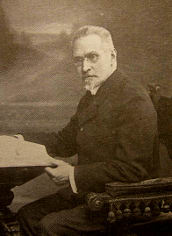 Sergey Platonov. Photo by K. Bulls
One of the most prominent researchers of the history of the Russian state of the Troubles. It was at the beginning of the XVII century, according to Sergei Platonov, that the origins of the new state, which under Peter I became called the Russian Empire, should be sought. Sergei Platonov investigated the death of the old state during the Time of Troubles and the fact “in what forms a new order arose, in the conditions of which a modern state was created.” The most important historical process of this era, Platonov called the change in the ruling class - the old nobility to the nobility. In particular, he pointed out that the oprichnina under Ivan the Terrible was a well -thought -out system of actions to defeat the specific aristocracy. Although the peak of the historian is considered the book “Essays on the History of Troubles in the Moscow State of the XVI -XVII centuries”, he was brought to the greatest glory to him by the textbooks “Lectures on Russian History” and “Textbook of Russian History for Secondary School”, which were very popular among students and schoolchildren.
What you need to know about
The accusation of Sergei Platonov in anti -Soviet activity was part of a large campaign, called "Academic Affairs". The calls to remove the “counter -revolutionary elements” from the Academy of Sciences began in January 1929, when the candidates of three communists did not go to the Academy elections. In August of the same year, the Government Commission conducted the “cleaning” of the Academy of Sciences, during which 128 full -time employees (out of 960) and 520 super -standard (out of 830) were dismissed. Basically, they worked in the library of the Academy of Sciences and the Pushkin House - two institutions, which was then headed by Sergey Platonov. At the end of 1929 and during 1930, the Leningrad OGPU arrested 115 scientists, mainly historians. According to the investigation, they created the monarchical counter -revolutionary organization “The National Union of the struggle for the revival of free Russia” with the aim of overthrowing the Soviet power and establishing a constitutional monarchy, led by Grand Duke Andrei Vladimirovich. Among the arrested were N.P. Likhachev, M.K. Lyubavsky, E. V. Tarle, S. V. Bakhrushin, P. G. Vasenko, Yu. V. Gauthier, V. G. Druzhinin, D. N. Egorov, V. I. Picete, B. A. Romanov, A. I. Yakovlev.
Sergey Platonov was also accused of concealing the documents stored in the library of the Academy of Sciences, the Pushkin House and the Archaeographic Commission of documents, including genuine copies of the abdication of Nicholas II, archives of the police department, gendarmes and counterintelligence, correspondence of Nicholas II with St. Petersburg General Trepov about the events of January 9, 1905 years, the archive of the Moscow governor and chief gendarmes V.F. Dzhunkovsky, the materials of the Provisional Government Ambassador in London V. D. Nabokov, the archive of the Central Committee of the Cadet Party, the archive of the Socialist Revolutionary Center of the Social Revolutionaries, the archive of the United Social Democratic Organization of St. Petersburg, lists of members of the Union of the Russian People, materials of the Constituent Assembly and the Commission on its Federal Bission, part of the archives of P. B. Struve and A.F. Kerensky. Platonov rejected the accusations, although he admitted that, according to his convictions, he was a monarchist. In 1931, Platonov, as well as E.V. Tarle, N. P. Likhachev and M.K. Lubavsky, were excluded from the number of actual members of the USSR Academy of Sciences.
On July 20, 1967, Platonov was completely rehabilitated by the determination of the military collegium of the Supreme Court of the USSR. On April 5, 1968, by a resolution of the Presidium of the Academy of Sciences of the USSR, he was restored at the Academy of Sciences.
Direct speech
“Troubles in the minds very soon turned into confusion in practice. From the very first day of the reign of Shuisky, this turmoil began and dared the king, as Boris and False Dmitry used to dare. But now, during Shuisky, Troubles have a different character than she had before. Before, she was, so to speak, Palace, Boyar Troubles. People who stood in power argued for the exclusive possession of it even under Fedor, feeling how it would be important to possess this possession at the time of the cessation of the dynasty. At that moment, Boris remained the winner and took possession of the throne. But then he was destroyed by the court of the boyar intrigue, which, however, acted by means of more than one court life, but taken out, excited the people. In this intrigue, the result of which the impostor appeared, in this way, the masses participated, but they were sent and led, as an unreasonable force, from the same palace boyar environment. The conspiracy that destroyed the impostor equally had the character of an oligarchic plan, and not a folk movement. But then the matter went differently. When the oligarchy was realized, the oligarchs with Shuisky at the head suddenly found themselves face to face with the people's mass. They have raised this mass more than once for their purposes; Now, as if accustoming to the movement, this mass has sighed, and no longer as a simple gun, but as a spontaneous force, pursuing some of its goals. The oligarchs felt that the threads of movements that they used to hold in their hands slipped out of their hands, and the soil under their feet hesitated. At that moment, when they thought to rest on the laurels in the role of the authorities of the Russian land, this Russian land began to rise against them. Thus, the reign of Shuisky can be considered a turning point in the history of our Troubles: from that moment on the unrest in the upper class, she finally takes the character of the tune of the people, which defeats both Shuisky and the oligarchy. ”
From the "Full Course of Russian History" by Sergey Platonov
“Professor S.F. Platonov literally resurrected the past before the listeners. He did not need notes or benefits, but reproduced ancient letters, documents by heart. The careers said that he read about every era in the language of that time, weaving quotes and links to the annals, diplomatic acts, expressing his heroes of the story. ”
From the memoirs of the listener of the highest female courses
6 facts about Sergey Platonov
- Entering the historical and philological faculty, Sergey Platonov believed that he would become a professional writer, but the lectures of Professor Konstantin Bestuzhev-Ryumin so carried him so that he decided to become a historian.
- Among friends, Sergei Platonov received the nickname Komar.
- In 1895 - 1902, Sergey Platonov taught Russian history of the Grand Dukes Mikhail Alexandrovich, Dmitry Pavlovich, Andrei Vladimirovich and Grand Duchess Olga Alexandrovna.
- Investigators of the OGPU claimed that Sergey Platonov, according to the plan of the conspirators, was to become the Prime Minister, and Evgeny Tarle-the Minister of Foreign Affairs.
- The wife of Sergey Platonov was a translator and literary critic Nadezhda Shamonin .
- In the testimony of the investigation, Sergei Platonov wrote: “My worldview, which has developed by the end of the 19th century, had a Christian moral basis, positivist philosophy and scientific evolutionary theory ... In essence, I remain so in the present moment. Atheism is alien to me as much as the church dogma. ”
Materials about Sergey Platonov
Article about Sergey Platonov on Russian Wikipedia
Article about Sergey Platonov in the Encyclopedia "Circumspices
Works of Sergey Platonov in the Library of Moshkov
Sergey Platonov on the website of the Russian Academy of Sciences