
Translated material
Belochkin's tears
Domestic confectionery factories enlarge, but gradually lose the market to foreigners
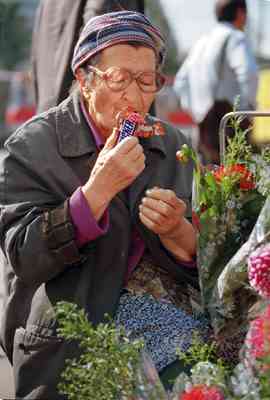
(Photo: Max Novikov )
A few years ago, the Russian confectionery market was divided into two parts: domestic and imported. And although in the early 90s the share of imports was quite high (tile chocolate, for example, imported up to 75%), consumers easily distinguished ours from their “their own”, and manufacturers, promoting their goods, did not miss the opportunity to play their patriotic feelings. Now, according to Stollwerck, the import of tile chocolate is not more than 5%. Some firms left the country after the crisis. Others even before the crisis have acquired their own industries here, and now their products - designed specifically for our market with Russian names - is perceived as Russian. Nestle, for example, continuing to produce chocolate under the same name, developed a brand of tile chocolate and sweets "Russia", and Stollwerck, without parting with Alpen Gold's chocolate, promotes the Kokrov chocolate and contest brand.
It is worth immediately explaining: when it comes to competition between "purely" Russian and naturalized Western companies, then competition is implied exclusively in the market of tile chocolate and chocolate sweets in boxes. Neither Karamel, nor Halva, nor Iris, nor even the cheek chocolate sweets of Western investors are especially interested in. Nestle, however, began to produce and advertise the caramel of "Savinov". However, there is no need to talk about the mass production of caramel by Western firms.
“Karamel, of course, helped to survive during the crisis to many Russian factories, but it is not so interesting to us, this is too cheap product,” explained Elena Belyaeva, head of the marketing department of CJSC Shtolverk Rus. Another thing is chocolate, the core of the confectionery industry, its elite part. Even with a small share of tile chocolate (for example, at the Babaevsky concern, it is approximately 20%, in Red October - 15) and the reduction of chocolate after the demand crisis remains the most profitable goods.
According to the Babaevsky concern, in Moscow there are 7% of the total confectionery market (confectionery market in this case includes chocolate, sweets in boxes and ambitious ones, caramel, and flour products, pastille with marmalade are not taken into account here) in kind, and all 12, all 12, to the share of chocolate sweets in the boxes in the boxes Accordingly, it accounts for 9 and 22%. For comparison: in natural terms of caramel, 37% of the metropolitan market owns, and in monetary - only 17%.
This is the main thing for the consumer in chocolate. The manufacturer appreciates it for the convenience of transportation (for example, for the transportation of inexpensive marshmallows or marmalade, lightweight, but large in volume, almost the cost of the product is spent). For the same reason, it is more profitable to trade packaged sweets than cheerful ones.
In a word, you will lose the struggle for a chocolate piece of the market - consider that you lost everything. And the struggle is becoming more acute. Take tile chocolate, which, according to the GFK marketing company, is more than a third of the total chocolate market (chocolate, bars, sweets in boxes and amused).
Today, Nestle and Stollwerck, according to GFK, control, respectively, 35 and 18.1% of the tile chocolate market in large cities of Russia (for comparison: Moscow Factories Red October, named after Babaeva control 5 and 6.7%, respectively). That is, in total, they account for more than 50% of the tile chocolate market. But Cadbury also has its production. And the growth trend of Western companies is evident. For example, Stollwerck is rapidly increasing its volumes. Starting to work in Russia in 1997, the factory produced 9 thousand tons of chocolate, and in 1999 - already 20 thousand tons of chocolate and sweets in boxes. And, according to the marketer Elena Belyaeva, this year the production volumes will still grow (factory capacities allow you to make 35 thousand tons of chocolate products per year). “Our chocolate enters the mass group, it costs inexpensively, and therefore is in demand,” she says.
The main problem is that the tile chocolate of the "purely" Russian manufacturers cost about 15-20% more expensive than the local Nestle and Stollwerck products and is not so briskly. This only fuels disputes about whose chocolate is better and more natural. Western investors, however, believe that there is nothing to argue about - they do not argue about tastes. But almost all Russian manufacturers are convinced that our chocolate is better and foreigners take exclusively at a price. Western manufacturers add various kinds of substitutes, preservatives, because their chocolate is cheaper, they explain. At the same time, they will not fail to add that many domestic colleagues also began to “indulge” with substitutes in order to reduce costs and reduce the cost of products. 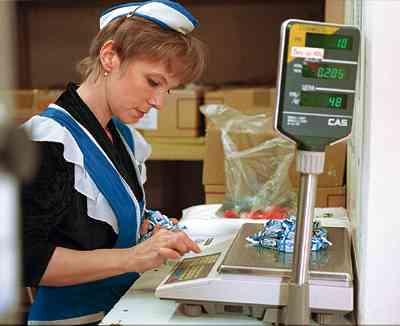
(Photo: Pavel Gorshkov )
Who, where and what adds, can only find out a special examination. We will only say that the main indicator of the naturalness of chocolate is the level of the content of cocoa products in it (cocoa-mass and cocoa grated). In milk chocolate, the share of cocoa products should be at least 30%, in the dark (Gorky) - 50%. According to Russian standards, the product can be called chocolate if it does not have any cocoa products substitutes.
International norms allow the content of substitutes for cocoa products up to 5%. “But in Russia we work according to Russian standards, so we use only natural cocoa products,” Elena Belyaeva emphasizes. “By the way, not all manufacturers use substitutes in the West, many well -known companies only work on natural raw materials.” As for artificial flavorings, they are used by everyone. What is honestly reported on the label: "The flavor is such and such, identical to natural." Moreover, data on the availability of substitutes for cocoa products do not affect either the "purely" Russian or the manufacturers owned by Western firms.
The taste of natural chocolate depends on the recipe - the variety of cocoa beans, combinations of different varieties (for example, the "golden label" is made of four varieties growing in different regions of the world) and combinations of various kinds of flavors, in which any products can act - from cinnamon and coffee to tea and alcohol. Hence the taste differences between Russian and imported chocolate (for example, Alpen Gold is made according to the Swiss-German recipe, the features of which are not disclosed).
Sweet worries
Russian manufacturers, being in equal terms with foreigners (the sources of raw materials are the same, because cocoa beans grow in Latin America, Africa and Southeast Asia, many factories were replaced by modern equipment), nevertheless they have some advantage: they know better the preferences of Russian consumers and offer exactly the products to which they are used to. Moreover, some products do not have Western analogues, such as the so -called soft sweets with fondant fillings, glazed with chocolate or icing.
Why, after all, foreigners managed to grab the lion's share of the market? Russian manufacturers often refer to huge advertising budgets of Western companies and complain about the absence of "such" funds. However, the main problem of Russian manufacturers most likely lies in various principles of marketing. “It is impossible to promote hundreds of items, there should be several strong brands,” emphasizes a representative of one of the Western firms working in Russia.
For example, the Moscow Factory "Red October" produces 400 items, and some sweets differ only in the name, and to taste very similar. For comparison: Stollwerck has only 60 items in Russia, and some of them are going to shoot. Both Stollwerck and other Western companies essentially have only two or three key stamps.
For the most part, Russian companies promote their assortment as hundreds of separate brands. It is very difficult for the consumer to understand such a variety. Coming to the store, he usually learns with a dozen items, and he chooses, and the rest of the products remains unclaimed. Olga Martynova, head of the Marketing Department of the Krasny October factory, admits that it is necessary to reduce the range "to at least 250 items." Representatives of the "front of the front", which has a "total" 250 items, also announced their intention to reduce the variety of goods produced.
The specialist of the marketing department of the front of the front Andrei Ivashchenko is convinced that it is with this that we need to start: “We will conduct an“ audit ”of our assortment, and chocolate, and sweets, and caramels, leave only those brands that are in sustainable demand,” he said. “And then we have names that have been produced since Soviet times, but customers have not even heard about them.” In his opinion, the main problem of all Moscow (and Russian) factories is the lack of exclusive brands. 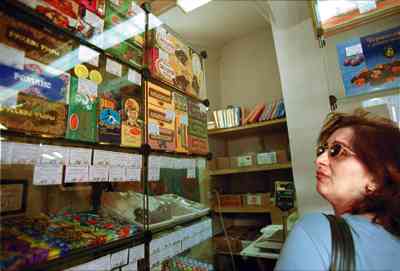
(Photo: Pavel Gorshkov )
Yes, our industry has "strong" brands in demand by customers. But basically these are old Soviet brands that many enterprises make. Factories often duplicate a friend and "undermine" competition. “Each manufacturer should have its own horse, and we do that everyone does the same thing,” says Andrei Ivashchenko. “Today, people are guided by the name of the goods, and this name should be the face of the manufacturer. But not all our factories have their own face.”
In other words, it would be more logical to every manufacturer, leaving the most popular old brands in his assortment (they will not be typed in general and two dozen), and develop several of their own exclusive ones. It is impossible to advance the goods endlessly under the motto such as "Taste familiar from childhood." “The main danger is to lose a young part of consumers, it does not remember the deficit and does not experience nostalgic feelings,” Olga Martynova notes. Something in this direction is being done.
To attract the younger generation, Red October, say, regularly organizes excursions for schoolchildren with a tasting to the factory and workshop museum. The same is engaged in Babaevsky. Manufacturers arrange contests among schoolchildren for the best name of the new candy, the most successful names are really appropriated. But you will not switch all the youth with such tricks.
As for new brands, they, of course, are developed, but, as a rule, not instead of some others, but a plus to the existing ones. And even if the brand succeeds, dozens of unclaimed names hang on it with a dead load. It is unnecessary to remind that the production of the market should be preceded by market research. For example, Stollwerck, taking the Pokrov sweets to our market, began with alcoholic fillings (with cognac, tinctures, vodka), because this part of the market in our country was almost free. This allowed the company to promote the brand and then bring under it the sweets familiar to Russia with fondant fillings. According to the western scheme, by the way, the Babaevsky concern went, bringing to the market a series of chocolate Babaevsky with the so -called large additives (that is, whole, and not crushed) in the form of nuts, raisins, tsukatov, waffles. According to the president of the concern Sergey Nosenko, only Babaevsky has a line for the production of such chocolate in Russia. Thanks to new developments, the factory over the year increased the production of tile chocolate by 22%.
But our manufacturers are sometimes "sculpted" new brands, guided by no means analysis of demand in the market. For example, at one of the Moscow factories they admitted that they often moves the need to "take people to do something." Say, a lot of people work in the factory, you can’t fire them. The result is one-day brands. Caring for workers, of course, is important. But considerable money is spent on the development and launch of new brands. It would be no better to spend these funds on market research, advertising of demanded products and, increasing demand, load workers with the release of these products?
Another problem of our confectionery is to sell in the inability. Many manufacturers build chains of branded stores (Red October, for example, in Moscow only has 12 stores, Babaevsky - 9), believing that this is additional advertising. However, according to Western investors, the creation of stores is too expensive. The costs of maintaining stores are one of the reasons that Russian products are not able to compete with imported.
“A trading institution attracts much more buyers if it offers goods of different manufacturers. The buyer then has the opportunity to choose,” Elena Belyaeva is convinced. “This is the only way manufacturers can really compete with each other.” But of all Moscow candy-chocolate factories, only the "mouth of the front" intends to follow the western path. "We will expand the network of our distributors and provide them with advertising support," the factory says.
Giraffe is big ...
Any domestic confectionery factory, including Moscow, is a local manufacturer, providing sweet mainly with its own region. For example, the Moscow Factory "Red October" leaves in the capital about 70% of its products, "Rot Front" - more than 50%. And foreigners prefer to create national brands that diverge throughout the country.
Large Russian factories are also trying to swing throughout Russia. Red October created a whole group, which, in addition to the Moscow factory, includes nine more regional ones, and, apparently, the group is not going to dwell on what has been achieved and negotiates on the purchase of another factory. The Babaevsky concern consists of five enterprises (including the Moscow factory). In the assortment of both monster, the whole gamut of confectionery - chocolate products, caramel, sweets, cookies and waffles, oriental sweets, cakes and gingerbread.
Expanding, Russian companies in terms of production and assortment become the largest players in the confectionery market. But this does not always contribute to the growth of their popularity among consumers. For example, the Red October brand is still marked mainly by the products of the Moscow factory (so as not to discredit the brand, manufacturers prefer to mark it only by proven goods), and the regional continues to work as if by themselves and with their assortment. But if regional products also went under the Red October brand (and even had a quality guarantee), it would have much more chances for success not only in its own, but also in neighboring regions.
By acquiring new production, Red October acts as an investor. And the investor, as a rule, tries to promote his brand, increasing its share in the market, in fact, new capacities are bought for this. Probably, it would be more logical by investing in re -equipment (to improve the quality of products, because it is the brand that should serve as a guarantee of quality, it does not matter which factory the goods were produced - in Moscow or regional), give the products their own name (and what are produced at the head of the Moscow enterprise, and the most successful local). Why buy up enterprises if they continue to work anonymously?
Moreover, in the next few years, competition in the confectionery market will worsen. True, you should not expect a completely new large investor to come to our country. But it is impossible to exclude the appearance of local small manufacturers. A year ago, for example, the Korkunov company, specializing in luxury chocolate products, appeared quite successfully by the Moscow company "Russian Chocolate" (the company was also engaged in the sale of chocolate products), which produces porous chocolate, which is cheaper than traditional manufacturers. Of course, it is easier for large enterprises to survive than small ones. But their success will also depend on the approach to marketing and sales issues. 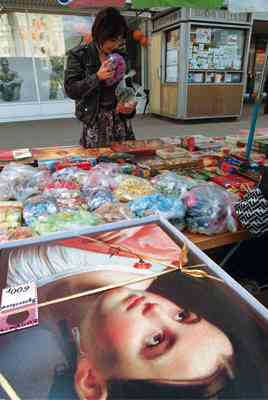
(Photo: Pavel Gorshkov )