
Translated material
Maxim Rousseau: Harbage Osopa
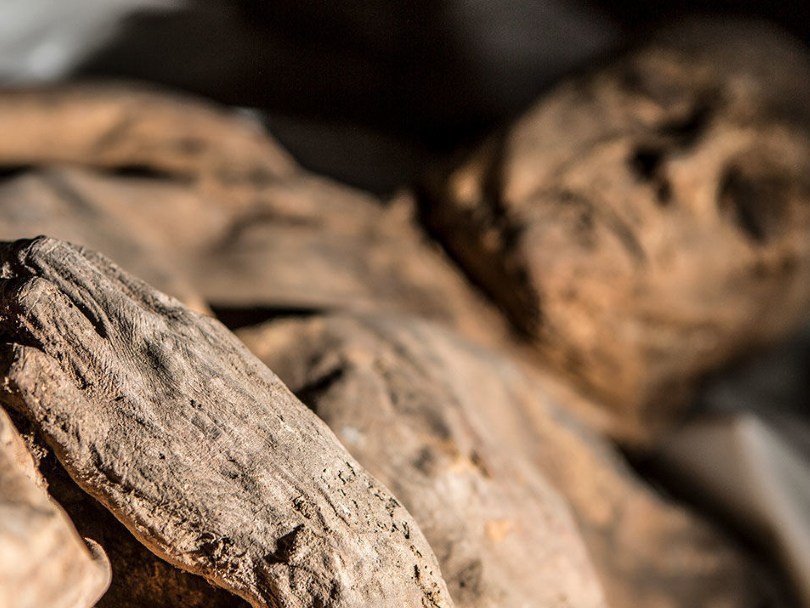
Maxim Russo 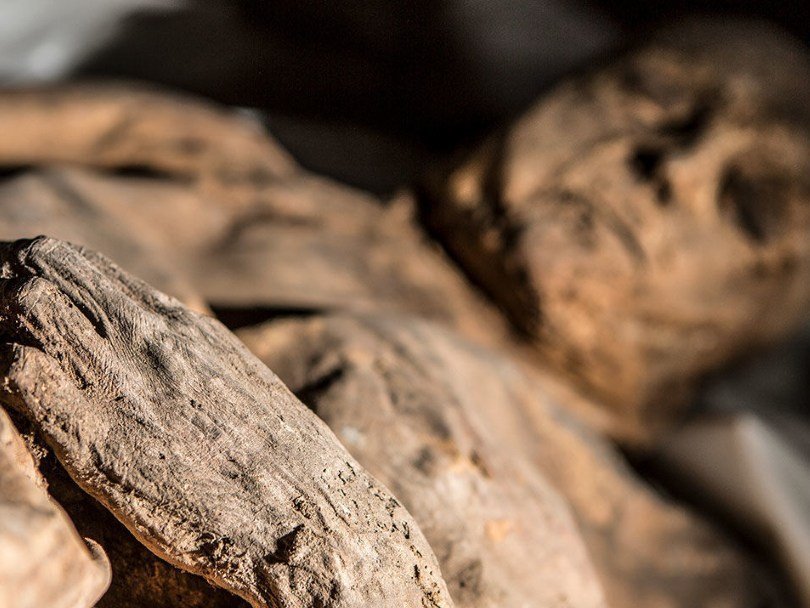 The mummy from the crypt, in which a sample of the smallpox Kiril Cachovski, Lithuanian Mummy Project was found
 The mummy from the crypt, in which a sample of the smallpox Kiril Cachovski, Lithuanian Mummy Project was found
Natural smallpox was considered the culprit of many epidemics, starting from the first centuries of our era. Her traces were seen in the marks on the bodies of the Egyptian mummies, about thousands of people who died from smallpox, the chronicles of Japan, India, the Roman Empire, Byzantium, and the Arab countries reported. However, the authors of the new study believe that the virus of natural smallpox arose no earlier than the 16th century.
Scientists from Lithuania and Finland studied the mummified body of the child who died from the smallpower, which was buried between 1643 and 1665 in the crypt of the Church of the Holy Spirit in Vilnius. Low humidity and constant temperature in the vast dungeons of this temple led to the fact that the bodies of many people buried there in the XVI -XVII centuries were mummified. The child did not have visible traces of smallpox, but when scientists sent samples to the Hendrik Poinar laboratory specializing in the extraction of an ancient DNA at the University of Canadian University, an employee of this laboratory Ana Duggan discovered a large amount of the natural insponus virus. This allowed scientists to get a high -quality copy of the 17th -century viral DNA, setting an antiquity record for viral DNA (the most ancient bacterial DNA samples belong to a plague age of 1600 years).
The researchers were very surprised when it was found that the 17th century virus had many common features with strains of the natural smallpox virus, which existed already in the 20th century, including a number of mutations, which were considered closely related to each other. Then the scientists built a pedigree tree, covering 50 different strains of natural smallpox, and traced their evolution to the common ancestor. They also compared the strain of the XVII century with the genome of cowpox. As a result, it turned out that, according to the “molecular clock” , the general ancestor of the strains of natural smallpox arose between 1530 and 1654, that is, no more than a century before the death of the child in Vilnius.
The date obtained on the basis of the speed of nucleotide substitutions in the virus genome is amazing. Indeed, from historical sources it has long been known about the epidemics of the Ospa in China (IV century), Korea (VI century), Japan, Syria and Persia (VII century), Italy, Spain and France (VIII century). The Latin word Variola in the meaning of “Osopa” is first found, apparently, in the “Chronicle of Maria Avansshsky” . This author, who lived in 532–596, and occupied the episcopal department in the city of Avansch since 574, wrote: “570. The fourth year of the consulate of Justin the Younger August. This year, the Great Mor, from which there was diarrhea and blisters (Variola), greatly struck Italy and Gaul, and bulls and cows in these countries almost all died out. <...> 571. The fifth year of the consulate of Justin the Younger August. This year, a terrible disease, as well as bloating, which are called Ospins (Pustula), in these areas killed an innumerable number of people ”(Translation by V.V. Andersen).
Hendrick Poinar proposes to explain all the mentions of smallpox before the 16th century by the fact that then another disease was called this name. This, in his opinion, could be measles or chickenpox, or some other virus, a related virus of natural smallpox and has since disappeared. When a new virus arose, the name was transferred to it due to similar symptoms of the disease.
The authors of the study believe that in the 16th century, the virus of natural smallpox as a result of a mutation passed from some animal to a person. Or a mutation could arise in the strain of human smallpox that was available at that time and make it much more fatal. If animals became the source of the virus, there is a risk that his ancestor is still preserved in their populations, which means he is able to again make a transition to infection of people. Scientists told about the results of their work in an article published by Current Biology.
Ann Carmichael from the University of Indiana, commenting on the study of Poinar and his colleagues, says that the results they newly new should be reproduced. But it does not exclude at all that the conclusions of the researchers were correct. Karmikel itself studies the records of the death of patients in medieval Europe and says that so far it has not been able to find reliable evidence of epidemics of natural smallpox until the 17th century. She expects that further progress in the methodology for the release of ancient viral DNA will help scientists establish a real picture of the spread of various viral strains in the early era.
Recall that the last case of natural smallpox was observed in 1977 in Africa. Now two samples of the Ospes virus are stored in only two laboratories: the Center for Virology and Biotechnology "Vector" in Koltsovo, Novosibirsk Region and in one of the laboratories of centers for the control and prevention of diseases (Centers for Disease Control and Prevention) in the United States. In March 2004, scabs of a patient with natural smallpox inside an envelope, invested in a book about medicine of the Civil War in the United States. In 2014, unaccounted for virus samples were found in an old laboratory warehouse in the United States. In both cases, the finds were destroyed, according to a special protocol developed for such situations.
See also: European diseases left traces in the genome of the North America Indians Alexander Bruther History of mankind and the history of tuberculosis, samples of natural smallpox were found in the old warehouse Maxim Roustinianov Chum