
Translated material
Mikhail Kutuzov
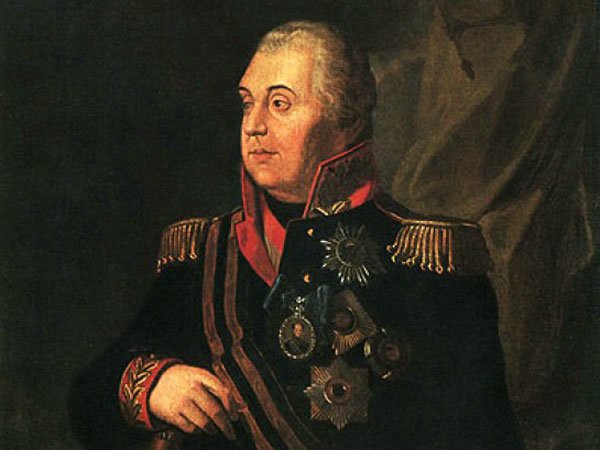
On September 16, 1745, commander Mikhail Kutuzov was born
Personal business
Mikhail Illarionovich Golenishchev-Kutuzov (1745-1813) was born in St. Petersburg in the family of General General-Morchik Illarion Matveevich Golenishchev-Kutuzov. In 1759, he graduated with honors from the artillery and engineering noble school and became a teacher of mathematics in it. Two years later, he was promoted to warrant officers and appointed commander of the company of the Astrakhan Infantry Regiment, which was then commanded by Suvorov. Since 1762, Kutuzov is an adjutant of the Revel General General, in the same year he was assigned the rank of captain.
In 1764, Mikhail Kutuzov received military baptism in actions against the Polish Confederates. In 1767, he was involved in working in the "Commission on the Compilation of a New Code." Three years later, he was transferred to the first army located in the south, and took part in the war in 1768 with Turkey.
In the spring of 1770, Kutuzov in Moldova, in the Rumyantsev army, served as Ober-Quartermaster Avangard. He participated in the battles of the mound of Ryabai Grave, under Large and Kagul. In the summer of the same year, he led fortifications, participated in the siege and capture of Bender. The following year he fought under the Popestas and was promoted to lieutenant colonel. 1772-1774 Kutuzov spent in the Crimean army Dolgoruky, commanding the battalion. In July 1774, in a battle with the Turks near the village of noise north of Alushta, Kutuzov was seriously wounded in the temple and right eyes. Doctors considered him a deadly wound, but he survived.
A year and a half, Kutuzov was treated in St. Petersburg, and at the beginning of 1776 he was given a year's leave to improve health abroad. Before leaving, he married Catherine Ilyinichna Bibikova. For a long time, Kutuzov lived in Leiden, also visited Prussia, Austria, England. Upon returning to Russia, he was sent to Crimea, where he served about six years under the leadership of A.V. Suvorov. Kutuzov was promoted to colonels and commanders of the Lugansk Pikiner Regiment, stationed in the Crimea, then the Mariupol light -end regiment and carried out tasks for organizing the protection of the coast of Crimea. At the same time, he had to do diplomatic negotiations with the Crimean Tatars.
In 1782, Kutuzov received the rank of foreman, and in 1784-Major General. Since 1785 he was the commander of the formed Bug Huts Corps. Commanding the corps and training rangers, he developed new tactical techniques for them. At the beginning of the Russo-Turkish war of 1787-1791, Kutuzov was entrusted with the protection of the southwestern borders of Russia along the Bug River. In the summer of 1788, he with his corps took part in the battles near Ochakov, where he was a secondly wounded on August 18. The Austrian general, Prince de Lin, wrote about this: “Yesterday they shot Kutuzov’s head again. I think that today or tomorrow will die. ” But Kutuzov managed to survive again. Moreover, after three and a half months, having barely managed to recover, he took part in the famous assault of Ishmael, commanding the sixth column of the left wing of the Russian army.
After the capture of Ishmael, Kutuzov was promoted to the generals and appointed the commandant of this fortress. Reflecting the attempts of the Turks to master Izmail, he defeated the Turkish army at the Babadag on June 4 (15), 1791. In the battle of 1791, Kutuzov, showing himself a skilled master of active and maneuverable tactics, dealt a crushing blow to the Turkish troops.
In 1792, he was sent by an extraordinary ambassador to Turkey. Returning to his homeland, he became the director of the land gentry cadet corps, he taught himself tactics, military history and other disciplines. In March 1795, he assumed the command of the Ground Forces of Finland. In 1797, already under Paul I, Kutuzov received the rank of general from infantry and was set to command the Finnish division. In early 1800, Paul made him a Lithuanian military governor, and in the summer he transferred to the south, instructing to form the Volyn army.
Soon after the murder of Paul, the new Emperor Alexander I appointed Kutuzov by the St. Petersburg military governor, but already on August 29, 1802, Kutuzov was deprived of all posts. After the resignation, he lived in his estate pots.
Opala ended in August 1805. When Russia entered the Anti -Napoleon coalition, Kutuzov became the commander of one of the two armies sent to Austria.
Kutuzov was supposed to lead the troops for union with the Union Austrian army, but it was defeated by Napoleon near Ulm. As a result, Kutuzov’s army was one on one with the enemy. He undertook a march-maneuver from Brownow to Olmyuts and skillfully withdrew Russian troops from the impact of superior enemy forces, having won during the retreat of victory under Amstesteten and Crees. On November 20 (December 2), 1805, an Austerlitsky battle took place. Alexander I, who actually removed Kutuzov from the command of the army, assigned him responsibility for failure.
In September 1806, Kutuzov became the military governor of Kyiv. On March 15, 1811 he was appointed Commander -in -Chief of the Danube Army. In the Battle of Rushchuk (15 thousand Kutuzov’s troops against 60 thousand Turkish vizier Ahmet-Bey), he inflicted a crushing defeat that laid the foundation for the defeat of the Turkish army. After that, Kutuzov deliberately took his army to the left bank of the Danube, without interfering with the crossing of the Turks pursuing him. Applying a skilled maneuver, he went on the offensive and surrounded the Turks. Ahmet-Bay secretly fled from his camp and began negotiations. On November 26, 1811, the remnants of the Turkish army surrendered to the Russians. After the conclusion of the world, Kutuzov was sent to St. Petersburg, where he was appointed commander of the troops for the defense of the capital.
After Napoleon Smolensk, Alexander I appointed Kutuzov as the Commander -in -Chief of the Russian Army. Under his leadership, Russian troops participated in the battle of Borodino, then left Moscow, made a Tarutin maneuver and forced Napoleon to retreat along the old Smolensk road. In January 1813, the Russian army crossed the border and by April entered Saxony, heading further to Paris.
On April 28, 1813, Mikhail Kutuzov died in a small town of Bunzlau (now Boleslavets in Poland). His body was sent to St. Petersburg and buried in the Kazan Cathedral.
What is famous
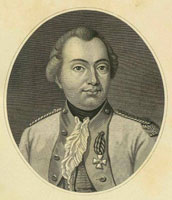 Mikhail Kutuzov
Mikhail Kutuzov received the greatest glory during the war of 1812. Continuing the tactics chosen by Barclay de Tolly, he retreated, avoiding the general battle. Napoleon sought such a battle, hoping with superior forces to defeat the Russian army. Having received some reinforcements, Kutuzov decided to give Napoleon the battle on the approaches to Moscow by Borodino. The battle of Borodino occurred on August 26 (September 7) and did not bring Napoleon the desired success. But the Russian army after the battle did not have funds for a counterattack or another major battle. Kutuzov, who understood this, arrived in the village of Fili on August 31. After the inspection of the positions proposed for the battle on the Sparrow Hills, Kutuzov called on September 1 in the hut of a peasant Frolov a military council to discuss the issue: “Do the enemy be expected in a disadvantageous position or give up the enemy Moscow?” The opinions of the participants were divided, and Kutuzov decided: “Napoleon is like a stormy stream that we still cannot stop. Moscow will be a sponge that sucks it ... Russia is not lost with the loss of Moscow. I deliver the army with the first duty ... We will prepare the death of the enemy ... I command to retreat with the most concession. ” After the abandonment of Moscow, Kutuzov secretly made a flank maneuver from the Ryazan road to Kaluga, led the army out of the enemy’s blow, and concentrated it in the area of the village of Tarutino.
Napoleon sent to Kutuzov the Marquis Loriston for negotiations about the world. Kutuzov replied that the war was just begun for him and there can be no talk of peace. Having failed in his attempts to conclude peace, Napoleon on October 19 began to withdraw from Moscow. He tried to transfer the army to the south, to the Kaluga region, where there were supplies of food and fodder. The most important task of the Russian troops was to prevent the penetration of the French in the southern provinces, where they could easily restore the army and overwinter.
The battle for Maloyaroslavets on October 24 turned out to be decisive. After eight desperate attacks and the burning of Maloyaroslavets, Napoleon was in front of an alternative: either decide on a general battle, or turn to the north-west, to Smolensk, along the Smolensk road ruined by him. Napoleon decided to retreat. This predetermined the result of further military operations. Russian troops went on a counterattack, which Kutuzov organized so that the army of Napoleon was continuously under the blows of regular troops and partisan detachments. This disorganized the enemy’s army, led to the defeat of the remnants of the French troops on the Berezin River and their flight to the border.
What you need to know about
Shortly before the invasion of Napoleon’s troops in Russia, Kutuzov won the most important diplomatic victory. Before the imminent war with France, Russia had to protect its southern borders and liberate the troops participating in the next war with Turkey. Understanding this, French diplomats in Istanbul tried in every possible way to tighten the conclusion of peace between Russia and Turkey. Kutuzov achieved the completion of negotiations a month before the start of the war with Napoleon. On May 28, 1812, a Bucharest peace treaty was concluded. Russia not only freed its Danube army for the war against Napoleon, but also received all Bessarabia from Turkey. “Such was the first blow in time,” wrote Yevgeny Tarle-who was inflicted by Napoleon Kutuzov-diplomat almost three and a half months before he was struck by the second blow of Kutuz-strateg. ”
Direct speech
“Major General and Cavalier Golenishchev-Kutuzov showed new experiments of art and courage, overcoming all the difficulties under the strong fire of the enemy, climbed into the shaft, took possession of the bastion, and when the excellent enemy forced him to stop, he, serving as an example of courage, kept his place, overcoming a strong enemy, and then continued to hit the enemies.”
A.V. Suvorov after the assault of Izmail
“One of the most powerful and happiest features of Kutuzov’s intelligence was that he had never and felt himself only a commander giving battles, or only a diplomat who was conducting negotiations, or only by a state -owned person - the ruler and organizer of the Great Patient. Helping Suvorov and Potemkin in Crimea in the 80s of the 18th century, he is fighting with the Tatar parties today, tomorrow he is negotiating with them, the day after tomorrow is administratively arranges a territory that is consistent under the power of Russia, and then, when it turns out to be necessary, again addresses the sword and again to diplomacy. When he was appointed by the Kyiv military governor or to Lithuania in July 1809 in October 1806, he, introducing an orderly administration, pursuing abuse, at the same time successfully and skillfully in Kyiv and in Vilna is considered to be national aspirations and dispenses Napoleon's plans to cause uprising or fermentation in the Polish and Lithuanian population, with the Lithuanian population. By success, letting all his intricacies of his mind and his diplomatic talents, because he does not believe in the Tilsitic or Erfurt friendly outpources of both emperors and knows what threat hangs over the Russian Western provinces and Lithuania on the part of the Napoleon Duchy of Warsaw and how clever the secret agents of Napoleon in Lithuania were sent from Paris and from Paris and from Paris and from Paris Warsaw. When he receives a very intricate assignment - to eliminate many years of mistakes and all sorts of free and involuntary failures of the weak and incapable of his predecessors and to end for more than five years the continued Turkish war, here every informed and impartial person does not know who is more surprised - a genius commander, the most skillful maneuver on the left -handed shore of the Danube. And then to defeating the Turkish army near Rushchuk and after Rushchuk, or an incomparable virtuoso of diplomatic art, which served Russia with such a service by the Bucharest world. This versatility of the mind and talents allowed Kutuzov to seek out such unexpected means, resort to such resources and achieve such results that did not occur to others. To warn the war, while it is just threatening, or to finish it as soon as possible, if there is at least some opportunity to achieve the desired results with peaceful negotiations-this is the trait that is very characteristic of Kutuzov. ”
Historian Evgeny Tarle
Before the tomb of the saint
I stand with a drooping head ...
Everything is sleeping around; Some lamps
In the darkness of the temple is golden
Pillars of granite community
And their banners hanging a row <...>
A delight lives in your coffin!
He publishes us the Russian voice;
He repeats to us about that year
When the people's faith is
He called to your holy gray hair:
"Go, save!" You got up - and saved ...
A. S. Pushkin
10 facts about Mikhail Kutuzov
- The Golenishchev-Kutuzov clan comes from the “husband is honest” by Gabriel, according to the tales of the ancient genealogers, who left “from Pruss” to Novgorod to the reign of Alexander Nevsky in the first half of the 13th century. His great-grandson, Alexander Khokshich (nicknamed Kutuz), became the ancestor of the Kutuzovs, and the grandson of Kutuz-Vasily Ananievich (nickname Golenische)-was the Novgorod planter in 1471 and the ancestor of Golenishchev-Kutuzov.
- According to the project of father, Mikhail Kutuzov, General General-Muchik Illarion Kutuzov, the Catherine Canal was built in St. Petersburg.
- The soldiers in the Tarutinsky camp folded the songs: “We are not afraid of the French, the bayonet is always a bayonet with us, if only Father Kutuzov allowed us soon!”
- Kutuzov had five daughters, and the only son died in infancy from smallpox.
- Kutuzov became the first gentleman of all four degrees of the Order of St. George. There were four such people in Russian military history, in addition to Kutuzov, this is Mikhail Barclay de Tolly, Ivan Dibich and Ivan Paskevich.
- Kutuzov’s wound in 1774 was described in Derzhavin’s poem, where there are lines: “Death through his head rushed, but his life remained.”
- They say that Barclay de Tolly asked Kutuzov: “After all, you continue to act according to the plan I developed by me; Why have they removed me? " Kutuzov answered this: "In order to make the capital to give the enemy, in Prussia there is Blucher, in the UK - Wellington, in Russia I can do this only."
- In the artillery and engineering noble school, Mikhail Kutuzov studied French, German and Latin. He later took possession of three more languages: English, Swedish and Turkish.
- The French writer Madame de Steel, who visited Russia, found that Kutuzov was talking better than Corsican Napoleon Bonaparte.
- During the Great Patriotic War, the code name "Kutuzov" received the Oryol offensive operation of the Soviet troops.
Materials about Mikhail Kutuzov
Article about Mikhail Kutuzov in Russian Wikipedia
Mikhail Kutuzov on the site "Patriotic War of 1812"
Mikhail Kutuzov in the project "Chronos"
E.V. Tarle "Mikhail Illarionovich Kutuzov - commander and diplomat"