
Translated material
Where are we going
In June 2017, an epoch-making event took place in the public life of Russia: for the first time at the highest official level, it was announced that from now on theology (differently-theology) is recognized in our country a full-fledged science, the same as physics, chemistry, mathematics. The main report on this issue was made by the Minister of Education and Science of the Russian Federation Olga Vasilieva in the I All -Russian Scientific (!) Conference “Theology in the Humanitarian Educational Space”, held on June 14–15, 2017 in MEFU (!). The minister said: “I think that today is a truly historical day. The Ministry of Justice was finally signed that theology is not with the degree of history, philosophy, philology, but as theology - the candidate and doctor of science - has the right to be. To date, all restrictions have been removed, and there are no obstacles to develop and expand this area of scientific (!) Knowledge. ” Designing plans for the future, the minister said: “We must go further along the path inherent in theological education. This is primarily fundamental and depth (!). We need to understand the place of theological science (!) Among other branches of scientific knowledge. Particular attention to the preparation of scientific (!) Personnel, therefore, is the issue of strengthening the departments of theology. ” Finally, referring to purely practical, “implementing” issues, the minister expressed confidence that “the time has come when both the state and scientific funds should support the scientific and theological (!) Projects that carry a deep worldview content (!)” The Minister was supported by the chairman of the Higher Attestation Commission V. M. Filippov, who clarified the situation: “The attitude in society to theological education is built today on the basis of myths and outdated stereotypes. But the Teachers themselves themselves do not always take into account modern realities and do not always seek to overcome obsolete stereotypes. ” The point of view of the authorities was voiced by Andrei Fursenko, who read the greeting at the specified conference from Anton Weino, the head of the administration of the President of the Russian Federation: “I consider the recognition of theology as a comprehensive scientific educational (!) Discipline an important and significant result of a long -term constructive interaction of authorities, religious organizations, pedagogical and expert circles, as well as a powerful incentive for the development of humanitarian knowledge (!), The promotion of advancement. In a society of traditional spiritual and moral values. "
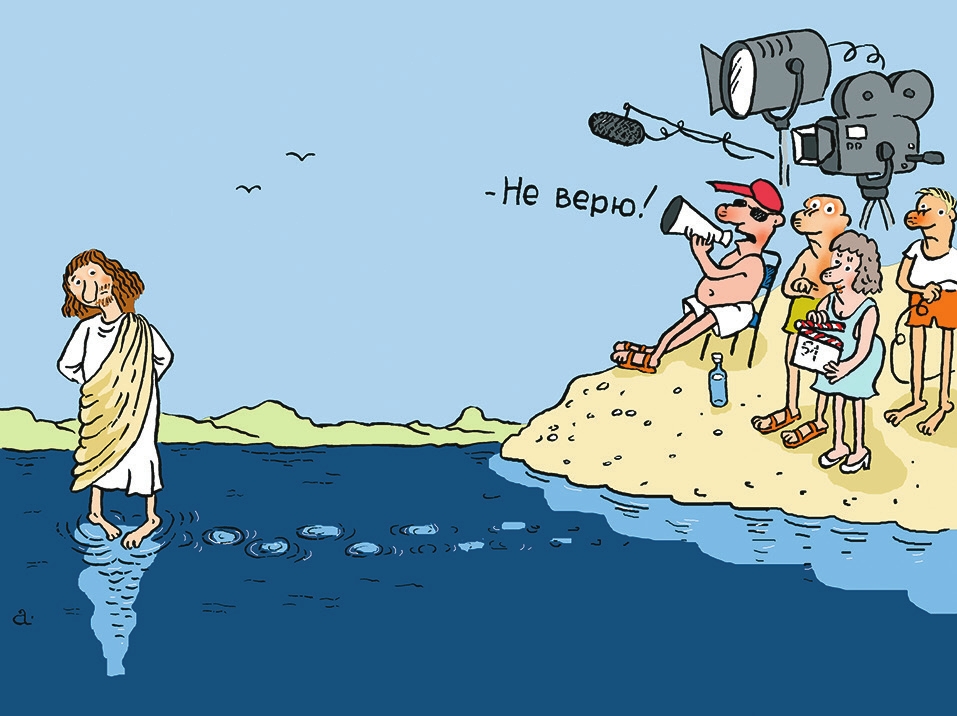
One gets the impression that the initiators of the next reform of science lost sight of the main thing: before changing the status of theology in the secular state, which is Russia, it is necessary to answer the question: is the theology of science or not. Only the scientific community can give a clear answer to this question. All sorts of “authorities”, “religious organizations”, etc. has nothing to do with it. However, they did not turn to this community - he was not even notified of the impending important innovation. It is more necessary to find out the opinion of scientists on this issue. Fortunately, this is easy - it is enough to turn to universally recognized authoritative dictionaries, reference books, and encyclopedias. And here we immediately find out that “theology (theology) is a scholastic church doctrine of God and dogmas of religion” [1], or that “theology (Greek. Theos is God, logos - teaching) - a systematic exposition of a doctrine that substantiates his truth and necessity for a person. Includes dogma, exegetics, apologetics, homiletics, etc. ” [2], or that “theology (theology) is a church doctrine of God and its attributes (qualities), about religious dogmas and traditions. All theological systems aim to justify religious ideology. Scientific propaganda contributes to the death of theology ”[3]. With the above definitions reflecting the position of domestic scientists, the definitions of foreign scientists almost completely coincide. Say, this: “Theology is a formal study of the nature of God and the foundations of religious faith” [4] or this: “Theology is the study of religion, religious ideas and beliefs, especially attitudes towards God and His attitude to the world” [5]. As can be seen from the given definitions of theology given by scientists, the word “science” is not used in them anywhere, and God is recognized as the main object of the study of theology - the object, the existence or non -existence of which is unprovable. Its citizens may be free to recognize or not recognize. Unlike objects studied by science (numbers, electrons, structures, etc.), the existence of which all citizens are forced to recognize, regardless of gender, political views, citizenship, etc. Thus, from the point of view of the scientific community, theology is not a science. Therefore, it is impossible to include it in the number of scientific disciplines, such as physics, chemistry, mathematics, etc.. And to allow the protection of dissertations on theology with the award of the degree of candidate and Doctor of Sciences is pure profanity of science. Which was already shown by the first defense of the candidate dissertation in theology, held on June 1, 2017 in the United Dissertation Council for Theology in Moscow. The applicant Archpriest Pavel Khondzinsky, who presented the dissertation “Resolution of the problems of Russian theology of the XVIII century. In the synthesis of Filaret, Metropolitan of Moscow ”, formally defended it, receiving 21 votes for and one against. However, it was not interesting that the received nine reviews on the abstract, of which five reviews (i.e. 55%) were negative. In these reviews, the dissertation was convicted that in the study he used "a method based on the experience of faith and the life of a theologian." Of course, this is not a scientific method, but it should have been so: science applies scientific methods, and “bad suits” - non -scientific. An attempt to “drag” theology into the sphere of science will have the most negative consequences for the Russian scientific community. Scientists-mathematicians, physicists, chemists, biologists, etc.-are hardly ever recognizing theologians to their colleagues. Although the latter will struggle to enter the scientific community, especially in those spheres where cash grants are distributed. For the sake of this, they are probably ready to make great concessions. For example, they can replace some of the most odious, medieval settings for the problems of their theology (for example, “how many angels can be placed on the end of the needles”) on more modern and “innovative” (for example, such: “In what condition should be placed in the coffin of the deceased - turned on or off”). However, these attempts will not make theology science. So the only real result of the actions of the Ministry of Education and Science of Russia will be a further deepening of the abyss between scientists and the state. With all the ensuing consequences for both sides and Russia as a whole.
Today, the world is moving into the future with seven -mini steps. And the Ministry of Education and Science, unfortunately, pushes us into the distant past.
Vitaly Levin,
doct. tech. sciences, professor, Honored Scientist of the Russian Federation
- Ozhegov S.I. Dictionary of the Russian language. M.: Russian language, 1984.
- Dictionary of foreign words. M.: Russian language, 1989.
- Big Soviet Encyclopedia. T. 1. M., 1958.
- Hornby as Oxford Advanced Learners Dictionary of Current English. Oxford: Oxford University Press, 1988.
- The Merriam Webster Dictionary. Springfield: Simon and Schuster, 1974.