
Translated material
In the inverted world
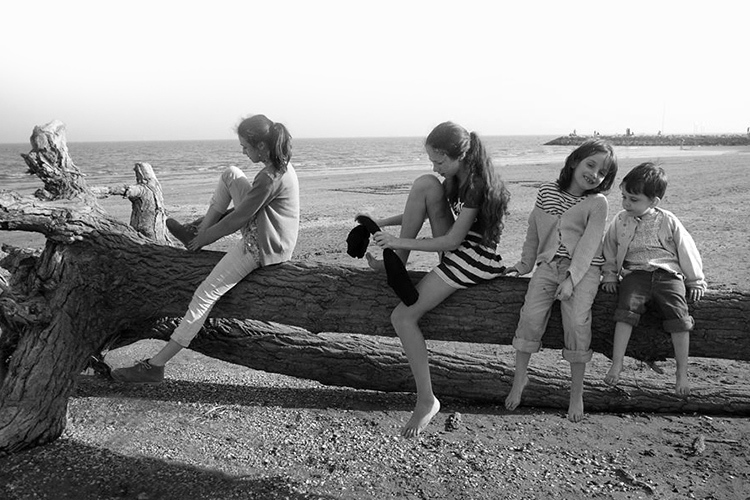
Soon it is already twenty years since I am a parent. My retribution has a very little experience - only a year. This is by no means a simple experience forced to reconsider a lot and provided a new vision of many phenomena of public life, which had previously seemed unrelated and random. Now a lot appears through the prism of orphanhood. When Kolta proposed commenting on the publication of the photo project of my eldest 19-year-old daughter about our new adoptive girls, the only form that seemed appropriate to me is a conversation with Lyudmila Petranovskaya, a psychologist, not only one of the leading specialists in orphanage and the author of many benefits and books regarding adoptive children, but also a very famous blogger, a publicist, which is supposed A wide range of socio-political topics. This is not quite an interview - rather, a mutual conversation, designed to report an additional measurement of the publication of the photo project of Roxanu Kenzheeva “9 months”.
Ekaterina Margolis: Your small, but extremely important text of “Generations injury” has, in my opinion, the capacity and explanatory power of the almost universal mathematical formula. Reading their notes of the year ago, as soon as wealthy children appeared in our family, I came across one where I mention you.
“She would be a minister. The fact that a psychologist and orphan specialist, abandoned and injured children, almost better understands what is happening with the country and its people is not surprising. Because, alas, the whole history of the country is just about that. About homelessness and orphans. As in the orphanage - mobile phones of the latest generation and lack of air, basic representations, love. When everything is possible - because there is nothing roots or the future. When you can get touched, you do not need to wash sweets and hands - tea, not Europe. The whole ball of disabilities and insoluble contradictions, a set of inferiority, erected into the ideology of greatness, the desire to be in the center of attention at the cost of Herostratic glory. And aggression is as the only affordable form of exit from the internal zone closed to the outside world. There is no place for thoughts in a tightly walled skull box. In a circle, as in the prison yard, there are repetitions, cliches, unacceptable history lessons, ready -made formulas - a circle in a circle. We are witnesses of the next round, the next circle. But there are no foster parents and is not expected, alas. Meanwhile, the traumatic and not mature teenage country, devoid of any guidelines in the world, continues to cripple everything around, including itself. ”
That's what I would like to talk about this. If we talk about the country as an injured adult, and in the past, disliked in time, when this mass deprivation began? Where did it happen?
Lyudmila Petranovskaya: Education historically was different in different classes. Children were raised and raised traditionally, but according to different rules. In some classes there were nurse, educators, tutors. In other, simpler, on the contrary, the children were fed themselves - and fed as assistants, not heirs.
A radical turn was the moment of depersonalization, when education became the same: then industrialization began - including childhood. As you remember, we had very stringent laws on parasitism, all women (and men, of course) were required to work. There was no choice. The child had to be given to a nursery from a very early age. In addition to individual (conditionally “professors”) families, all stages of education from a very young age have become similar - and, most importantly, institutional. And institutional education is guaranteed deprivation. It was then that this phenomenon became massive. The gradual mitigation of social life under Khrushchev also affected this. Until the 67th year, parents were required to go to work 2 months after the birth of the child. In the 67th, the law on annual parental leave was adopted. But this had its own tin. If the child has been in a manger since September, and until that time, for example, to be with random nannies, for example. In addition, the beginning of the second year of life is very dangerous in terms of anxiety. The child already consciously understands that he wants to be with his parents, but is not able to understand time. Therefore, an inevitable sensation of abandonment arises. What it leads to is well known. Since the late 80s, children began to be given to children's institutions from three years old. And this is the first more free generation.
Margolis: It seems to me that industrialization is historically like the cover of this phenomenon. After all, industrialization in the history of our country was side by side with gulagization. The theme of the camp, the habit of violence as a norm (including psychological) and in general thieves aesthetics and ethics, spilled in modern Russian society - from love for chanson to everyday vocabulary and basic consciousness - also goes there roots there. If even in ordinary schools and hospitals, and simply on any playground around the sandbox, we observe how the historically repressive penitentiary system entered the flesh and blood of society, what to say about closed “zones” - boarding schools, orphanages and houses of the child. I see that ordinary foster families in the person of their new, often the youngest, members face the phenomena frightening and inexplicable from the point of view of previous experience. It is rather scary to see how the child turns out to be a carrier of camp morality, when the experience of survival teaches to instantly assess the situation, determine the strong, plowman, understand where to bend, and where, on the contrary, go ahead to just survive. All these expensive skills, in addition to the fact that they themselves are terrible, in addition, according to my observations, freeze internal development, destroy self -esteem (and what can be self -esteem of an unloved and unnecessary person?), Transferring emphasis on the external attracting attention. And again, this is a very common phenomenon of modernity. For example, we regularly observe how a group of not teenagers, but in the appearance of already quite adults with the connivance of the authorities and the inaction of the police destroys flowers at the place of the murder of Boris Nemtsov and puts on social networks a photo report on the work done with their photographs. Of course, hooliganism, immorality existed at all times. But our time, it seems to me, stands out with the desire to also twist this abomination. And social networks, which, for one part of the population, are savory bridges that allow you to restore impaired unity, in these cases, on the contrary, become the exhibitionist showcase of the worst in a person, infecting society with a sense of permissiveness. What happened to education? It was. Despite all my deep aversion to Soviet totalitarianism, I can hardly imagine that the hooligan defeat of anyone's grave or memorial could be the subject of social pride even in the gray Brezhnev times of my childhood. Where does such widespread barbarism come from? Why did the people of completely different generations suddenly be ready to defiantly violate the most basic human norms under the slogans of the protection and salvation of some relative (for example, national) interests? What is this, a sense of vague time and connivance of power or the result of some deeper defect?
Petranovskaya: This once again says that in the same Soviet times all ethical ideas were determined by purely external framework. This is a formwork, not a supporting structure. So that the norms in society are internal, you need a lot of well -being. He has never been to Russia.
Plus, group things come into force. Personally, I'm not to blame. We are all together. Blurred responsibility is characteristic of an immature person. Moreover, everyone is a bit of rescuers. All nasty things are always under the slogan of salvation. Although just now we are observing the opposite side of humanism, nevertheless at the superficial level adopted in society. In fact, little has changed. But now it’s not the same era when it is allowed to openly be proud of cynical conquests. In our times, they occur under the slogans of humanism. Although many victims would be alive - if there was a more direct conflict. For example, all these demonstrative shelling for cameras. They would not exist if it were not necessary to feed the rescuer complex. Paradoxically, but in the inverted world, humanistic norms, which at least demagogically must adhere to, become actually the reason for the murder.
Margolis: It was simply clear by experimentally: institutional education and, as a result, collective consciousness is not able to grow adults. Probably, this is also the root of teenage under -formed social norms, non -deposits, and teenageity of the majority of the population. Here are two considerations that I recently came across. In the novel by Lyudmila Ulitskaya “Green Tent” there is a metaphor, or a biological parallel: in zoology, the phenomenon of neoice is known, the meaning of which is that a creature that has not reached the stage of an adult (Imago) begins to multiply at the larvae stage. This happens for the reason that in the surrounding world there is not enough factor so that the larva ends its cycle and turns into an adult creature. So the populations of "larvae, children of larvae" arise. This is in some way comparable to the process that occurs in today's world - infantilization of society. In the novel and in an interview, Ulitskaya says that adulthood is difficult to determine, because a person who is completely unripe in one area of life can be quite wealthy in another. But the main thing, perhaps, is that the “larval” world rejects a sense of responsibility, he lives a momentary need, in life he appreciates pleasure and turns from creators and builders of life exclusively into its consumers. When does childhood end and adult life begins? For many never. What vitamin or hormone is needed for this transition? One of the heroes of the novel Viktor Yulievich Shengeli, a teacher of Russian literature in high school, is trying to answer this question. The second consideration expressed to me by the psychologist Natalia Kolmanovskaya in a personal conversation - I don’t know, not being a specialist, as a common opinion. That the moment of transition to an adult state is the moment of "adoption of parents." And that the absence of some traditional socio-design design of this moment does not make it possible to realize the importance of accepting the child who grown up after the inevitable critical teenage period of his parents as they are. What do you think the criterion of adulthood? And who could be the adoptiveman at the level of a whole society? And how exactly society could “adopt” its parents - i.e. Your past, not idealized, but real?
Petranovskaya: It seems to me that we are trying to shove three dissertations into one interview. The question of who could be such an adoptive parent at the level of the people, I do not understand. That is, purely theoretically, such a wise leader? Ataturk? I'm afraid that if such a thing appeared, it is not a fact that he and I would be close to us. In general, adoptive parents are very different people. And I am not a supporter of the idea of motivation. These people may have different social status, various political views. Well, except perhaps the rarely foster parents are completely dysfunctional or, conversely, super -red -handed (conditionally - ruble). The only thing that, maybe the foster parents have common, is that in general, these are more resource people - not those who barely pull their lives and in a psychological sense live "from salaries to salaries." All other parameters are different. Many adoption stories begin with volunteering. From going beyond their family and their immediate interests.
Margolis: Returning to adoptive children, victims of institutional education (by the way, in some countries equated with victims of concentration camps). I am very annoying, for example, when about the eldest of my foster girls, with a very difficult past and often difficult behavior in the present, they ask me: well, she already thawed, has already leveled out, has already come to her senses? The more closely I look at the stories of all foster children from orphanages, the more obvious to me the inappropriateness and even the tactlessness of such issues and such an approach becomes more obvious. One way or another, all these children experienced at least a huge grief of loss of the most important at the very beginning of life. And then many other negative factors left this loss. Imagine that the child in early childhood had an accident, broke his arms and legs, spine and was forced to spend the rest of his life in a wheelchair. No one will pester him and say: "Well, he already jumped up and ran?" My feeling that a foster family should not and cannot set a goal to rewrite history: it is impossible to return to the past and correct something there. This is a lie. It is much more important, as it seems to me, to understand by ourselves and let the child feel that his past, and an accident, and even a wheelchair, although not permanent, but not a sentence for misfortune. That he can be a happy, full -fledged person, despite what happened to him in early childhood. Still, a huge number of foster children and families have passed through you. What are the main and irreparable losses, things that are difficult to adjust, would you call?
Petranovskaya: Of course, everything is individual. And while the child is a child, it is impossible to say exactly what is compensated and what is not. And to what extent. Children are different in terms of vulnerability. The reaction on the mountain and injury is individual. Someone more relatively small things destroy and destroy the root. And someone from the much more terrible will be able to shake off and go further. Of course, there are general phenomena. Often children with such a story, even growing up, do not feel their self -sufficiency. They have no original children's confidence in the legitimacy of their existence in this world. This is very difficult to adjust, since the feeling that you have the right to be in the world is one of the first, which is transmitted with parental love in trusting. And therefore it is not realized, but it affects everything that will be later. Children who have not received him all the time are trying to earn the right to live.
The second very typical feature is a reaction to difficulties, frustration, to which a person himself cannot cope with. This is what is formed from 1 to 3 years approximately. A healthy reaction to trouble. Here the child begins to take the first steps in independence-he falls, either does not cope, or the tower of cubes, or something else collapses. There are a lot of such events in the life of a small child daily. The parent comforts him, supports, offers help and thereby works as a reducing agent. The child is, as it were, every time it is new and ready to repeat the same experience again, even if he is unsuccessful. This is repeated a thousand times, and thereby in the psychology of the child a path for the future is pumped: reactions in a collision with difficulty. There are two such healthy reactions: either try to win where it is possible or cry and put up if it is not at all. Instead, in the children injured by institutional education, we most often observe a stupor in a collision even with a hint of frustration. Instead of crying - aggression, scandal, hysteria. Instead of the desire for victory and overcoming - swinging rights. The ability to cope with frustration is a very important property of a person, and this skill is given along with parental care and love.
Margolis: I often recall the gospel “Be like children” in a new way. It turned out that being children does not mean to be like children. This is a terrible feeling from many orphanages - that in front of you is only the body and face of the child, and the filling of an adult burned convict. Only recently, for example, our eldest of the foster girls learned to cry. This is a huge step forward (or backward on the path of straightening the distorted childhood path) - when instead of a subtle microsurgical aggression (the ability to determine the weaknesses of even an adult, thereby getting control and do as painfully as possible) suddenly it turns out that you can change the roles: become a child, just crying to pity you.
Petranovskaya: Loss of trust is a very strong factor. And for the adoptive children, the key. This is unnatural when the child does not trust adults. The model is broken. Experience taught these children not to perceive the adult as a source of protection and care. This is either instrumentalization-for example, to listen to something, to exhale toys, etc., or adults do not have a key value at all-like part of the landscape. For these children, there is no normal, good vertical world.
Margolis: It seems to me that a typical Russian property that Olga Sedakova noticed in one of her essays was not to be surprised at anything, to be amazed and joyful. So, for example, Russian tourists in other countries often try to show that, they say, we have seen all this, we all know, they say, nothing special. Such an armor of exposure is also associated with this initial loss of trust, openness and fear of being vulnerable.
Petranovskaya: Of course, this is also about trust. Any interest, naive innocence in the world of strong hierarchy is perceived as weakness and vulnerability.
Если ты проявляешь уязвимость — это не основание тебя защитить, а возможность тебе вломить. Отсюда паранойяльность. Если никому нельзя верить, то нельзя демонстрировать свою уязвимость или неосведомленность в чем-то.
Марголис: Отсюда, наверное, этот бесконечный синдром заговора? Даже в общественно-политической жизни при столкновении с трагедиями (упал самолет, затонула лодка, застрелили человека) тут же начинаются поиски, кому это выгодно. Моментально звучит слово «провокация». Как бы места нормальному человеческому горю и спонтанному сочувствию этому горю не остается.
Петрановская: Люди так защищаются. Если доверие утеряно, то человек не верит, что если что-то случится, ему кто-то поможет. В обществе исторически сломаны все системы поддержки: община, большая семья. Все переломано, перепахано революцией, войнами, репрессиями разного порядка. Почти каждый имеет опыт уязвимости, когда этим пользовались ему во вред. Отсюда дефицит эмпатии. Если мне не придут на помощь, то почему я должен?
Марголис: А как же благотворительность?
Петрановская: Это не правило. Но поэтому, например, более благополучные слои (условно — в прошлом более любимые и более защищенные взрослыми дети) откликаются на чужое горе легче. Посмотрите на сообщества волонтеров: больше ресурса — меньше страха. Недаром мы наблюдаем пересекающийся контингент, скажем, волонтеров и людей с отчетливой гражданской позицией.
Марголис: Мне кажется, то, что принято называть адаптацией, — тяжелый период прирастания ребенка к семье и семьи к ребенку — тоже как раз про опыт утраты и обретения доверия. Причем взаимного. Если снова воспользоваться библейскими аналогиями — то это история выхода из рабства. Она часто болезненнее в чем-то самого рабства. Там все было плохо, но понятно и гарантированно. Здесь — пустыня. Народ начинает роптать и хочет обратно. Начинается агрессия против того, кто из рабства пытается вывести. Тот же условный Моисей, который выводит свой народ из рабства, тоже в недоумении, разочаровании и обиде от неблагодарности и неожиданной и незаслуженной агрессии. Иногда мне кажется, что детдомовский опыт — это как радиация, облучение. Человек не только сам отравлен, но невольно является источником этой радиации зла, порожденного рабством, которое может затронуть других членов семьи. Готовность обеих сторон к доверию, несмотря на опыт боли и разочарования, — это, наверное, и есть момент «принятия», когда уже выбираться надо вместе. Поэтому все предложения «не вестись» на провокационное поведение другой стороны, не реагировать эмоционально мне кажутся ошибочными. Если ты отгородишься от боли, то тот же забор не пропустит ничего другого — ни привязанности, ни сочувствия. И это касается и детей, и взрослых.
Петрановская: Любое исцеление возможно только через отношения. Для ребенка это исцеление через взрослого. Отношения — это же двусторонняя вещь. И даже если детдомовский ребенок вырос, все равно остается возможность реабилитации через отношения: через дружбу или через партнера — мужа-жену, через старшего.
Марголис: Нашу старшую приемную дочь зовут Герда, поэтому, конечно, часто аналогия с историей Снежной королевы и ее царства без любви, где даже изначально совершенно нормальному мальчику Каю в глаз попадает льдинка, искажающая его видение мира, приходит сама собой. Это и про общество в том числе. В чем все-таки главное спасение от царства Снежной королевы? Возможно ли его реформировать и как?
Петрановская: Через семью. Недаром тоталитарные режимы всегда посягали на привязанности и семейные связи. На те отношения, которые делают человека непригодным к тому, чтобы стать винтиком в госмашине. Именно поэтому такие режимы работают на слом семьи, на то, чтобы человек переместил свою привязанность вовне.
Марголис: Все Павлики Морозовы, сын за отца не отвечает, отречение жены от мужа, мужа от жены как от врага народа и т.п. Возможно ли, что это повторится?
Петрановская: Если говорить о нашей текущей политической ситуации, то пока все-таки второй волны нет. И надеюсь, что пороху на это не хватит. Отношения — главное, что дает человеку чувство безопасности. Именно отношения дают силы делать то, что нужно, а не то, что велят.