
Translated material
Elements of life
Books of poems by Linor Goralik are not published as often as its journalistic texts, small prose and research. At first glance, there are not many intersections between them (and this is the author’s fundamental position), however, if you read them as a single text, an interesting picture could have (but this is a topic for a separate material).
 © Literature without borders
The collection “So it was Hudochka” was published eight years after the book “Break down, Petrusha” and more than three years after the collection “Oral Folk Creativity of the inhabitants of the M1 sector”, which, along with verses, included prosaic fragments (which, however, performed a structural function). Concluding the review of that book, Martyn Ganin quite rightly noted that the problem of perception of this literature is "in the development of a critical language adequate to it." In this sense, the texts of the authors, defined by the reader as “complex”, find themselves in a more advantageous position, as they often indicate a metalamic, which could be used when analyzing them. It is difficult to call the poems Goralik complicated from the point of view of the chosen language, in this sense they are quite democratic (which coincides with its strategy of the “multi-station”, may this technical metaphor forgive me), but it is also difficult to call them “simple”, since they are in an obvious and implicit form correlate with a variety of areas of knowledge, from folkloristics to pharmacology, and Many discourses “grind”, revealing the non -obvious and dead -end ties between them. For example, eschatological motifs in these texts become more convex against the background of deliberately reduced or objective passages:
In a sweaty minibus on the way to the grocery market
She has an accident -
how they both go to paradise,
Where will he love her again -
so that it will stop hurting in the chest
At the sight of advertising booklets with idiotic palm trees.
Moreover, one without the other is impossible: it is through private experience, often banal, it is possible to appeal to wider generalizations. The interweaving of private emotion and general dysfunction is one of the important motives of this poetry.
In his poems, Goralik seeks to present a certain universal experience, “the severity of the counting - a solid song in a fluid world, a solid song among floating voices” (Grigory Dashevsky). Moreover, formally universality is formed as a result of both multiplying thematic units and subtracting them.
In fact, these are two different sets.
In the first case, the text is a kind of manic tongue twister, striving to accommodate all the voices and events of the world:
Slip, beauty, shout at the point;
cigarette, exchange me a hundred;
Glue closer, cute blasting;
Full to climb, beret, on a cap,
Do not drive, Pokrovka, on Petrovka,
Balaklavka, not Dwarf Chernivka -
Do not bake, girls
<...>
The text is built on constant sliding of the meaning, as a result, it seems that nothing can be understood, except that we are talking about some kind of wild carnival. Human bodies undergo many metamorphoses here, anonymous voices break into a cry. Words infected with the delirium of the collective unconscious are losing their meaning. The poem from which the above quote was taken was preferred by the epigraph from Nina sincere (1951-1995), which in the 1990s brought a similar type of letter to virtuosity. It is obvious that Goralik seeks to develop practice sincerely on a new sociocultural round, when speech landscapes become more homogeneous and great temptation to present this approach by an expression of a universal language of violence. In almost every poetic text, Goralik - as if by a wave of rock - shows itself to the destructiveness that has an impersonal nature. The human body is not protected before the force that breaks it into atoms (and as if arriving from the school model of hell - the combination of youth and evil is not accidentally here): "Our Anya screams all through her staphylococcus - / red -marked puppy, heart is a sinewy bite." The author’s optics, organizing the world covered by pandemia, appears either sympathetic or in a Tneeigerly curious and thorough one: I will allow you to assume that the texts of Goralik are written for a long time, not immediately falling into the desired intonation between private and general, their own and strangers.
The desire to describe human experience as a biopolitical phenomenon that is different in structure units so different in structure: it is not for nothing that “life” and “death” turn out to be the most common words in its poetry.
In the second case, all the “excess” are removed from the text, only the most necessary details remain. At the same time, the formal solution of such texts is not striking, offering to focus on the message:
In the park, under the bobber, simple,
The old is old young:
Proud, silently, with a stone face -
In a word, he dies well done.
Nearby, under the Clements is simple,
Dies old young:
groans, cries, pulls his face -
It also dies well done.
This fully given text as if it even excludes a hint of a private, individual fate ... But immediately includes it in terms of a reader's reception formed as part of the author’s culture. Roughly speaking, it does not just “someone” dies here, but “someone”, it is possible that you yourself.
The eight -playing Goralik resembles the texts of Natalia Gorbanevskaya and the eschatological orientation of the late poems of Blazheman (Aizenstadt) filled with ethical contradictions. But the texts of Goralik are more constructed, they can see the desire to believe the harmony of the severity of cultural oppositions. However, the design does not exclude the emotional component provoking the reader to the response, which again indirectly indicates the desire for universalism:
At night, doctor, I found out
For which he would have given half his life, -
And to forget what I found out,
By morning, he would have given half a life.
That's why in broad daylight
Life left me:
at least loved - cried,
I could not forgive the insult.
The desire to describe human experience as a biopolitical phenomenon so different in structure unites the texts of Goralik: it is not for nothing that “life” and “death” turn out to be the most used words in its poetry.
A few years ago, the book of Linor Goralik “Private Persons” was published, where it acted as an interviewer of a number of modern poets who were proposed to express a purely individual view of the social, psychological and existential coordinates of their own life. In that project, a variety of authors participated in the range from Sergey Gandlevsky to Sergey Zavyalov. On the other hand, in numerous conversations, where Goralik is interviewed, it emphasizes the exceptional importance of the optics of the private person, which she is guided in her work. What does it mean? I dare to assume that here we are talking about particular, which Joseph Brodsky described in his Nobel lecture: an uncredible but interested look of a single individual who feels an acute existential contradictions, but does not lose their own dignity. But such an author’s identity is contrary to what is being studied in the poems of Goralik: a person here is simply a living creature among other living beings, dragging his life consisting of external prescriptions and chemical elements.
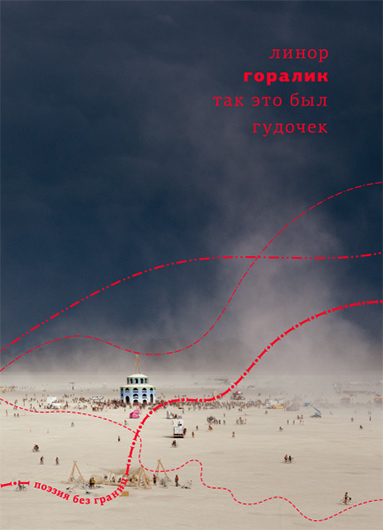
Linor Goralik. So it was a bead. - Ozolnieki: Literature Without Borders, 2015
Interview with Linor Goralik read on colta.ru in the near future