
Translated material
Colta.ru
The forge of the world film order celebrates the anniversary. A rough number 70 with a caustic bell appears in the final of the outflow of the Cannes festival before each film of the official program in the two thousandth Grand Auditorium Lumiere . Competition paintings are shown here. The system of selection for the competition and the control system of that very world film driver are not the first time lead to a situation when only celebrities - gods and heroes in the program in almost piece exceptions: Todd Haynes, Yorgos Lantimos, Michael Hanek, Fatih Akin, Naomi Kavashe, Kornel Mundruzo, Christian Munzhiu, Serge Su, Francois Ozone, Michelle Khazanavichus, Jacques Duion, Sofia Coppola, Ruben Estlund, Andrei Zvyagintsev ... The battle between them creates the complete feeling that the observer-observer lives in mythological times.
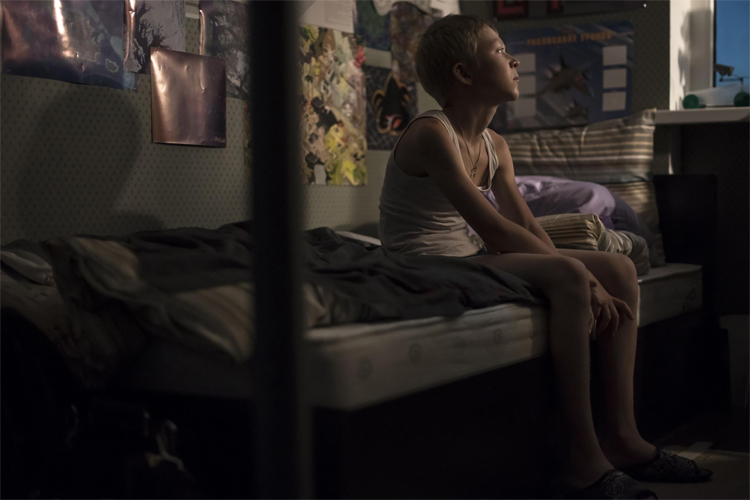
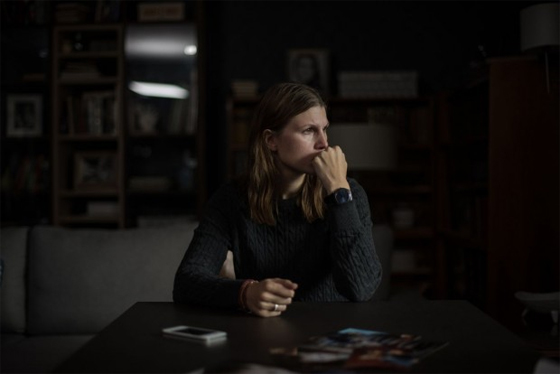
But the times in the film by Andrei Zvyagintsev land anyone in the reality of Russian everyday life. The statics of snowy landscapes and a tricolor on the building of the school that are not pleasing to the school in the sleeping area of the metropolis are marked here and now . The third film in a row by the director of actual social models causes hot audience involvement. However, if in Elena the explicit falsity of the scenario structure remained in Elena, and in Leviathan the cold detachment of an observer who was not offering an exit dominated the director, building a universal psychological collision, offers a way out of a dead end - a volunteer movement, but too idealizes the form of social organization alternative to the state. This time, the genre basis of the plot of the plot is a dramatic detective search chronicle-including the volunteers mentioned above-a 12-year-old son, who disappeared from parents during a conflict divorce. The Russian spectator will get the opportunity to look in the mirror of the "dislike" immediately after the end of the Cannes, from June 1. New acting names are opened: the film has a successful ensemble and a bright soloist - Maryana Spivak. Therefore, further into detailed descriptions of plot dramatic ups and downs is not necessary to delve into detailed descriptions.
 © "Non-Stop Production"
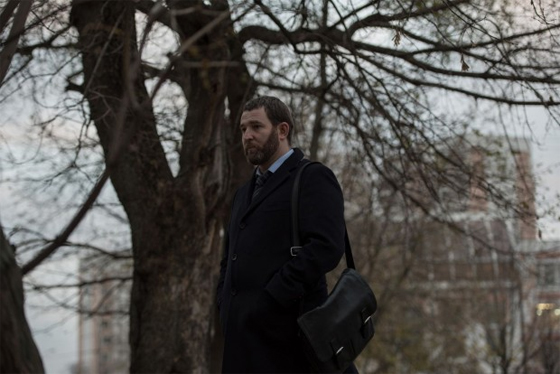
"Dyeal" is designed on the principle of the universal designer of Lego . In the directorial simplicity and accuracy, nothing superfluous is a small world and schematic, and recognizable, and sufficiently detailed: an apartment, office, restaurant, a cosmetic salon connected by impassable automobile veins. An irreversible search for happiness throws a man and a woman into each other's arms. The heat of love of office workers creates a new cell of society. But the structure of society itself, its ontological organization does not allow love harmony. Family microcosm is short -lived. A sore social microclet bursts, and its toxic deed in a painful conflict is spilled out outside. An involuntary victim becomes the future - a child.
Zvyagintsev-director clearly hone the skill of thoughtful accuracy, although it works with a rather archaic and conservative cinema, bright author’s elements in which, in addition to in-depth interest in social modeling, so far are absent. Sometimes the director lacks a sense of proportion and taste, as in the final scene with a “running on the spot” of a heroine in the Olympic costume of Bosco with a frightening bloody inscription of Russia . But the form of the existence of Cannes as a “point of power” with a special aura provides Zvyagintsev with the boundless possibilities of the directorial transformation and creative author’s self -disclosure, which can be observed with interest.
 © "Non-Stop Production"
The refrain of the film sounds a discussion of the coming end of the world according to the predictions of the Mayan calendar. The onset of the frightening apocalypse with its inevitable fall of the "star of the wormwood" is actively discussed at the scenes in radio -skills. In the final, the apocalyptic civilian scrolled the “number of the beast” forward at the speed of the bus with number 777, arriving at the stop, sealed by the announcements “The Boy disappeared”. Here, even a sleepy viewer understands that in the Russian court in the sleeping area, with all the Brueghelevsky idyllicity and serenity of children's playgrounds, the post -apocalyptic moror is already reigned.