
Translated material
Colta.ru
It has long been noticed that in modern poetry the “lyrical self” was subjected to irreparable corrosion. His place was taken by impersonal or hybrid constructions, and speech is often transmitted to dead or “quote” voices. There is a temptation to connect this shift with a growing function of memory. Rhetoric of this type can be compared with the configuration of a hysterical symptom that Freud wrote about that he is a “mnemonic symbol of some active (traumatic) impressions and experiments”. A hysterical symptom, like a modern verse, turns out to be a compromise assembly, which connects the desires and their suppression. In the 1908 article “Hysterical fantasies and their attitude to bisexuality” Freud, for example, gave an example of a patient who pressed her dress to the body (like a woman) with one hand, and tried to disrupt him (like a man).
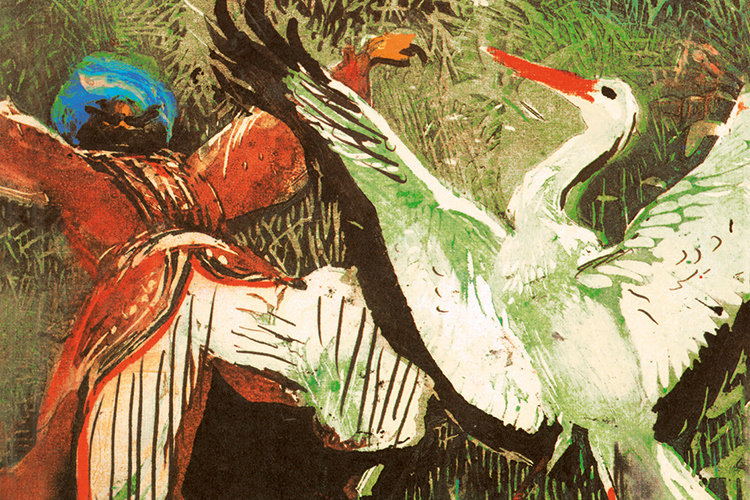
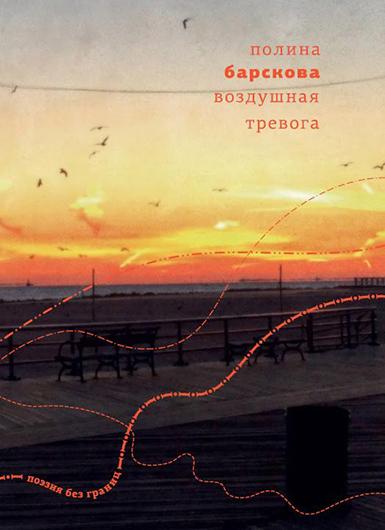
This kind of rhetorical constructions reflect the complicated repertoire of existential experience, which poetry is trying to open, but they also introduce a chain of metamorphoses into the poetic tissue of the emphasized instability. From this point of view, it is interesting to look at the beautiful new book by Polina Barskova “Airy anxiety”. I will start with one non -trivial moment, namely, the presence of references to the tales of Wilhelm Gauf in the book. The second part of the book is entitled Mutabor. In the cycle that bears the same name, there is a poem “Mutabor”, which refers to the “Caliph-Aist” by Gauf. This poem begins with a roll call of storks who want to “wake the word”:
It would seem what words only
They did not try not to taste it for sound
For strength
Live words dead words
The words of their parents are the ugly words of their older sisters
They filled themselves with dictionaries of the synonyms of rhymes
Technical and medical terms
Obscenities and names
Words with an unbearable sound with a whistle flashed past
Leaving us empty but unproved ...
The opposition of the dead (for example, parental) and living words introduce the opposition of two poets. The first is the Ukrainian futurist Mikhail Semenko, who once “drew” his self-portrait, sorting out fragments of his own name:
Hale Seme Ncom
Ihail Kohail Alse Komikh
Ihai Men Mikhsa Okhai
MX YL KMS MNK MIGH
Semenko Enko NKO Mikhail ...
Barskova says about him:
With ice mockery Pierro-Lee-ARLECINA
Dead poet M. Semenko on the edge of the Earth
Writes the darkness of screaming poems.
The reference to Pierrot and Harlequin is connected with the strange and completely contrary to any intelligible logic attempt by Semyonko to put on the mask of the decadent Pierrot. His three collections of 1918-1919 were called “Pierrot”, “Pierrot loves” and “Pierrot is dead.” But the names of some of his poems: “P'yro are out of place”, “P'yro Koha”, “P'roe”, “P'ro Ryashchit”, “P'ro Santmiamn”, “P'yro is the Fraud” ... This inadequacy of the name and image is essential for the Barskova. The dead poet acquires in the poem of a living double-Alexander S. (probably skidan), who "waves with long hands: Caliph, apprays, laughs." The living poet-Aist directly refers to Gauf, where the caliph and vizier laughed, hearing the conversation of two storks, and from laughter they forgot the magic word "mutabar", allowing them to become people again. The poem ends like this:
They tried all the words
What came to mind:
And Murtobor, and Murbutur, and Murburbur, and Murtubour.
But nothing helped
The cherished word has forever disappeared from memory,
And they were as they were
So forever and remained stages.
This overkill of similar meaningless words echoes the poetry of Semenko. In addition, Skidan owns a poem dedicated to the Film of Godard “Mad Pierrot”, in which the motive of the inadequacy of the image of a person sounds. Here are the last lines of this poem:
...Human
Never coincide
Not with your own
death, neither, in fact, with being.
I emphasize a certain underground similarity of Semenko and Alexander S. because it is accompanied by the internal discretion of each of the poets - dead and living. Alexander S. - a stork who cannot become a person, and Semenko is Pierrot, which he is also not able to become. And the strange overkill of meaningless words in Semenko’s self -determination, as well as the bureaucrat of the meaningless “Murtobor, and Murbutur, and Murburbur, and Murtubour,” does not allow the bird to become a man again. The loss of identity with oneself, a mutation, a change primarily struck the ability to express meanings. The words themselves lie in the plane of identities, intelligible forms.
 © Ozolnieki: Literature Without Borders, 2017
The duality of the living and dead is one of the important motives in the book. The dead double shines through in many texts:
Next to my hand
A different, accurate and predatory hand appears. <...>
And suddenly I hear an underground voice:
Touch it ...
("Public Library in San Francisco")
There will be a slurry in the window
And I will see the limit to myself
Then I will call by phone
Replacement-tel-Leporello
He is forever near the area
And he will continue my business
The brown -haired woman screeches and blonde
It will sigh, how terrible, poor he is ...
Next to him after the fight
We fall asleep, hiding in a rag, abyss.
("Confession")
These ghostly double doubles are in the zone of non-metabolism. When communicating with them, poetry enters into the field of self -destruction, untreating:
Waking up into the darkness,
I see you again under the ice:
Muffled and solid,
Who left in the womb.
<...>
It's you?
It's me?
We have not seen each other for a long time.
And how do we recognize each other?
The features linked to us will not tell us anything,
Clothing words.
It's me?
It's you.
It's you.
The beast also calls and finds
The stubborn owner.
("Winter view. Bruegel")
But, probably, a poem with the name “Katull 68 (A) Lisbon” is probably fundamental for this topic. In this text, Barskova refers to the 68th elegy of Katull, dedicated to his friend Allia. Catullus put in this elegy crying about the death of his brother. Brother's death is the central motive and Barskova poems:
I don't know where you are my brother
Perhaps you are no more
Perhaps you have never been. <...>
I, a wordless brother, - you, a verbal brother?
The duality with the dead man is expressed in unfairness. Even to a greater extent, the text of Barskova-a specialist in classical philology-refers to the 101st elegy of Catullus, in which the poet visits the grave of his brother and turns to his dumb dust: "And unrequitedly, alas, to appeal to the dust ..."
By the way, the incomprehensible word “mutabar” is only one of the forms of the Latin verb MUTO- “change, turn”. In this case, we are talking about symbolic transformation into wordless dust, and in Gauf - into a dumb animal.
Catulla elegia is important for Barskova and the fact that, in my opinion, they introduce a different layer of twin, namely twinity with another poet, a classic philosik Anne Karson, who dedicated the death of his brother the unusual book “NOX” (“Night” in Latin), built just around the 101st Elegy of Katull, an unusual, almost literal translation of which is proposed in this book. The book itself was invented as a box (coffin), where there are evidence of the life of a brother - evidence that cannot be revived and turn into a voice of death. The Karson book is a paradoxical dialogue with a dumb dust: “I COULD GIVE The LAST GIFT Owed to Death and Talk with Mute ash ” translates Karson (“... to give you the introduction of death / and unrequitedly, to the pane to call ...” - the translation of S.V. Shervinsky). This conversation with the ashes of Katull sounds like this: “... et mutam nequiquam alooquerer cinerem ...” , where MUTUS is “dumb” - he directly echoes the Gaufov “mutabor”. By the way, Barskova has a poem “Translator 3” in the book, where the translator turns into a carrier “From Aid to Hades”, seeing the shadow of the dead on the shore of the sticked, which he should give a voice:
This is the shadows of us awaiting and meeting
What are you distinguishing there, honey?
Describe your tongue not strangers with nonsense force
Describe repeat repeat
Almost
On the shore over the invisible half, oil lanterns stink
Calm around, across the immodest dream
About the ideal total word
Give me relaxed, pity, miserable words
From left to right, in advance, on the contrary.
The transformation into a dead double takes place at the Barscum stage of metamorphosis to the animal. And this metamorphosis (Hello Ovidia and Kafka) often passes through an erotic fusion. The book has a poem “Gauf”, which the epigraph from the “dwarf of the nose” was preferred: “And Jacob saw an amazing dream. He dreamed that the old woman took off his clothes and wrapped him in a squirrel skin. He learned to jump and jump like a squirrel, and made friends with other proteins and pigs. ” Numerous old women in the Barskova collection are probably referred to this fairy tale of Gauf. The old woman turns out to be an intermediate stage of movement from life to death. Often the old women are found on trains, as if traveling from childhood to old age and death. In the poem “Gauf”, this dream of Karlik turns into a love scene with a kind of double:
What kind of wild sounds expire outside?
What kind of marvelous hands do they look for meaning in me?
What kind of squirrel squirrels lick a ball of ice?
What kind of dwarf in the crib is fooling around me?
The transformation into an animal associated with the inarticulate “Mutabor” directly refers from Barskova to the heritage of the blockade poets published by her recently in bilingual anthology in New York. In the Mutabor cycle there is a poem dedicated to one of these poets - Gennady Gorus. In this poem, the raven (bird of death) directly turns to the poet:
I wasn't I clinging to her lips
And he pulled it out and inserted
Friend I'm your tongue
Tell me what else do you need?
The crow is squeezing the worm
Earth falls from the beak
And I turn away
At the mountain, the search for unity with the dead (for example, with a dead wife) is constantly comprehended as a metamorphosis in an animal (he writes about Ovid, "envious protein"). The raven (the mountains refers to Edgar in the) is taken from the barsk one. An animals at the mountain are not only blockade with their terrible cannibalist fantasies, but also the Germans. He wrote about one of them:
And the heart opened a cat,
Puppy puppy
And bird stomach,
And the blood of pigs.
But after a moment, the poet sees a raven in this strange assembly of the animals: “That bird was sitting with a human face, / Night bird in an overcoat.” Many fantasies from the poems of the mountain directly go into the texts of the Barskova. For example, the just quoted assembly is turning into a different dream in the poem “The Tale of Wandering”:
Bird with hot hands
Fish with pleasant hands
Terrible cat hands
A terrible face caresses me.
In the Barskova collection, a shadow of metamorphosis constantly appears into an animal associated with the transformation of the poet’s body itself. Moreover, these metamorphoses are often associated with the transformation into an old woman - a stage of movement towards the dead.
Huge faces of fish appeared one after another
With the same with my mouth.
Fish tear fish goat fish you all guessed the right dragonfly correctly
Fish mol fish prisoner
But the old woman fish swam closest to my face
Thalassoma Ballieui
<...>
We were one.
About the bottom
The fish hit and became a bird.
Fish the bird approached the old woman.
They did not share the silence for long there, about that, hung nearby.
Or the poem "Song of betrayal", where an indefinite metamorphosis takes on a distinctly fairy -tale character:
I am an archival inventory of losses of all who penetrated me through the windows, in the morning I put it out the door, do not kill me pike a fox, I will come in handy for you a wolf and an owl <...> I will come in to the lynx, I will turn you a little and betray a little to you. Time will grow up to become itself.
These metamorphoses are often associated with the loss of articulated speech and immersion in non -percent. The transformation into animals reminds of the formation of the living of the division and Guattari, where such formation is understood as destabilization, “determinerialization” and where the stability of the subject is replaced by a constant movement. Deleuz and Guattari associate such a transformation with the motive of a pack, in which “multiples are constantly transformed into each other, pass through each other. Werewolves, when they die, are transformed into vampires. And this is not surprising, for the formation and many are one and the same. ” Philosophers speak in connection with this formation-molecule. In the “thousand plateau”, this molecularity is associated with the image of a rat, a rat flock: “And there is everything: formation-living, which is not content to be carried out through a similarity, and for which, on the contrary, similarity appears as a kind of obstacle or stop; The formation of a molecule associated with the reproduction of rats, with a flock undermining the great molar power of the family, profession and marriage ... ”A tender-up of the pack from which the rat arises is the image of the destruction of all human stability, all the institutions of society. In the book of Barskova there is a poem “Alien Letter”, which is partly retelling of Turgenev’s letter Polina Viardot from Kurtavel (1849). In this letter, Turgenev describes how the rat made up in the kitchen. The rat found a maid dress on a chair and hid in his sleeve so that this sleeve began to move at some point. There is an almost mystical transformation of the maid Veronica into a rat, Veronica, who in a letter and poem kills this rat. This transformation in the poem is doubled by the metamorphosis of Turgenev himself, whom Polina Viardo discovers and exposes:
As long as he
Lay, hiding perfectly, and waited
Exposure:
It is about to find him
And there will be a silk noise, and shoes,
And, like a dragonfly, flat
Calling everywhere:
He will move, she will finally notice him,
She will spin in squeamishness, fuck ...
The writer’s speech, famous for his stylistic sophistication, itself turns into a “cheerful squeak”, and Polina (the namesake of the poet and her double) turns into an animal, fish, with which Barskova compares herself in a different poem:
And somewhere in the middle of him all Polina
Her green eyes slightly
And the hair is straight resin
With a light laughter, a slightly rattling voice
And a narrow brilliant fish camp.
The dying rat appears in another famous letter - “Letter of Lord Candos”, written by Hugo von Hoffmanstal. Here, rats also arise in the context of numbness of Chendos, the loss of the ability to use words to describe the world. As Chandos notes, “the abstract words, which a person inevitably uses, expressing this or that judgment, broke up in my tongue, how rustling mushrooms scatter under my foot”. The breakdown of concepts and abstractions allows him to enter into a new empathic attitude with the world, which is fully manifested in the episode with rats: “Not so long ago, I ordered to pour ratios of rat poison into the milk cellars. <...> And suddenly this cellar swung open in front of my inner gaze, where the Rat People fought with death. Everything, everything was in me: a sweet, sharp smell of poison, which soaked the dank air of the dungeons, and the piercing dying cries, woven in the seizure of the power of the body, broken against mild walls; The chaos of despair, madness, scouring in search of a way out, eyes full of icy rage, when two encounter a legitimate gap. But what am I looking for help from the words again, I have detonated! " And this is a clash with a “molecular” flock, teeming on the verge of death in a total brutal chaos, appears before the gaze of Hoffmannstal as “reality, absolute, the highest reality”. The ceremonial pattern of words ceases to stand between him and the chaos of the world.
Alien letters are based on Barskova as the basis of another text: cycle (poems?) “Airy anxiety”. They are called to convey to us a speech in which everything ritual-poetic disappears and the barely articulated speech of death and suffering arises:
Every night he screams in an incomprehensible language.
At first I was surprised, I tried to at least guess the language group.
Now I am sad, languishing.
At night it seems to me that this is a secret message if I could
To solve it ...
The formation is an important point in the form of interest to Barskov. Traditional poetry is the embodiment of a formal organization of speech. But the existential experience of the twentieth century - the Gulag, the Blockade, the Holocaust - makes poetry in its formal aspect with an unprofitable means of expression. In the same way as in the catastrophes of the past century, the body shape is due to the ideal of humanists and the ideal of art, and speech is also subjected to corrosion. And “corruption of speech” is an important aspect of the formation-living, loss of formal in the body and language. In one of the deepest poems of Barskova “forty -year -old” this moment is presented with the power of a poetic manifesto:
We are the corrupted tissue of the tongue,
Thus continued the black thing
What they conceived, say, ZEK
And thieves, then lieutenants,
Princes of captivity, penalty troops,
Spikelets, in Ukrainian expanses,
Zuskin, who saw dreams in reality.
We are the last of those that
They taught the tongue in the ditch. <...>
then our father is unknown, for
Deaf, like an unclean fish,
That the aquarium is stirring by itself
He managed to get out, Goluba,
Ball, fucking, he has blue.
This is a sworn tongue
We, having developed, laid out: there is a bird,
There is animal, a cry of watchmen,
A cry of a worm in a dark torture fossa,
Goul moron in a green panama
Yes, sterile firing lice.
(Inarticulate “ry” here, probably, is taken from the blockade poem by Pavel Zalzman “Ry-ra”, where, in particular, it says: “We have been hiding for a long time like animals ...”)
The compound with the dead in the barric becomes a paradoxical connection with many, with a teeming, with the uncertainty of animals that constantly lose shape and pass from one to another. Philosophy is known to contrast the body and flesh. The body as a form dates back to the Greek understanding of the ideal. Плоть связана с библейским понятием ( basar на иврите) и понимается как нечто бесформенное, влажное, пассивное, женское, снедаемое голодом и желаниями, подверженное страданиям. Плоть не имеет лица. У Барсковой постоянно происходит распад тела, из которого возникает плоть, и идет поиск речи этой плоти. Энн Карсон писала о женской плоти как не имеющей границ и способной к метаморфозе. В книге «Men in the Off Hours» («Мужчины в часы безделья») Карсон приводит совершенно неортодоксальный вариант сто первой элегии Катулла. Здесь сестра готовит жертвоприношение на могиле брата, смешивая воедино вино, молоко, мед и цветы. И это жертвенное смешение призвано само стать беззвучной (звучащей?) элегией, стихом:
Cut out carefully the words for wine milk honey flowers.
Drop them into a bag.
Mix carefully.
Pour onto your dirty skeleton.
What sound ?
(Аккуратно вырежи слова для вина молока меда цветов.
Брось их в мешок.
Аккуратно смешай.
Пролей на грязный твой скелет.
Что за звук?)
Это классическое жертвенное возлияние на могиле уводит в страну мертвых, о которой Мандельштам писал, что там «не едят надломленного хлеба, где только мед, вино и молоко». В другом тексте возлияние становится напитком полумертвых и полуживых: «И, как слепые, ночью долгой / Мы смесь бессолнечную пьем?»
Этот рецепт жертвоприношения Карсон/Катулла напоминает мне рецепт поэзии Полины Барсковой.