
Translated material
The colors of evil
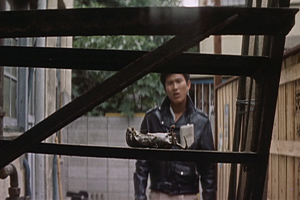
On February 18-28, in the St. Petersburg film center "Rodina" (and from March 9 and in Moscow, in the conference hall of the engineering corps of the GTG) , a retrospective of Masahiro Synodes will be held. Vasily Koretsky - about the bizarre filmography of this great director.
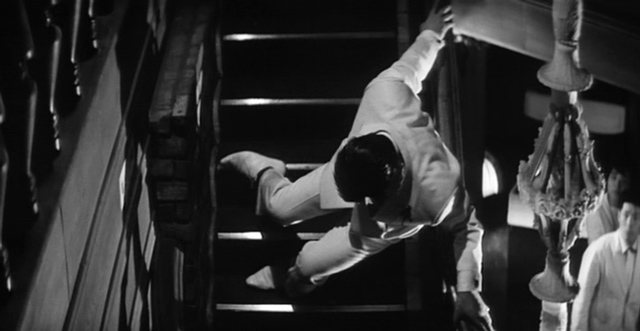 . . .
Masakhiro Synod is usually mentioned on a par with the directors of the Japanese “New Wave”-but, like the French “New Wave” or the German “Berlin School”, this label combines too different authors to be at least some kind of general and objective characteristic. Therefore, speaking of the Synod, it is more appropriate to talk about the wake of the widespread. Many peers of the Synods (as well as the directors of the New Hollywood decade) came to directing due to the crisis of the industry caused by the rapid spread of television. To delay the viewer from home screens, the Japanese Major studios are primarily the “Setika”, on which three of the key figures of the new Japanese cinema worked: Osima, Synod and Yosisige Yoshida, quickly switched to a widespread projection, a symbolic. For the older generation of studio directors, the new format represented a certain complexity: traditional Japanese interiors in which family dramas or historical films took place at all for a wide screen (Odzu, for example, did not control the synemascop). In the order of the experiment, the “Setika” decided to give the way to new plots and young professionals who had previously worried about the Assistant as assistants (the “Master/Pupil” system, by the end of the 50s, also died, and the assistants, instead of patiently adopting the style and manner of the teacher, ran from one director to another; in a few years at the Synod studio, for example, worked out to work With all the stars, the "poke", including Ozu, is to consider all their conformists who survived from the mind). In 1956, the studio authorities gave the good to the adaptation of the young and little -known director to the naughty of the scandalous novel by Sintaro Isihara “Mad Fruit” (the history of the resort novel by three, the melodramatic anthem of the sexual revolution). The film becomes a cash hit, young assistants are rapidly occupied by directorial places, “senca” begins experiments with risky cinema for angry revolutionary youth. And then, the Synod, the former historian of the theater, who threw the university for family reasons and terribly suffering from stupidity of studio production (the end of the 50s of the Synod, spent on the beach, where he ran away immediately after work depressively looked at the waves) comes to the revolution.
True, the young theater did not really want to rebel - the dislike of demonstrations was declared already in his first noticeable film “The dry lake”. The momentary relevance and political situation did not very attract a young man immersed in misanthropy and philosophical thoughts. The child of the war who survived the collapse of the world after the renunciation of the emperor, he quickly turned his eyes to the past, where he saw all the prerequisites for the current state of the country. Tradition-like its spectacular overthrow-did not represent any interest for the Synod, he lost faith in it back in 1945. In Japanese history, the Synod was looking for something opposite - moments of disasters, ruptures, collapse of false foundations, exposing human nature. Troubles, feuds, sharp shifts of the political course, examples of “real politics”, betrayal and cynicism - in all historical films Synods, these events if they are not the source of the plot conflict, then pass the background. He himself directly admitted that the object of his close interest is only evil - it is both more realistic and spectacular than good.
However, in the four years that the Synoda worked before the first serious conflict with the leadership of the “Setika” (the story of the Yakuza-Drama “Pale Flower”, accused of censors of immorality), he showed himself to be a strong multi-dinker capable of filming and stupid romantic comedies (“My face burns in the rays of the setting sun” or “Samysen and Bike”), and Bike) The melodramas (“epitaph of our love”), and the light social dramas in the spirit of the Ozu (the magnificent “our marriage”, in which the factory girl cannot decide that it is better to love a good guy from the workshop or become a currency prostitute at the “blue -eyed foreigners”, and as a result she goes beyond the elegant merchant, a former speculator). Pretty quickly the Synod gathers a permanent team around him - he writes to him Xi Taraima (the most important figure of the Japanese avant -garde; he was engaged in everything in the world - from the filming of an erotic film award to severe theatrical experiments at the junction of Kabuki and Grotovsky), the composer of the Torah Takemitsa floods his films alarming and atonal noise polyphonia, two women played by two female roles. The most beautiful stars “Sitika”-Mariko Kaga and Sima Ivasit (in the 67th she will become the director of the director). With them, the Synod will make all his best films-to settled down by the 70th and become a living and slightly boring classic of a costume-historical drama, who was even entrusted with filming the official chronicle of the Winter Olympiad in Sapporo.