
Translated material
True fairy tale
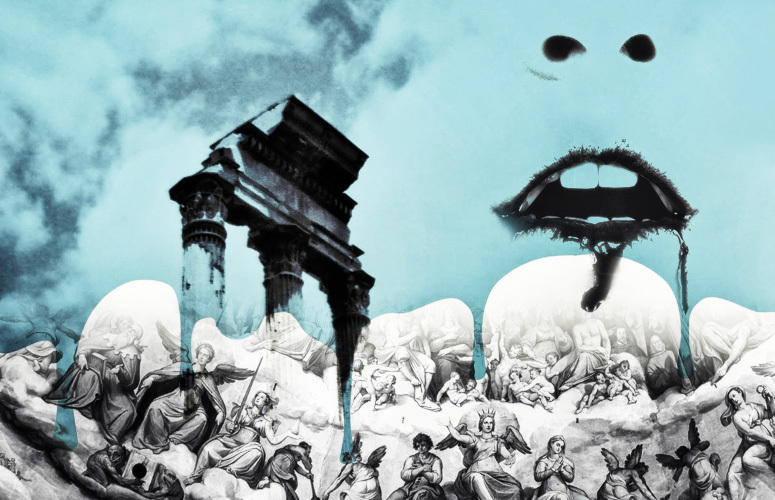
The epigraph to Pangee Maria Golovanivskaya causes me a feeling of sadness: “The text is not life, he has otherwise than ours. He is our protest against death. Perhaps we will bury God under the weight of our words ... ”This, of course, Foucault (and there could be Baudrillard, or Lacan, or even Roman Jacobson). But no matter how sad I am, no matter how much my soul was rushed into the naivety space where Roger Martin Du Gar and Konstantin Fedin did not know about this concept-“Text” and believed that they simply tell us such a living life-and no matter how much I rush, you won’t cancel the course of time! The twentieth century approved the axiom: when we write, in some result, it is precisely the “text”. It is unlikely that it is possible to cancel the axiom. Modern writers all over the world are aware that they write texts. Maria Golovanivskaya is a talented modern writer, her novel “Pangea” is a text, she recognizes this clearly, therefore the epigraph is corresponded.
Some critics defined Pangea as a sort of “novel about Russia”, overwhelmed with supposedly thin hints of thick circumstances and notorious figs in the pocket. Such opinions were completely amazed. Explicitly mentioned critics did not read the aforementioned romance. Maria Golovanivskaya is not only a writer, but also a doctor of philological sciences, the author of serious research on the problems of the existence of European languages. There is no opportunity to even imagine that she begins to be petty, in a woman’s allegedly ultramodern to hint, fill the extensive (in the book eight hundred pages!) The “pocket” of its text with a rotten fig. No, writers such as Maria Golovanivskaya, ts and e books, write not with such purposes! The author of Pangea is clearly interested in some global problem, the problem of extreme importance. Pangea is a novel about culture; Moreover, about the foundations of modern world culture and about those concepts of the fundamental, without which there was no culture, there was and will not be. What are these concepts? Of course - “good” and “evil”.
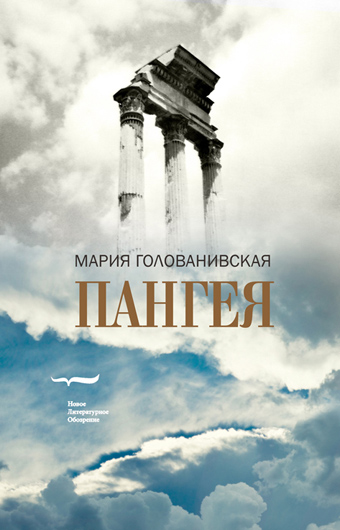 © New Literary Review
Once, in my student years, I tried to translate the poem by Jean Rishpen about Francois Viyon and was all surprised: why Rishpen put up the medieval poet as a drunkard and a libertine, for which he slandered and insulted. And having thought, I realized: Rishpen only wanted to say that, not being a drunkard and a lecher, you will not even become a “genius”; That is, evil is such good. What is some kind of Rishpen when we have Dostoevsky. Here! A young man, a student, brutally killed an old helpless woman. And how described it! Now our hearts will shudder with pity ... shuddered ... from pity for the killer. Dostoevsky was gloriously mocking us. In order to cause us a pity for a brutal killer, it turned out to be sufficient to portray the victim of the old and ugly, and the killer - attractive and young. And all! We are not just forgiven him, we regretted him - a killer, not a victim. The Second World War very briefly placed the concepts of “good” and “evil” in their corresponding places. Already Sartre in the Dead without burial asked the intricate question: did the French partisans showed cruelty? And he answered - of course - in the affirmative! And immediately the good movement of the resistance and evil of the German occupation of France were equal ...
You ask: why are these my reasoning? And what are they related to Pangee Golovanivskaya? Such! As a reasonable modern author, Golovanivskaya does not try to feed us freshly baked and it is not known where the “good” with cream has come from, since vulgarity is not peculiar to it to a small extent. She does not cunning with us, does not justify evil. She honestly talks about what happened in culture with the concepts of “good” and “evil”.
Pangea - what is it? Huge primitive mainland? Hypotetic, by the way. Some space? Huge myth? Metaphor of culture around the world? In fact, both that and the other, and the third, and much. Pangea Golovanivskaya lives on its own. Her voluntarist was drawn on the wall of the temple unknown Nikola Saprykin, completely confident in his naturalness - fantasies? Fantasms?
“... Anna, she fights silver spoons, and Valentine, her husband, cop ... this is a lot at her feet. The ruler, and behind him ... Konstantin, the prime minister was duckl. Lot wanted to build a temple park, but the witches cheated him ... This is Eve, the lover of Lot, she gave birth to a son, Plato ... And next to him Nur, she is not a man ... "
If the space of “one hundred years of loneliness”-from which side you will not enter this space-remains a specific place-time of Latin America, then the Pangea space is the very primitive mainland, the whole world. And, quite naturally, this world is a myth. The myth of the great ruler and his three daughters, the myth of three witches, the myth of the immaculate conception and the birth of the supernatural child, the myth of tragic contacts and the great confrontation with the East, the myth of the notorious “invasion of the East” and the eastern femme Fatale . Marquez - for all the fantasticity of his characters and situations - is found in a close world. Golovanivskaya is located all over the world.
Maria Golovanivskaya, like an experienced surgeon, gropes for a painful, as a tumor, the problem of modern culture - the problem of mixing, the natural indifference of the concepts of “good” and “evil”, and these concepts can be so gesture ...
But in the world of modern culture (and civilizations), it is no longer to understand what “good” is and what is “evil”.
Literature firmly learned the concept of “game” (with the presentation of Heisin and Eric Bern). But in the Russian language, the “game” is either something childish, or something fake, it is worth remembering this to Russian writers. And Maria Golovanivskaya remembers! However ... Game ... games that writers play. Why do modern writers (the second half of the twentieth - beginning of the twenty -first century) love to play the game “History of tyrant and tyranny”? Is it really only because the twentieth century is the century of exceptional tyrants: Stalin, Hitler, Mussolini ... What - in essence - is such a “tyrant”? This is the same "best"; The same people who come out of the people are the best among the people. If the monarch is valuable as legal, then the dictator-type is valued as the best. The crisis of the Institute of the Monarchy gave rise to the descent of the "best people from the people." But not only this - that is, for writers not only. In the second half of the twentieth century, the writer defines himself as a “person of a game”, “playing a person”. And better, clearer, more precisely, the Polish science fiction writer Stanislav Lem said about this. His robot-inventor Trurl constructed the whole world-with battles, bastions, cities and maids, astronomers, palaces, prophets and nurse, etc., and so on. “And all this, united, conjugated, carefully fitted, fit in a box, not too large, just such a size that Trurl was able to easily raise it ...” And what did Trurl do with this design? He presented this box with an exilia "for eternal ownership." And eccilia was a lone tyrant and therefore was in dire need of such a design to realize his tyrannical ambitions. Maria Golovanivskaya perfectly unfolds and - I am not afraid of this definition - revives the metaphor of Lem. Pangea Golovanivskaya, with all the vastness, compact; True, she is not a box, she is a fresco, but filled - like life - here! - varieties of all kinds of misfortunes. However ... In the world of modern culture, there have long been depreciated and dispelled of any varieties of happiness. But it, happiness, is necessary for people! And the heroes of modern culture in a desperate impulse, the Poisk of this very happiness are combined with bodies, hoping to gain something genuine in copulation. And then - “They were happy at night” - accurately and lapidarously determines Golovanivskaya. Happiness and, accordingly, the only genuine value in the world of Pangea, in the world of modern world culture, is the very desperate falling body to each other. This fall is crippled and treating (to cripple it anyway), and the immaculate conception in Pange is bodily. It is as the result of this conception that Nur appears, a supernatural beauty, a wonderful being, the same human and human love that "... Europeans depicted a young girl with wings many centuries ago ... In her right hand in their images, she holds fish, and in the left - a wreath of wildflowers ..." - love - body and soul? .. But in the world of modern culture (and civilization) no longer understand what Such "good" and what is "evil." The problem in the history of Katerina is strangely aggravated - not the most important, but the iconic character of the novel. Katerina decides to leave someone else's child, whom she wears as a surrogate mother. Katerina’s decision to become a surrogate mother out of curiosity is bad? Or is it a simple desire for a modern woman to “try everything”, to experience everything, even experiment with her own body ... but also a decision from his own voluntarist whim to keep someone else's child to herself, to break the contract - is that good? But does Katerina have no right to a child whom she endured? .. The author of Pangea does not give an answer, as his modern culture (and civilization) does not give ...
At first glance, with not very careful reading, it may seem that the novel Pangee is just a chain of short stories, often fantastic stories, in terms of amusement of almost equal classical “manuscript found in Saragos”, arbitrarily divided into three parts: “life”, “law”, “movement”. But we are really a novel, a coherent story with the plot and the characters associated with each other. The center of this narrative is - in a completely natural way - a fabulous tyrant Lot, around which all the others are grouped - his daughters, their husbands, his supporters, opponents, his illegal son Plato, and even the characters, it seemed that they are not connected with the lot, eventually tighten to his personality. Plato - undoubtedly, one of the most important and interesting characters of the novel; Reading about him, you involuntarily recall the “extra people” of classical literature - from the English Byron Don Juan and the French Moliere Misanthropus to the Russian Ilyich Oblomov. But Plato has nothing to do in a world where the culture has undermined the very foundations, there is nothing to think about, there is nothing to strive for ... “The revolution is made from boredom,” says the son -in -law of Lot Konstantin. From boredom, “people begin to cut kings” ... But what is it really about? Of course, about the depreciation of the concept of "heroic"! Revolutions are made from boredom, the destruction of the Bastille - absurdity, the mucius of the stroke - is stupid ... Examples of such a view of history can be multiplied and multiply. But if something has depreciated, therefore ... it will not gain a new price until the same story requires it! And it is still unknown whether it will be too scary to live “in the beautiful and fierce world”! Maybe Katerina is right and comfortable unity of bodies with subsequent childbearing is better? .. But Plato is a masculine principle, hungry thoughts and heroism; What to do with him? ..
However, the feminine world can throw a woman on the hind legs, no, a female being, some Jeanne d'Arc, an ascetic iron maiden. “The little people stopped being afraid ... There is no shudder in Pange ...” - says none other than Satan. And in a certain space of the philosophy of history, where the concept of “humanism” is completely useless, “shudder” should be returned to Pangea! And it was Claudius - the eldest daughter of Tirana Lot could create it. But not destined, Claudia is waiting for the dreary fate of the unfortunate old woman. Of course, the possible savior of Pangea is a male creature, but his mission will not be fulfilled. He is an alien, a stranger, his name is Yusuf, he arrives in a hot train, a homeless person, a migrant worker, a migrant connecting in an embrace with Christ himself, a pure person. But Yusuf is dying, and the mysterious, mysterious East, which Europe is waiting for, as in the famous poem of Kawafis, is waiting for the ancient world of the coming of these same “barbarians”! And ... what's next? ..
In essence, the “myth of the East” took in modern culture the place of desacralized ideas about God and the devil (and Golovanivskaya honestly shows it). Above Pangea, the sky, in which God and the devil are drawn on the fresco; And the apostles Peter and Pavel are judged and rowing almost as on signatures to the pictures of Jean Effel, creating, creating more and more embodiments of either soul, or characters ...
And suddenly ... The final of the novel - the husband looked at his wife (and the relationship was the most difficult, painful) - “... I looked with my eyes with an expression on her face.
But there was no face ...
Without eyebrows, eyes, nasal lines, lips ... ”Everything is like nature in which there is no person, because the concepts of“ good ”and“ evil ”have disappeared ... And when, these concepts, will return, how is it good or bad? ..
Maria Golovanivskaya. Pangea. Novel. - M.: New Literary Review, 2014. - 752 p.