
Translated material
: Harms and benefits of rallies

The metropolitan protest generates its own mythology and in itself becomes a political agenda. What is the point? Does a lot or few people come out? Does the future wait for the future? And in general - what is it? No one, regardless of the personal degree of "white -openness", has passed the history of the capital's protest.
When the former head of the Presidential Administration of the Presidential Administration Konstantin Kostin left the civil service, he first stated that his newly created fund would be engaged in the study of the history of the appearance and formation of the movement of “angry citizens”. His former chief Vladislav Surkov in December, even before his hasty transfer to the government (also, perhaps, due to protests), gave two interviews on the theme of the “townspeople”, although Surkov’s interview until then seemed extremely exotic. Vladimir Putin several times tried to publicly comprehend protest moods, each time in a new way and every time without much success.
Representatives of the opposition, journalists, social activists of all stripes - everyone tried in almost a year to understand the nature of what happened in December. The rallies were predicted by death - and each time a new rally again gathered several tens of thousands of people. People of the most diverse, united, as it seems, only by dissatisfaction with the situation in the country. Everyone, including the TV presenter Tina Kandelaki, has their own view on the topic, the protest is good or bad, what does it mean and what is the future of the country in this regard.
Professional sociologists seek to comprehend rallies. “Levada Center”, for example, published the results of the third survey of metropolitan Protestants following the results of the procession and rally on September 15.
Sociologists found out approximately the following: among the participants in rallies, the number of liberals and middle -aged people with high income is reduced, but the number of left -handed people and nationalists of young age is growing.According to the survey, people who consider themselves liberals at the last rally were 23% against 31% on Sakharov Avenue on December 24 last year. The number of citizens who declare themselves as “democrats” also decreased. Before the statistically significant (7%) the number of “new left” has grown, more nationalists became more compared to December (their percentage has grown from 6 to 12).
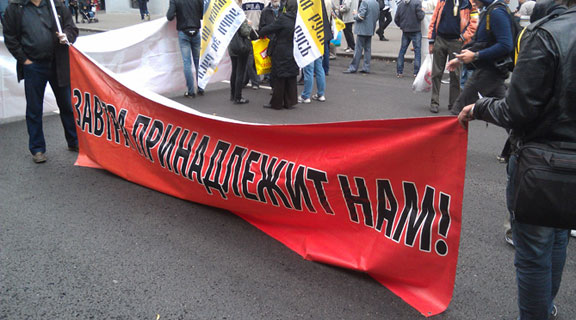 Nationalists. Photo: Leo Katz
Sociologists confirm that there are practically no sympathizers of power among protesters. “Pride” for the policy of the authorities experiences 0 percent of the respondents. Satisfaction - 1 percent (and those may have played a trick on the half stakes). Nobody found it difficult to answer this question. The “thieves and mafia” power was called almost 50 percent of the respondents, which is also indicative.
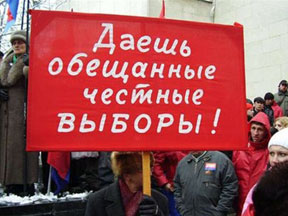 For honest elections, people in the square go out generally conscious. Putin’s departure for Protestants is not an end in itself. The change of power, among the priorities, called only 24 percent of the respondents, and this is only the fifth most popular answer. The most popular among Protestants is the requirement of the independence of the court (44%) and honest elections (35%). That is, the requirements of institutional transformations and compliance with the law, and not specific and narrow political requirements.
At the same time, the trend for radicalization of protest is present. It is inevitable: the more youth and leftists of different ones, the more radically the Protestants will be.
All these statements, however, are visible without sociologists. The fixation of what everyone knew about, only based on the scientific apparatus, and not on common sense and their own vision. But a qualitative explanation of the process - both was not.
It is interesting that, despite all the conversations about the exhausted protest, about the adaptation of power and the meaninglessness of the rally activity, the number of September rally was no lower than the March or June action. 14 thousand, according to the Moscow Central Internal Affairs Directorate, is the same in reality of 30 thousand. Not December Sakharov Avenue, but not Strategy 31 on Triumphal Square. In addition, two -thirds of the respondents are definitely going to continue to participate in protest rallies, and another quarter - "rather gathers."
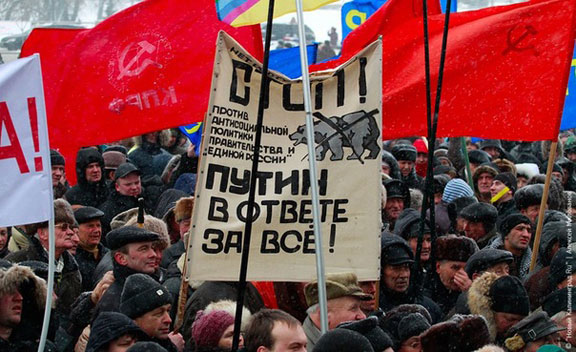 Protest movement
In this context, the dispute about the meaningfulness of rallies should be recognized as false. It can be argued that this is a new type of urban leisure (this is, in principle), we can say that such forms of protest of power are comfortable and will not lead to any changes, but it is obvious that it will be difficult to disperse the houses that have gone out in the area of people.
So, rallies are already successful and remain an effective way of self -organization.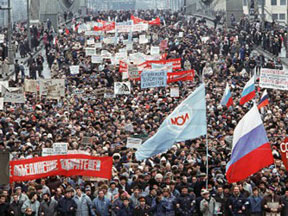 Growth of self -awareness. Photo: S.primamedia.ru The question remains, the self -organization of what . “Civil Society” as a product of rallies looks attractive, but obviously a small explanation - due to the ephemeral of the concept. The remaining explanations are also not impressive. Self -organization of city communities? But almost anywhere in Russia nothing like this is fixed, and the metropolitan life does not become more comfortable. Self -organization of the office class? It is also not very clear whether she is happening.
Obviously, however, the fact that the authorities have no mechanisms - neither for establishing a dialogue with protesters, nor to knock down protest moods - simply not. The repressive laws of this summer so far are risked only in extreme cases and more indicative than as a tool. It seems that there seems to be no way to satisfy the requests of the protesters in power. The authorities themselves do not understand (like other protest analysts) what is happening in the capital's squares. In this regard, rallies perform a very important function. They push both the authorities and citizens to reflection on the topic of which society we live in. From the clarification of this, not far to the development of strategies for the development of the country, different from empty memos.