
Translated material
Multifultering scene
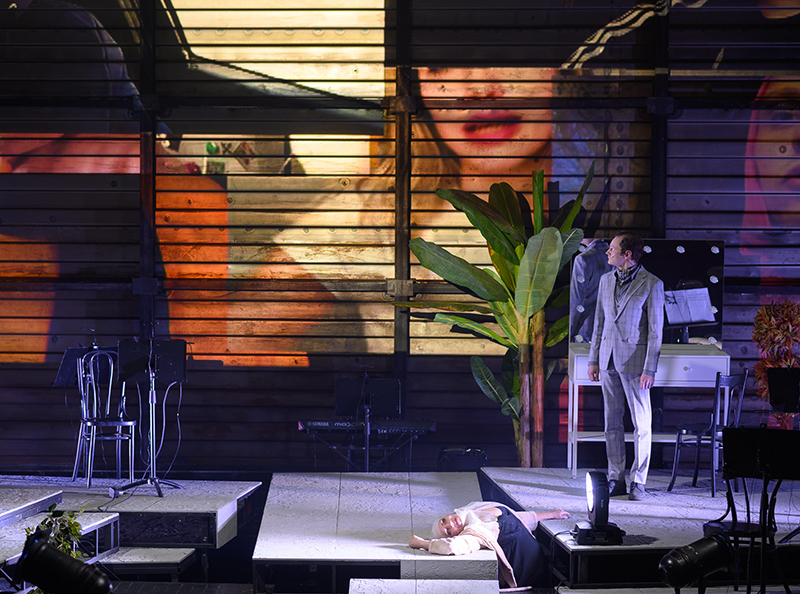
Four years after the “drunk”, based on the play by Ivan Vyrypaev, director Marat Gatsalov-now in the status of the Glavrezh of the Perm opera-returned to the main dramatic scene of the same city, in the Theater Theater : this time-not with modern text, but with the textbook compound of Alexander Ostrovsky. He returned with the same star team: Sergey Nevsky wrote music, space - a couple with Gatsalov himself - was developed by Lesha Lobanov.
There are unexpected co -authors - almost two dozen bloggers, professionals and lovers who specifically recorded the video essay about the play of Ostrovsky. The videos of the reviewers alternate with game scenes, and somewhere they even replace them: for example, the director removed the third action completely, limiting himself to a short playful retelling.
The artists covered the first rows of stalls with a broken platform and lowered the fire curtain, cutting off artists and musicians from the stage. On the platforms - office furniture, trees in tubs, bath, toilet table. Before us - either backstage, or a waiting room, or a common corridor, in short, an intermediate, insignificant place. So the actress Negina sees everyday life: the world outside the theater for her is the periphery. At the end of the performance, the curtain, of course, is raised, and the heroine, like a mistress, steps on empty stage.
 © Nikita Chuntomov
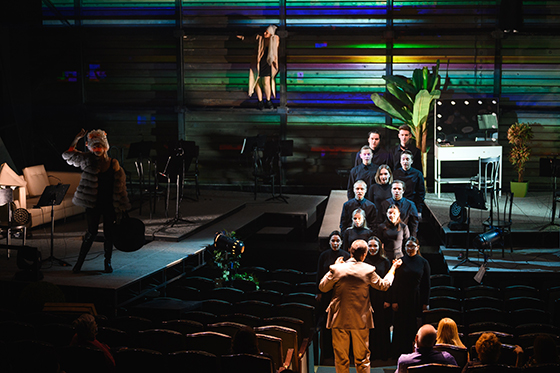
By chance or not, Gatsalov and Lobanov added unobtrusive, but intelligible religious motifs to Ostrovsky’s plot. The scene is hidden behind the iron curtain in the same way as the altar - behind the iconostasis, and for Negina embodies about the same thing: the lost paradise that needs to be returned at all costs. The role of God gets the manufacturer Velikatov, who, as it should be the Almighty, appears accompanied by a choir (in principle, there is something similar in the play itself: the Magnat estate, from his own words, is a kind of vulgar version of the Eden garden).
In general, recently, Gatsalov often leaves the scene of deserted in order to turn this neutral space into an independent sign. Almost two years ago, he released in the Omsk Drama the Dragon on Schwartz. The artists there work right in the auditorium, almost without light, with miner lanterns on their heads. In the context of Antiutopia fairy tales, an empty scene resembles an empty square: in cities without public politics, the square is always empty.
 © Nikita Chuntomov
Another example is completely fresh. In December, the director made his debut in the Perm opera with the Mozartovsky Don Juan. The choir sings from the lodges, soloists from the orchestral pit: the artists here are by no means equal to the characters - they are only performers, translators, the same as musicians. The artist Monica Portmale, who is known in Russia according to the performances of Alvis Hermanis, built a museum hall with a conveyor ribbon on stage. On it, like suitcases at the airport, the work of contemporary artists floats, and each echoes some kind of motive from the opera.
It is inconceivable to play a vagabond plot about Don Zhuan for Gatsalov: archetypes are incorporeal, they can only be observed in countless reflections - like Plato's Aidos (in fact, the decoration of Portmale is nothing more than a visual model of the Platonic cave ). The scene in Don Zhuan is a portal in an invisible world, only instead of spirits there are ideas.
“Talents and fans” - a conceptual project, where, in essence, the official function is prescribed to the famous text of Ostrovsky.
When the scene works as a metaphor, the theme of the theater arises in the performance - it does not matter whether it is about actors or not. The Dragon interprets the theater as a political platform - which is characteristic, cleaned. “Don Juan” - as a meeting place with archetypes. In Talents and Fans, this is a temple of escapism - but not only.
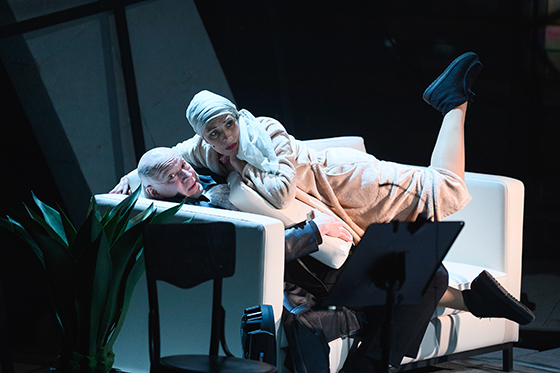
It is not the primary goal to read the textbook text for Gatsalov’s extraordinary text: the director does not change the heroes of the role, does not give them unexpected assessments (and does not give predictable assessments either) and does not connect with any modern types. Everything that was required of the artists was delicate and without unnecessary colors to play Ostrovsky’s roles. The theater-theater team (plus Vera Makarenko in the image of Negina) impeccably copes with this task, justifying even rare grotesque decisions.
The play “Talents and Fans” can be edited without much effort so that a solid traditional performance is obtained: Gatsalov would do it better than any conservative director-craftsman. Yes, he did when he worked with modern plays - as “August: Oseezh County” Tracy Letts. But to tell the story of Sasha Negina, which absolutely everyone remembers in the theater world, Gatsalov is not too interesting: “Talents and fans” is a conceptual project, where, in essence, the official function is prescribed to the famous text.
 © Nikita Chuntomov
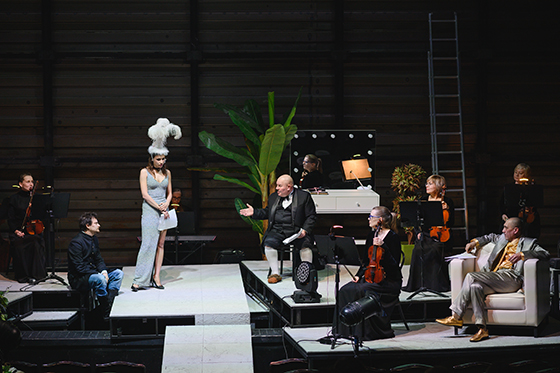
The director was not going to reanimate the classics - he wanted to combine three cultures on the stage. The singers, whom the Nevsky composer compares with the antique theater choir, embody the archaic, folk tradition, where there is no place for individuality, and any special case reflects some universal rule: the choristers respond to the plots of the plot, which the Narodnik Ostrovsky entitled the plays-like “poverty was not a grief, but suddenly altyn”. Choir antagonists are bloggers, agents of a modern, individualistic culture: all of them act as a review genre that is common for YouTube , where the main thing is the personality and charisma of the narrator, and not what he talks about.
Finally, the actors represent the native culture for Gatsalov-theatrical, located somewhere in the middle of the spectrum: not the most modern (in contrast to video executments, this is especially striking), but capable of taking both extremes. For which, it seems, the director appreciates her.