
Translated material
Eternal "sabotage"
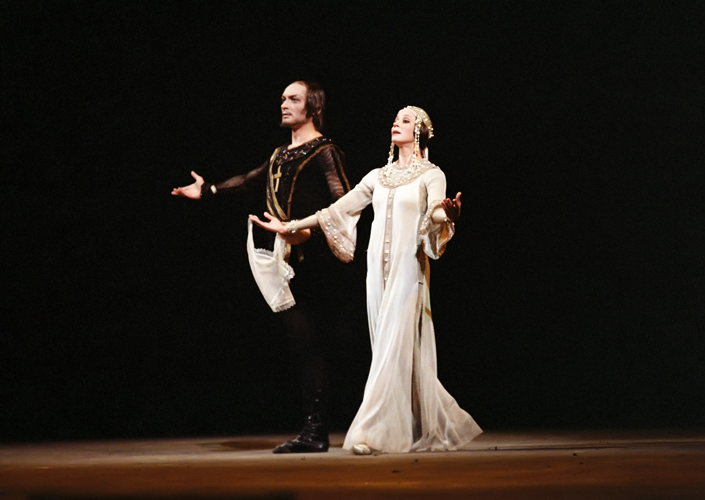
Under the auspices of the magazine “Session”, the most probably the great and controversial book about the ballet from all that was written in Russian was reprinted: “Sabotage” by Vadim Moiseevich Gaevsky, which was born in 1981.
The controversial, of course, is not in the trivial sense: its position in the history of Russian culture is just undoubtedly, the brilliance did not fade in forty years, the thoughts have not sour. But here's the proof: as soon as the “session” announced the release, a dispute was immediately brewed on Facebook (where else) - why publish, what is a rarity if you can easily buy from the Bukinists a 1981 publication? And is it possible to call the publication new if the new one in it is only design and pictures? The questions are logical, but the editor -in -chief of the “session” Lyubov Arkus was offended and fought back: as if she had been accused of staring the sturgeon of the second freshness. And then, as is usually on Facebook, a “mechanical scandal” began in the spirit of Dostoevsky, when - according to a well -known expression - no longer to make out where the Swiss, where the club is, where the general was.
Therefore, let's start the story from the very beginning. From the era of "late Brezhnev." In 1981, the “divertissement” from afar, in order to immediately withdraw almost the entire circulation, and the editors - Sergey Nikulin - to dismiss (blown up an ideological sabotage, contributed to the sortie of an ideological enemy). Gaevsky himself returned to the position of Persona Non Grata, in which there was more or less constantly all Soviet times.
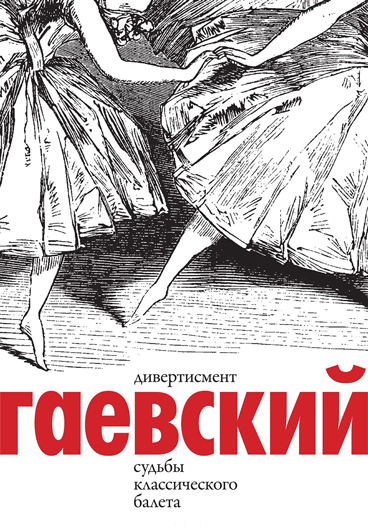 © Session, 2018
Now, of course, you can’t imagine what such a thing should be written in a book about ballet so that a state cannibal with an ax rushes at it. Especially if the book is about art, and not about politics, about dancing, and not about the patrons of ballerinas, about performances, and not about theft, bribes, waste. I asked Gaevsky. He is generally a master of dialogs “Ask a stupid question - get a smart answer”: for example, I even asked him why in 1918 the Bolsheviks did not disperse the ballet to the hell - Imperial art, Matilda, because of the Kshesinskaya, he answered. He answered this time too. In the “sabotage”, the ballet of the choreographer Grigorovich “Ivan the Terrible” was criticized, where the tyrant and psychopath was depicted with understanding sympathy, and this sympathy became possible only at the general turn of the “city of Brezhnev” to approval of Stalinism - Gaevsky wrote about it. For this, reprisal followed. The cannibals love to shed blood, they do not like to come into it later with their callous fifth - “then” cannibals love flowers, chickens, kittens. About this, by the way, was Gaevsky’s answer to the question why they did not disperse the ballet in 1918, if you are interested in: so that there was where to go “later”.
In the XVIII century, dramatic operas ended with sabotage (so that after passions, a serious, great, high viewer, he smoothly took out a fork from a socket - and looked at the “legs”). The “sabotage” became a ballet that completed the dramatic Soviet opera about Pasternak’s injury, the arrest of “life and fate”, the persecution of Sinyavsky and Daniel, the emigration of Brodsky, and the exile of Solzhenitsyn. In 1982, Brezhnev died, and the elderly, protruding the ass under his coat to throw the sand on the coffin in a glove with their first children's memories (I was surprised: who digs in gloves in the sand?). But Vadim Moiseevich Gaevsky was destined for me to find out only as a luminary, professors, teachers - and Moses, terribly witty, funny, charming and very beloved by all of us, students. How he managed to maintain this spiritual ease and happy disposition after many years of non -recognition, ostracism and even direct persecution - a riddle. But, as Agatha Christie correctly noted, a happy disposition is the best than they can give the death of the fairy.
This was very distinguished by him against the backdrop of Soviet colleagues, whom I had already found by old people and old women. By the way, he perfectly wrote about the envious power of power of the elderly in the “sabotage”, it is true that it was not about the Soviet ballet -studio professor, but about Lake Swan. Soviet writers about ballet were really a strange herd. To start with the fact that the Soviet ballet encouraged mediocrity: he was so huge, strong, beautiful, he was like a large magic pig, leaning towards a warm side (and even better - a nipple) of which could be satisfied all his life. The talent immediately flew with the scream. Only Vera of Krasovskaya was lucky: she matured from the book to the book, her first works did not stand out against the general mediocre background and did not alarm anyone, but when everyone realized that they had blinked a talented rival, it was too late: Krasovskaya already came into force and it became dangerous to attack her - only she managed to write everything that she wrote. I began to print me in this herd, but I was still possible to ruin my life, I was still a student, and when I was surrounded by angry old chickens, it was Gaevsky who rushed to save: he remembered too well how unpleasant when you were pecking.
Yes, I have no and had no respect for other people's gray hair (once I will become an old woman and I, what's from that?). Maybe that's why I was so struck by a huge inconsistency of the nullity of the object (ballet criticism - no, not so: ballet !!! Criticism !!!) and human dramas, boiling there.
For example? For example, Valery Chistyakova. You are talking about this, go, and do not know. She was not the worst. After in 1975, Baryshnikov fled from the USSR, she threw a profession. “I did not make anyone worse except myself,” grumbled, telling me, Vera Krasovskaya, who appreciated Chistyakova. But Krasovskaya herself behaved as a heroine of classic drama: deciding to become a scientist, critic, artist, left her husband who had no attitude to art, and son, and connecting his life with David Zolotnitsky, her best editor and adviser, she said to him: I also leave his wife and daughter - completely. After all, something more - ambitious: the multi -volume history of the Russian and European ballet, which she will write alone, but with Zolotnitsky behind her back, was moving forward. A striking accomplishment - but also a striking sacrifice. Maybe the whole point is that I am a man of another era - from the non -frighty? Maybe that's why both acts are equally incomprehensible to me, how incomprehensible the Oedipus, groaning his eyes. However, the head, as they say, are understandable: it is not for nothing that the citadel of the science of ballet, the Leningrad Institute of History of Arts was called the Institute of Frightened Intellectuals. The ballet was not just a greasy fat milk from the tapes. He offered a flight from reality. In his paradise garden, one could hide from a lot. Maybe that's why it was worth it? ..
What he kept in the profession of Gaevsky, he wrote best of all - when he wrote about the "Book of Jubes" by Akim of Volynsky: the expectation of a stranger. No, no, not in the trivial erotic sense (Gaevsky has been happily married in the most romantic style for many years-the style of "old-world landowners"). The concentrated delight of the mushroom pipe. Patient excitement of the fisherman. Can it get bored? And once, Ulyana Lopatkina will flush out onto the stage in front of you. Gaevsky wrote the best about her. And he proved that there is no great ballerina without a great ballet critic.
Gaevsky spent the Soviet time on the sequence of the official path, which was trampled by candidates and doctors of sciences, NII employees, associate professors, professors, academics. But in the last two decades he wrote a lot - and remained on top. This is amazing. Because age is taken away not only from dancers: very few can boast of good texts in 70, and Gaevsky will turn 90 on November 12. So, in general, the idea of reprinting the “divertissement” is understandable: well, the old book, yes, so what? Now Gaevsky writes, and how. The project of the project was Pavel Gershenzon, the best critic of the 1990s, who had a who abandoned the ballet for a long time. His impulse is very understandable: the publication of “divertissement” now, in good design, with perfectly selected illustrations (instead of myopic black and white photochelves of 1981), is a simple recognition of the fact that this book is still alive. Not outdated. And what is better than Gaevsky in the genre of Essay on Ballet, no one has yet performed over the past forty years.
Vadim Gaevsky. Divertissement. The fate of the classic ballet. In 2 tt. - St. Petersburg: Session, 2018. 256 p., 384 p.