
Translated material
Maxim Russo: On the "raft" through the ocean

Maxim Russo 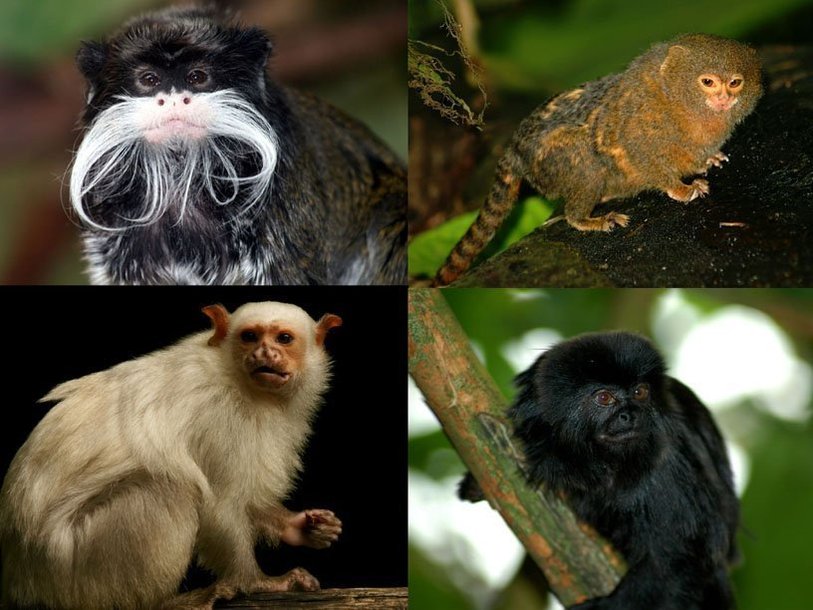 Some monkeys of South America Wikimedia Commons
 Some monkeys of South America Wikimedia Commons
During his lifetime, Christopher Columbus used the glory of the discoverer of the New World. It later turned out that he was not at all the first to step on the American shores. The discovery of Greenland and North America by the Vikings in the 10th century was well confirmed by archaeological data. There are to varying degrees justified (but so far no confirmed hypotheses) that representatives of various other peoples sometimes got into America: from Phoenicians to the Chinese. Finally, do not forget that even earlier people settled America, penetrating it through Beringia, and began to wait until the Spaniards open them.
Recently, more and more scientists have been inclined to the idea that there was another discovery of America, which were not committed by people, but also representatives of the Primates detachment. According to the ideas of the systematic, the infrast detachment of monkey -shaped ( SimiiFormes ) is divided into two large groups. One of them - narrow -legged monkeys ( Catarhina ) - includes in Makak, pasty, gibbons, monkeys, gorillas and many others in love and people. Enjoyed monkeys live in Africa and Asia. One species (magot) penetrated into Europe (Gibraltar), well, people who settled everywhere. The second group of monkey -shaped - wide -skinned monkeys ( Platyrrhina ), or monkeys of the New World. These include a variety of bundles, marmosettes, kapuzins, saimiri, tamarins, mirikins ,rights and coats. There are wide monkeys mainly in South America, and their most northern species are widespread no further than the southern borders of Mexico.
Asia was the birthplace of all monkey -like. The separation of wide -skinned and narrow -skinned monkeys occurred about 40 million years ago. But here we come across an unexpected difficulty. By the time of allocation of wide -nosed monkeys, South America was separated from all other continents. And only three million years ago did the Panaman is an isthmus that connected it with North America, and from the rest of the continents it is still reliably separated by the oceans. Shirokolous monkeys appeared in South America obviously earlier. How did they get there?
The location of the continents is about 50 million years ago
They tried to answer this question differently. The most skeptical version of the response was that the broad -legged monkeys arose independently of another ancestor, and their similarity with narrow -minded ones was only the result of convergence. But the community in the structure of the two groups of monkeys was so great that such an explanation seemed very doubtful. And then molecular methods confirmed the kinship of these two groups.
The assumption made that the monkeys penetrated into South America from Asia through North America, probably through the hypothetical land bridge that arose during the temporary rise of the ocean bottom, and then again disappeared. But paleontological data does not confirm this option in any way - in North America they do not find the remains of ancient monkeys.
The second possible way is from West Africa directly to South America. The task is also difficult. Although in that era, the Atlantic Ocean was less wide, it would be difficult to cross through it for monkeys. There are no evidence in favor of the existence of temporary land bridges. Unless he claims the role of the transshipment point of the archipelago of St. Peter and St. Paul (Arquipélago de Sune E Sance Paulo), better known as the islands of San Paulo. These uninhabited volcanic islands are located about 940 kilometers north-east of the coast of Brazil and 1824 kilometers from Africa. In the past, the archipelago could be a more extensive piece of land. But here, too much distance inspires skepticism in relation to the transatlantic travels of monkeys.
Supporters of the hypothesis about the route through the Atlantic most often noted that even though this path is difficult, it remains the only one likely explanation of the appearance of monkeys in South America. They believe that animals could go into swimming (of course, against their will) on peculiar "rafts" - torn by storms and trees falling into the ocean from the coast. If such a tree was a male and a female of an ancient species of monkeys and if they survived during such a trip, then, finding themselves on the opposite shore, they could become the ancestors of the monkeys of the New World.
At the very beginning of 2015, the arguments in favor of this hypothesis brought in the magazine Molecular Phylogenetics and Evolution Professor of evolutionary anthropology of the University of Duke F. Kay, who used these phylogenetics, geology and paleoclimatology. He analyzed 16 living species (one from each kind) of wide -skinned monkeys and 20 extinct, comparing their structure 399 different indicators, and then constructing a genealogical tree on the basis of a comparisons matrix. The second option was built according to genetics (for modern species). Both trifles were well agreed by each other. Genetics also confirmed the kinship of wide -skinned monkeys with their narrow -minded brothers in the Old World.
According to Richard Kei, the evolution of wide -skinned monkeys began about 26 million years ago. The center of their resettlement was always the Amazon basin. From there, when climatic conditions allowed, they settled the peripheral areas: Patagonia, the islands of the Caribbean. But later, the monkeys in the extreme south of the continent died out due to the newly changed climate, leaving no descendants (about 15 million years ago). The broad -legged monkeys of the Caribbean is recently disappeared, only about six thousand years ago. According to Kay, the monkeys hit the Central America late, only after the appearance of the Panama Isthmus.
In 2010, in Peruvian Amazon, paleontologists found the remains of a monkey, which further strengthened the confidence of scientists in the migration of monkeys through the Atlantic. The description of a new species, called perpithecus ucayaliensis , was published in February 2015 in Nature magazine. The impression was made by the age of this monkey - about 36 million years. The structure of her teeth, according to researchers, is very similar to the monkeys of Africa, which once again confirms their relationship.
Perpithecus ucayaliensis
The question remains, how the animals managed to cross. The authors of the article believe that their small size helped the ancestors of American monkeys. An animal size of modern protein did not need so much water, so they had a chance to survive during swimming. Perhaps they really sailed on the likes of rafts - small shreds of the earth, fastened with intertwined roots of plants and torn by a storm from the shore. If standing trees remained on such hypothetical rafts, then, according to the assumption of Sihoshon’s resettlement and Brunetto Chiarelli), they could even play the role of a kind of sail.
Researchers are trying to establish the nature of the currents in the ancient Atlantic based on the features of sedimentary rocks. They confirm that at the end of the eocene there really was a strong current in the west direction from the coast of Africa. But, according to Elvyn L Simons, transatlantic swimming still had to occupy at least 60 days. However, the other author Alain Houl gives another option for the Atlantic 40 million years ago, which would more advise traveling monkeys equal to 14.7 days.
Also, stability to dehydration, characteristic of residents of arid regions, could also help animals. Back in the 1980s, a group of scientists from the University of Chile established that Degu-small rodents living in arid areas are able to do without water for two weeks. The size of the hypothetical ancestors of American monkeys is about the same as that of Deu, which means that they could have the chances of survival.
In addition to monkeys, there is another group of South American mammals, which may have settled this continent after the ocean navigation. These are rodents from the Caviomorpha group, uniting 12 families. Among them are such well -known species as Capybara, a guinea pig, chinchilla, Aguti, Degu and Nodria. Their fossil ancestors appear long before the emergence of the Panama Isthmus. Accordingly, they also had to swim. Scientists consider three possible scenarios of their appearance in South America. Firstly, direct swimming from Africa through the Atlantic Ocean. Secondly, the transition from Asia to North America, and then through the ocean to South. Thirdly, the transition from Africa to Antarctica (when these continents were connected), and then swimming to South America.
See also: Maxim Rousseau, scientists presented the ancestor of all the humanoids of Alexander Bruther the conditions of progress: monkeys and guns after a thorough study instead of five types of monkeys-saki turned out to be sixteen disputes about human evolution: genetics and morphology