
Translated material
It is better to buy reforms
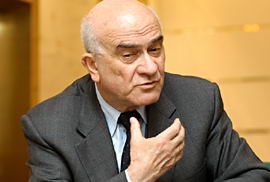
Evgeny Yasin, supervisor of the Higher School of Economics,
About a reduction in VAT:
Olga Chernenkaya leads the heading
About a reduction in VAT:
Many initiatives of Prime Minister Mikhail Fradkov can only be welcomed. This applies to innovative policy and a number of investment projects. For example, a program similar to the American SBIR program, within which Grand Prixes are issued for a commercial implementation of scientific developments, would bring a lot of benefits. Unfortunately, he has initiatives that can definitely be attributed to the category of harmful ones. The latest example is the proposal to reduce value added tax - VAT by 5 percentage points.
The government has been reducing taxes for five years. A flat 13 percent income tax scale was introduced. Income tax, which used to be more than 35%, was reduced to 24%. Finally, more recently, a single social tax was reduced immediately by 9.5 percentage points, bringing the case to a serious deficit of the Pension Fund. To date, it can be argued that taxes in Russia are not at all high. The exception is only the raw material industries, where the tax on mining and export duties are additionally charged. The problems of our economy are not at all in high taxes, and an attempt to stimulate economic growth, reducing them - the idea is meaningless. It is necessary to treat completely different diseases: the weakness of the institutions, a poor investment climate, the opacity of the relationship between the state and the business. If Yukos had not ruined, if the tax authorities did not try to distinguish themselves, completing taxes for previous periods, if a new wave of pressure on the business under the slogan of the fight against laundering revenues had not begun, one could still talk about a decrease in taxes. Then this measure could still bear at least some fruits. And so ...
What is the use of reducing the VAT rate in conditions when different people later come to businessmen and force the “saved” to deduct all kinds of “projects” - from the next elections to the reconstruction of the Konstantinovsky Palace.
If the state has unnecessary money, it is better to spend it on increasing the salaries of state employees. From the point of view of inflation, in the current conditions it is absolutely indifferent to what to do - to invest in infrastructure projects, increase salaries or reduce taxes. In conditions of constant pressure on the business from the state, high and constantly growing corruption, poor business and investment climate, money saved by business due to a decrease in taxes, will not be invested in expanding and modernizing production. In the best case, they will be spent on prestigious consumption or acquisition of public securities. Or taken abroad. Inflation begins in conditions when the amount of money in the economy exceeds the total business demand for money. The state, in order to maintain inflation in the framework, is forced to sterilize surplus in the stabilization fund or stimulate their export abroad. In conditions of poor business climate, the demand for money does not increase. Therefore, the money that the business remains after a decrease in taxes increases inflationary pressure on the economy, it is excessive.
In turn, increasing the level of income in the country, you can solve several problems. A lot has already been said about a decrease in social tension and increasing the level of trust in society. This must be done, including pragmatic considerations - to increase confidence in society. In addition, the presence of cheap labor implies the modernization and implementation of innovation.
The country has colossal problems that require serious institutional reforms. At least four areas related to the social sphere require an immediate solution: housing and communal services, healthcare, education and the pension system.
If we build an aircraft factory, buy foreign equipment, these glands will be very fast. Investments in institutional reforms are investments for decades to come. These reforms are unpopular. All the latest salaries and pensions were made under pressure dissatisfied with the monetization of the benefits of citizens. We must "buy" reforms, invest in them. People should understand that they will receive more money, but they will have to pay a real price for housing and communal services. They will increase their salary, but they will have to buy an apartment by taking a mortgage loan, they will need to buy medical insurance. It is all much more complicated than just taking and reducing taxes, but an order of magnitude more effective.
Olga Chernenkaya leads the heading