
Translated material
Nicos Panayota: “Journalism needs the production of meanings, and not just the description of events”
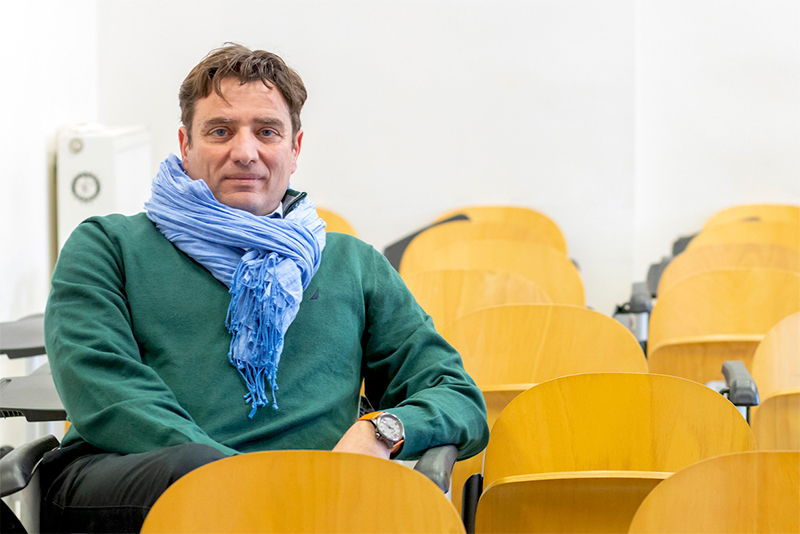
On September 21–23, the International Summer Media School in Thessaloniki, with the support of the European Union representative office in Russia, holds an online academy for young journalists Global Media Systems and New Technologies. We will talk about how AI and new high -tech formats will change the forms and essence of the profession.
Ekaterina Sivakova asked the founder of the international media school in Thessaloniki and the associate professor of the Journalism and Mass Communications School of Aristotle University in Nicosa Panayota on how pandemia changed our ideas about journalism and what to wait for future students of the online academician of this year.
To find out other details and apply for participation in an online school, you need to go through this link .
- Dr. Panayota, what challenges did journalistic education encounter during the pandemic period?
-Covid -19, in fact, accelerated some things that should have happened over the next few years. Our initiative, the international summer media school in Thessaloniki, was just created in order to give an answer to these challenges.
Together with Professor Christos Fragmentopolus, we wanted to establish an international forum where we could discuss the difficulties that a journalistic education faces. We started with questions related to disinformation, with difficulties in covering global events. This year, the fourth for our school, we will talk about verification, but also about artificial intelligence, about VR and AR in application to the profession. Journalistic education is obliged to adapt to innovative tools that our students will soon dispose of. This means, for example, that if before the so -called mobile journalism (that is, journalism using digital tools. - Ed. ) Was a luxury, now this is a necessity.
In general, during the pandemic, we met with a different reality and now we must adapt to these changes in an accelerated mode. In other words, journalistic education needs to adapt to both environments - online and offline - each of which has its own arguments for "for" and "against". We must develop a mixed learning model, develop a remote mode.
- Why did you choose the technological optics to understand the tasks facing the media?
- This is a special focus of this year, and we believe that technological development must be talked through the prism of social sciences. For example, we must talk about whether the artificial intelligence of journalists will replace. Whether we like it or not, it will be a reality for students in a few years.
- Today, our life is much more mediate than before. And in the context of an excess of information, journalists are in much greater stress, now they need to make more decisions.
- Yes, our world is mediate, so one of the main challenges is how to provide reliable information under these conditions. This is no longer a matter of speed: now we must focus on quality.
I would emphasize this situation like this: we must teach our students to be both journalists and editors at the same time. They should not only produce news, but also choose them, that is, make editorial decisions. And be able to switch between these roles.
-One of the master classes in the framework of the school will be dedicated to environmental storytelling (Environmental StoryTelling) .
- Yes, at one of the sections of our school we will talk about environmental journalism, which will become one of the priority areas next year.
- And how would you generally describe the evolution of steritelling in the era of pandemia? It seems that it changes greatly due to social distance standards.
- I grew up, listening to the stories of my grandfathers and grandmother. And it seems to me that such human contact in storytelling is difficult to replace: it gives rise to meanings that cannot be replaced. Now a generation is growing, which receives most of the information from the screens of the devices and depends hard on them. Yes, thanks to new technological tools, storitelling can be more spectacular. But we must remember that the essence of steritelling is in attracting attention. And there are few purely technical solutions here: we must create stories that have a deeper meaning. That is, we need to decide whether we want to create stories that will capture attention for a few seconds or minutes, or want to make stories that will give us a real understanding of what is happening. Journalism today needs the production of meanings, and not just the description of events. Of course, the current agenda will not go anywhere: we see that something is happening, and we must talk about it. But the main task of the journalist today is to show what significance this event has for our lives.
- That is, journalists should create an added value for media content?
- That's right.
- We live in the world of post -truths. Under these conditions, media experience new difficulties in interaction with their audience. Society is becoming more and more divided: people are in information bubbles in which there are their own ideas that there is truth and what is not. How to work in these circumstances? How can they "reach" to different groups of the audience?
- Previously, we also lived in information bubbles: I bought a specific newspaper, representing my point of view, listened to the radio station or watched the television channel that translated political positions close to me. I got what I wanted to hear. But today, due to social media, this phenomenon has developed much more. In my opinion, the media today make a huge mistake: in their desire to compete with these platforms, they made a bet on formats that provide fashionable but superficial information.
On the other hand, I think that we must get away from the concept of a single audience and realize that there are different segments in our audience. The media must determine the characteristics of their audience: to understand who these people are, what they are looking for, what they want to achieve and so on. Instead of adapting social media formats, the media should strive to give the audience an understanding of why it should choose them. If the media reports the same news that I, Nicos Panayot, can read on Twitter, why should I choose your site? The media must make it clear to the audience that they can offer her something else.
- What, in your opinion, today in the media space there are resources to combat the language of enmity and organize a public dialogue in the conditions where the audience is divided into information bubbles? How can journalists and media experts connect different groups of people who do not want to hear each other?
- This is possible only if both groups - journalists and audience - trust each other, and it is impossible if one of the groups says that the other is lying. It is important to restore trust in the media: if people trust you, then you can be mediators, if not, then the dialogue will not happen. How should we build this trust? Changing media formats. How else? We must see what we need to change in ourselves. Until today, the media have been not much engaged in self -criticism. But we must ask ourselves: why don't people trust us? What are our actions to do this?
- Returning to the topic of AI and journalism. How does the task of the production of meanings correlate with the growing automation in journalism, which you will also discuss in the media school? Where is the place for the journalist?
-The training model, on which I studied in the 1980s as a journalist (and thought I would be competitive), does not work anymore. If in 2020 you think that you can be competitive, doing nothing for this, then you will stay overboard. In the past, the journalist was a gatekper, but now this role is lost. But even then and now the role of a journalist is that he should be a mediator or catalyst for changes. These roles need to be developed today. So you can save your place in the profession only if you continue your education.
- Will AI and VR remain only instruments for representing reality or will they produce independent reality?
- This is a wonderful question. But again , I would say that everything will depend on which journalistic model will be selected by the media. Will this desire be to broadcast short messages or the desire to make meanings and explain what this event means for a person? These are completely different models.
- We all agree that journalism is seriously changing from a technological point of view. But it seems that the value of this profession will grow, because in a society of anxiety and post -trauma after Covid -19, journalists are intermediaries between people and reality -as doctors. What new gives professions and what trends will remain with us in the near future?
- First. Before Covid -19, people gradually moved away from the media, but during the pandemic returned to them. In Greece, for three months of quarantine, people read the media to find out the news. And the media should use this: this is a great opportunity to cope with the crisis they experienced.
But for this, the media should find out why people choose other ways to obtain information. And they choose them because the formats that use the media do not correspond to the needs of the new generation. And the media should change this. For example, employees of more traditional media need to be taught new tools. We see that the young generation is watching Tiktok : this means that they are interested in video. Then make a video!
Another serious change is that journalists should learn reporting data in order to show the meaning of Big Data . This can be seen in the example of Covid -19 cases: journalists should not only report what is happening, but also verify this information. But this is not just journalism about numbers: the numbers come and go very quickly. This is not about what numbers you give, but about what influence you have on people.
The negative consequence is that the economic crisis brought by Covid -19 had a huge impact on the advertising industry and the production of “fast” news. Therefore, media organizations should use new resources: for example, subscription journalism.
But in general, I think that all This will lead to the evolution of the very essence of journalism, because journalists will be in a situation where, on the one hand, they need to understand how technologies work, and on the other hand, to be able to use them in order to produce deeper meanings.
- Tell us a little more about what awaits the participants of your school this year.
- For a conversation in our media school, we collect experts from around the world who will represent various approaches, views and ideas. Among the participants will be both students and teachers. This guarantees that the discussion will develop at different levels. Specialists will present a professional approach, and students will be able to offer new ideas and solutions. We want to collect different experience together.
By the way, we included not only ecological steritelling in the school program, but also coverage of the European Union, to show how journalists can write about organizations, illuminating questions that directly concern people's lives. As part of our school, we collaborate with partners from around the world: these are Deutsche Welle , universities from the USA, Korea, China, Serbia, Croatia, all the main universities of Greece. One of the main lecturers on the topic of steritelling will be the current journalist of one of the leading newspapers of India - a country that has serious environmental problems. Previously, she came to our school participant, but now she will act as a lecturer. We create a community, which then continues its existence.