
Translated material
The results of the week. The return of the leader
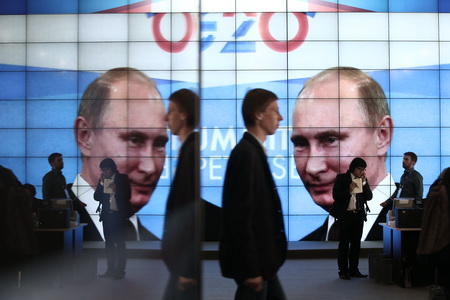
The Great Twenty summit, which opened this week in St. Petersburg, even with a very big stretch, cannot be called the main economic event not only a year-a month. And the discussion of purely economic issues, due to the latest circumstances, is not interested in world leaders as much as the upcoming US military operation in Syria, as well as its consequences. Russia, as the receiving side, will make every effort to ensure that the “Syrian question”, albeit not included in the official summite of the summit, becomes its central theme.
This is largely justified, since the situation in the global economy directly depends on the scenario in which the situation will develop in Syria and around it. What can be the consequences, financial markets have already demonstrated very clearly. As soon as a possible military operation was about, oil prices jumped, and the outflow of funds from “risky assets” and, above all from developing countries, increased seriously. What exacerbates the already rainbow situation of recent favorites in the leading race in the pace of economic growth. Brazil and India, according to many experts, are on the verge of a serious crisis caused by a slowdown in the economy and the impairment of national currencies of these countries. The last factor is even more confused by potential investors. A similar picture is observed in Russia, although here it is somewhat smoothed out by an additional influx of oil -eater, which appeared as a result of the growth of a “military award” in oil prices.
The recent “locomotive” of the world economy - China - also slows down, suffering, among other things, from serious structural distortions in the economy. If the Syrian conflict goes beyond the “demonstrative flogging”, which the American authorities are going to carry out by the Assad regime, the already fragile situation in the global economy can be even more destabilized, which can provoke another global crisis. About the prospects of the war, which will also be connected by Iran with Israel, I don’t even want to think.
All this is so, however, no matter how many world leaders discuss the prospects of American missile strikes on Syria, no matter how many of the possible consequences of these blows, they are not able to somehow influence the decision of President Obama. The only thing that excites the American president is whether his Congress and the US people will support.
The situation is similar, the main topic for the global economy for this year - the expected US withdrawal from the “quantitative mitigation” program, as a result of which global fueling in the economy with streams of cheap money will be seriously reduced. The cost of borrowing around the world will begin to grow. This jeopardizes numerous credit “bubbles” that have been inflated in recent years, primarily in developing countries. And if at least one of these “bubbles” bursts, this can cause a chain reaction.
However, here world leaders are hardly able to somehow influence the situation. If the US Federal Reserve and will take into account the possible global consequences of its decisions, then far from first of all. The main determining factor is the state of the American economy. And if the members of the FRS Open Market Committee consider that the program has completed its task, and its continuation is fraught with an increase in inflation in the United States, the printing press will reduce the momentum.
The current “big twenty” summit very clearly demonstrates that if the US positions as the main determining factor in the world economy were shaken after the 2008 crisis (which, among other things, led to the creation of the “twenty”), now they are restored and even strengthened due to the weakness of the EU and Japan. The role of China, rapidly growing at the end of the last decade, gradually decreases.