
Translated material
Image and sample
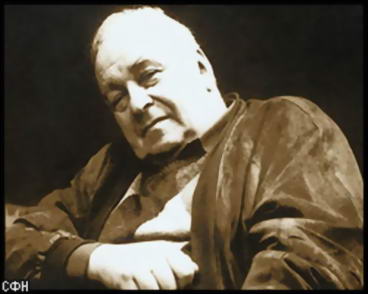
In one of
Last interviewsThe text of which Yuri Levada no longer had time to subtract and assure, he suddenly spoke about "crowding out in the area of dead memory." Indifference, pump and vulgarity (if this is not the same) threaten each of the departed. However, the figure of Levada, now moving into a different dimension, with the previous, earthly stubbornness resists glory and heroization. And during his lifetime, he immediately stopped any rumors about some of his merits and differences, shrugged his shoulders and referred to the “troublesome problem”. It is necessary to understand - signs are given, we decide to read them without turning away and not obscuring - in which depopulated, impaired, unconditioned space people in Russia now live. What are their common guidelines? Who are their recognized authorities? It is a shame to pronounce the answer.
We will not talk about geniuses - most often this only justifies their own failure. Levada was an active and collective person. Social-nervous (engaged) and responsible (that is, not unrequited). Convinced and consistent. This is the point. Such an individual warehouse, also multiplied by impeccable scientific honesty and human decency, does not speak about the charm of the personality, constituted extreme rarity and attracted many to it. But many - and there were much more of them! - repelled. Let us realize how much he contradicted the entire anthropology of Soviet society and man, no matter how much the collapsing society and its governing bodies are tried to reinter such qualities to their Kutsy Saltyk, to assign to themselves and, on the rights of the moral code, drive an “active life position”, “collectivism” and the like, but ineffective bonds.
“I do not know how to work without interest,” he once said in an interview (and the very concept repeated more than once, sometimes, in relation to others, also calling him the word “passion”). It would seem simple? But such a property - you have to remind - was also exceptional. This is now as if they are admired, and even then in words, but before he was not forgiven. Since the usual among others was completely different - “to suffer”, “serve the service”, “pull the strap”, “sit on two chairs”, “give the Caesar Caesarean”.
There were constantly people around Levada. In a fragmented, sprayed, frightened and wary of Soviet society, this was again suspicious. Voluntary cohesion around something looked like a dangerous challenge: "What are they doing there?" And then the hasty and the skin: “Yes, they will destroy us all!” But such a reaction (and from the part of the people who were considered, the sin to say, “decent”) had to be seen, hearing even in the completely vegetarian 1984-85. What can we say about 1969-70-after Soviet tanks in Prague and the beginning of emigration from the USSR, after the process of Galanskov-Ginzburg and the defeat of the "New World"? Then they went under the knife ideologically unreleased “lectures on sociology” by Levada, and their author, doctors of philosophy, deprived the professor’s title, cut off from the possibilities to teach and publish, dispersed the department headed by him.
But Levada never stopped the matter. He loved to collect people. And he knew how to preserve (protect, store them). It is characteristic that many of his employees and like-minded people of the second half of the 1960s came with him-in twenty years, and what years! -In July 1988, in a recently created VTsIOM to work there until now. It is significant that the open (this publicity was fundamental for Levada!) The seminar of the same time was revived in the late 1970s, and then, after several years of the break, transferred to the All-Russian Central Executive Committee and exists in the Levada Center. And when in September 2003 there was a threat of the nationalization of our center and the change of its leadership to the Kremlin appointments and the henchmen, the entire new team of Levada unanimously and deliberately again left with him.
However, with all the many years of continuity in work, its topics, orientation and level, with all the fidelity of the old ties, their tireless support and the caring of Levada, the first to begin the new one to begin the new one. And he does it sharply, irrevocably (the softness of Yuri Alexandrovich should not hide the determination of his actions and the unambiguity of choice in communication: he was not a bully, never boiled, but he was not even more relaxed and a relativist). He did not just feel time - he embodied him. And he pointed out if anyone wanted to see. Its department in the then VTIME was called the theory department. He himself was a theoretician, as they say, from God: his recorded, but still not read by the scientific community of the article, as if the silent decade 1974-1984, in a summary sketch, represent the only theoretical project of sociology at that time, as an independent discipline (in 1993, they were included in the collection of articles on sociology). But in 1988, Levada once decided for himself and made it clear to us all: "Today we need something else." So it was born and, on a historical scale, a variety of sociology took place very quickly, which, it seems, has no analogues in our country or abroad. It is based on gigantic arrays of empirical data obtained during the regular rhythm, but constantly changing in content, in addition, as a rule, orders of public opinion, and, at the same time, sets the task of describing and understanding social economic, political, cultural, national, electoral processes that make up the current Russian society, occur in its “inaccules” and the inaccurators ”and "The top."
The interest of Levada himself, in the framework of this new project, was (and this is also characteristic!) Anthropology of the Soviet - surviving, adapting, applied to circumstances - a person in the post -Soviet conditions, in the postimpersal framework, on the ruins of a totalitarian structure. In many ways, and even first of all, this is what his articles of the last twelve years were devoted to his articles, which compiled two massive collections - “from opinions to understanding. Sociological essays 1993-2000 ”(2000) and“ We are looking for man. Sociological essays 2000-2005 ”(2006). A respectful links to them seem to be found in magazines and books-the ideas are still not discussed, not taken to work. Or am I mistaken?
... In that February on Thursday, on November 16, in my head, in the morning, for some reason, two quotes were spinning in my head (Yuri Alexandrovich, for the past one and a half weeks, did not feel it, and the subconscious anxiety for him apparently did not leave even at night). One is the Byron line: "Who killed John Kitsa?" The second is the epigraph to the cycle of the jaws of the nervous "Christ in the Oil Garden": "Cry, children, you do not have any more father." Consciousness cannot come to terms with the fact that Levada is gone ... It is more important to understand - and, perhaps, help others to appreciate - who he was, remains and, I want to believe, will remain.