
Translated material
The first post -Putin government
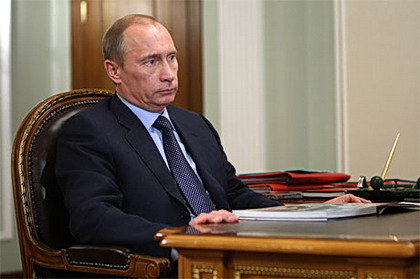
In Russian society, a substantial discussion has unfolded about the composition of the future government of the Russian Federation. The first post -Putin Cabinet of Ministers, which will have to take on the most difficult part of the work to overcome the economic crisis.
The very fact of this discussion cannot but rejoice. He testifies that not only among traditional oppositionists in the expert community, but also in the country's economic elite, understanding has matured: the intellectual and political resources of the current government have been exhausted. The office of Vladimir Putin has no - even bad - anti -crisis strategy. The policy of this cabinet is reduced to a chaotic set of actions to ensure the interests of companies and people close to the prime minister. Meanwhile, the crisis is aggravated, and the government often behaves as if he had a decade of economic stability and high oil prices in its reserve.
The country needs an effective anti -crisis strategy, which means a new executive branch. The highest collegial body of which, according to the Constitution of the Russian Federation, is the federal government.
However, in the discussion about the future appearance of the executive branch, it dominates - in any case, so far - the idea that the personnel permutations themselves are the key to solving the problem. Say, we will replace the prime minister, as well as a dozen Putin ministers with non -Putin’s - and the beginning of effective power is laid.
This, of course, is an extremely naive and therefore dangerous idea. If we want the government to really cope with the crisis in the foreseeable future, a qualitative change of approaches to its formation is required.
Take, for example, the post of chairman of the government. Almost all critics of the Putin’s office propose to appoint a new (next) premiere in the same administrative-bureaucratic way: the president recommend the candidacy, the president introduces it to the State Duma, the State Duma claims, etc.
However: why should we trust the key to modern Russia to the President and the State Duma?
After all, Dmitry Medvedev once has already made a dramatic personnel mistake, making a candidacy of Vladimir Putin to the post of prime minister. Where are the guarantees that the current president will not be mistaken secondly?
And the State Duma, as we all perfectly understand-is nothing more than a collection of irresponsible silence and lobbying-locals. In addition, the very legitimacy of the lower house of the parliament is too much doubt to trust the Duma by the appointment-at least a purely formal-anti-crisis prime minister.
We must understand and remember that we have no time to build up or the right to a systemic error. If the first post -Putin government is not fundamentally different from Putin, then Russia will collapse.
This means: the administrative path of appointing the head of government is no longer acceptable. The prime minister’s candidacy should be called the instance completely objective, impartial and therefore effective - the market.
The Prime Minister should be appointed following a free transparent auction. The starting price of the issue can be at the level of 1 billion euros, the auction step is 100 million euros, any citizenship citizens and dual citizenship can participate to participate. The one who will become the winner of the auction will take the main office in the White House (on the Krasnopresnenskaya embankment). Payment-in rubles at the rate of the Bank of Iceland within 10 days from the date of signing by the President of Russia a decree on the appointment of a new prime minister.
In order to avoid any corruption actions and lobbying intervention and summarizing the auction, the functions of the auction commission should be delegated by the state or public body, which even in the conditions of the modern Russian Federation did not manage to completely discredit. For example, the Council of Human Rights and the Development of Civil Society Institutes under the President of the Russian Federation (Chairman - E. A. Pamfilova).
The auction procedure for determining the new prime minister will lead to the choice of an optimal candidate, since:
• a person who paid billions of euros will not be engaged in corruption at the premier post - after all, he was very likely to actively engage in it in the past and familiarized with its detrimental consequences;
• The winner of the auction will inevitably turn out to be a solid liberal and adherent of market principles - because Only such a person in the post -Soviet Russian Federation could become the owner of a major state;
• The winner of the auction will truly work, “plow” from dawn to dawn, and not “serve the number”, like Vladimir Putin-he will be mortally sorry for the money spent on the premiere post.
It is very important to immediately understand: the new government, which is destined to get Russia out of the crisis - or collapse with the country - cannot be a hostage to the changing mood of the president or intrigues in his environment. This cabinet should have a guaranteed “period of immunity” during which it will be able to work calmly without fear of a sudden resignation. Optimally - from 18 to 24 months. Accordingly, it is necessary to indicate in the conditions of the auction that if the President of the Russian Federation signed the Decree of the Government’s resignation before the expiration of the “period of immunity”, the amount paid to the prime minister is returned to him in full plus penalties in the amount of 0.5% for each day unfinished. Such a condition will force the president as delicately as possible to approach both the assessment of the government’s actions and the use of their constitutional powers in personnel policy.
Next. Consider the principles of the formation of a financial and economic block of the future cabinet of ministers.
A number of respected researchers and commentators believe that in order to change the quality of economic and financial policy, it is enough to replace the incompetent bureaucrats of the Putin’s call on highly capable Russian economists (Mikhail Delyagin, Evgeny Gontmamer, Vladimir Milov, etc.). We are sure that this is not enough.
As you know, the key parameter of the state and at the same time the condition for the development of the Russian economy is the world price of raw oil. Russia cannot influence this parameter with reasonable ways. (Unless, of course, not to consider the scenarios of military adventures, which have recently been whispering about the friends of Vladimir Putin.) Therefore, the price of oil for us is the issue of global good luck (Farce). Therefore, the financial and economic block of the government should be headed by a figure that is traditionally and often outside of any rational framework-luck accompanies. Alarmic figure, in other words. In addition, this should be a person who is not afraid of work in conditions of persistent original hopelessness, as well as having real experience of iconic victories. Only one candidate is responsible for all these qualities in the Russian Federation - Gus Hiddink . He should become the head of the new united federal body - the Ministry of Economics, Finance and Energy (Ministry of Equennero) of the Russian Federation (on an extra -curric basis).
Insufficient knowledge of the Russian language cannot become for G. Hiddinka an obstacle to making a responsible position. We proceed from the fact that the Russian words and expressions that the current state of the Russian economy are optimally described are already well known: these words (expressions) often use the Russian national team football players, as well as representatives of the multimillion -dollar army of our fans.
There is serious reason to believe that immediately after the appointment of G. Hiddinka, the Minister of Economics, Finance and Energy of the Russian Federation, the price of oil Urals It will jump up to $ 50-55 per barrel, and within six months from the moment of appointment-it will rise to $ 80-90 per barrel. Nothing else for a fundamental exit from the crisis, in essence, is not required.
However, the out -of -heart nature of the purpose of Hiddink is an exception. All other ministers, the heads of the State Committee and Federal Services should get their posts as part of transparent competition procedures. It is optimal that the appointment in the next government following the results of sociological surveys at the Echo of Moscow radio station is seen. Considering that the audience of Echo of Moscow consists of the most educated, competent and professionally wealthy people of the country, there is no doubt that the choice of this audience will be as close as possible to the political and managerial ideal. However, other mechanisms that should be discussed later, closer to the day of the resignation of the government Vladimir Putin are possible.
It is regrettable to see that the vast majority of participants in the political and expert discussion about the future of the anti-crisis office do not pay sufficient attention to the need for qualitative changes in the goals, objectives and functions of a number of ministries and departments. Without comprehension of which faithful personnel decisions are simply not possible.
Take, for example, the FSB of the Russian Federation. In the context of Putin's policeocracy, this department was mainly engaged in political repression and power support for redistribution. But in post -Putin Russia, its functions will be already fundamentally different. First of all, the FSB should concentrate on the power protection of civil rights and political freedoms of Russians. And also - take radical decisive measures to complete and final defeat enemies of democracy in order to prevent their revenge. In such a situation, to consider the candidature of personnel security officers, genetically related to a police, is at least not constant to the post of director of the FSB of the Russian Federation. Chekists can be sweet and worthy people, but they will never be able to jump above their own heads and qualitatively change the vector of activity of the largest and odious domestic special services. In my opinion, the famous scientist Evgeny Albats could lead the post -Putin FSB. (However, this is just my private opinion.)
The same applies to the Ministry of Defense. It is quite obvious that one of the most gloomy representatives of the Putin militocracy - Anatoly Serdyukov - should leave. And forever. However, this does not mean that in the ministerial chair we need a representative of the military circles, the General-Marshal lobby. In this case, we will receive a situation of the 1990s: the hysterical cries of the generals about the need to increase the financing of the army against the background of the absolute inefficiency of the use of budget funds and state property as a whole. Plus, another familiar picture is painful: military service soldiers in the construction of general cottages.
(It should be especially noted: the largest Russian liberal economists, leading managers and entrepreneurs, in particular, members of the RSPP Bureau, the heads of Business Russia and Rossiya organizations, have never used soldiers - only officers. There was only a significant contribution to the social adaptation of the officer corps in the conditions of objective large -scale reduction of armed forces.)
Now we must honestly and frankly admit: the army is not a national treasure. The army is a “toxic asset”, a gigantic problem that we inherited from the totalitarian USSR. Boris Yeltsin could not solve this problem due to political instability. Vladimir Putin-due to incompetence and indecision, as well as the detrimental effects of politocrats. If you do not cut this Gordia knot in the coming years, Russia will never leave the crisis.
Therefore, the new Minister of Defense should not be a warrior (albeit the most democratic), who still dream of the Korean war and the Caribbean crisis, but a supercoptional manager who has unique experience in transforming closed non -and -bid corrupt formations (structures) into open effective market systems. At least one such manager in the country is definitely. His name is Anatoly Chubais.
Perhaps only Chubais, having become the Minister of Defense, will be able to teach the army to feed itself and, at the same time, once and for all to optimize the number of armed forces. The answer - how to make an army market and profitable - lies on the surface. Key word: rent. We need a transition to a rental relationship. It is clear that Russia itself is not going to fight with anyone and no one will attack us. And at this very time in different parts of the Earth, there is an acute shortage of capable troops. And here various parts and formations of our army could be quite useful.
A simple example. If Russia in August 2008 leased the 58th Army for Georgia, then in just a few days the federal budget would have earned from $ 1.25 billion (moderate assessment of experts of the Russian Economic School) to $ 1.77 billion (optimistic assessment of specialists of the Higher School of Economics). There is no doubt that the United States and the IMF would provide the Georgian authorities with appropriate resources. And moreover, we would save billions that Russia today is forced to throw into black holes called “Abkhazia” and “South Ossetia”.
And how much we will receive money if Russian troops in 2011-2012. Will they take the place of Americans in Iraq? From $ 45 billion (Rash rating) to 66 billion dollars (forecast guns). And these funds will be enough not only on the army, but also on the patching of several more newly -minted holes of the federal budget.
Brilliantly carried out by Anatoly Chubais for 10 years (1998 - 2008), the reform of the electric power industry allows us to hope that it will be no less successful as a reformer of the military sphere. And already in the middle of the next decade, our armed forces will resemble a small and compact, but rapid and comfortable Mercedes, and not bulky, falling apart and hopelessly outdated ZIL-114.
However, there should not be the impression that a radical change in goals and functions applies only to law enforcement agencies. This fully applies to government institutions of the social bloc.
For example, the Ministry of Culture. Today there are various names of potential candidates for the post of his head - writers, artists, composers, museum leaders. But where is the true reformal, anti -crisis logic here? How does the cultural figure at the head of his industry ministry differ from the general at the head of the Ministry of Defense? Yes, nothing. The same eternal cries “Give money!”, “More money!” With a stubborn reluctance to transfer the industry into market rails.
The main problem of Russian culture is the same as the army is egregious economic inefficiency. The same museums and theaters have a huge real estate located, as a rule, in the best places in Russian cities, and they are not able to earn a living and constantly run into power authorities with an outstretched hand. Or they distract with their dependent squeaks of the most productive and busy people of the country - businessmen. The main task of the Ministry of Culture in the new authorities is to create a mechanism for self -financing of cultural infrastructure. Moreover, for each suburb of culture there are its own, quite obvious recipes. Thus, according to the Augur Estrate news agency, today the ownership of the Russian Federation, as well as successful representatives of the middle class, are 127 square kilometers (!) Of free walls, whose surfaces can be used to place art objects. Why not transfer to the wall owners to the responsible storage (99 years) part of the collections of Russian museums, releasing certain museum areas for commercial use? One way or another, and the next Minister of Culture of Russia should not be a naphthalin “Halturger” (the term I. Ilf - Evg. Petrov) and not even a creator like Vladimir Sorokin, but a professional successful developer. For example, the one who last year at the World Congress of the Small Dutch said the famous phrase "who does not have Rembrandt can go to w ...". And tore off the ovation.
In my opinion, the discussion of the future government pays too little attention to significant changes in its structure, the need for which is dictated by new priorities in the activities of the executive branch of the next call.
So, there is no doubt that one of the most important tasks of the first post -Putin cabinet will be the revival of political and economic freedom in the country . First of all, freedom of speech. However, are all Russians ready for freedom today? Of course, no. For almost 10 years, our fellow citizens have been subjected to the wrapping effects of authoritarian propaganda. Not to mention long centuries of obsessive state paternalism, which seriously deformed the political and economic consciousness of our compatriots. And today, if freedom is provided to everyone at once, we will encounter, first of all, with an uncontrolled jump in nationalist rhetoric, as well as a sharp growth of left (simply put, frankly parasitic) moods. And the new government, not even having time to proceed to the necessary transformations, will become an object of obviously unfair criticism from all sides. Which, to a large extent, paralyzes his activity. This cannot be allowed.
We have no right to repeat the mistakes of the early 1990s. Переход к свободе должен быть плавным и постепенным. Свободу слова нужно предоставлять в рамках упорядоченной процедуры. Для этого, вероятно, потребуется новый орган исполнительной власти – Федеральная служба свободы (ФСС), которая будет заниматься лицензированием россиян. В лицензии, выдаваемой ФСС, должно быть четко указано, в каком объеме и в какое время суток (а также, вероятно, на каких языках) ее держатель (лицензиат) может пользоваться свободой слова. Для людей либеральных взглядов условия лицензий окажутся, вероятно, предельно мягкими. Зато для социалистов, националистов и т.п. необходимы разумно жесткие ограничения. Лицам же, замеченным в последние годы в особо радикальных (экстремистских) либо откровенно провокационных высказываниях, выдавать лицензии не следует в принципе — по крайней мере до 2015 года. Иначе неконтролируемые тёмные энергии просто разнесут страну быстрее, чем первое постпутинское правительство выведет её из кризиса.
And the last. О чем нельзя не сказать. Многие участники экспертной полемики о конфигурации следующей российской власти сходятся во мнении, что Россия не начнет реальную борьбу с кризисом, пока Администрацию президента страны не возглавит Владислав Сурков.
It is difficult to disagree with this. Владислав Юрьевич Сурков известен как самый востребованный политический менеджер и криэйтор современной России. Результаты его деятельности говорят сами за себя. Достаточно вспомнить такие успешные общественно-политические проекты, как молодежные движения «Наши» и МГЕР. Кампанию «За Путина!», которую В. Ю. Сурков организовал осенью 2007 г. (только теперь мы понимаем всю гениальность замысла: мягко дискредитировать В. Путина, чтобы сделать невозможным его возвращение к власти ). Статьи о суверенной демократии, аналитической глубине и стилистической легкости которых позавидовал бы сам Иван Ильин. Произведения ленд-арта, созданные Владиславом Сурковым в соавторстве с Николаем Полисским. Шедевры раннего сюрреализма, написанные В. Ю. под псевдонимом «Хоан Миро».
Однако персона Владислава Суркова столь масштабна, что одной лишь должности главы кремлевской администрации для неё (персоны) — слишком мало. Было бы правильно, если б В. Ю. Сурков параллельно возглавил бы еще 3-4 федеральных министерства (ведомства), остро нуждающихся в оптимизации руководства и антикризисном менеджменте (в частности, Госнаркоконтроль). А также занял пост первого заместителя главы Минэкфинэнерго РФ. Что позволило бы министру, Гусу Хиддинку, больше времени уделять семье и любимому хобби — руководству футбольным клубом «Челси» (Лондон).
Сегодня мы вправе со спокойной уверенностью говорить: скоро у нас будет новое правительство. Но процедуру качественного обновления должна пройти не только исполнительная власть. А — все мы, от задних пяток до корней волос. Иначе мы никогда не сможем стать сильнее и выше кризиса.