This year, after a 30-year break (in the 70s, the visit was paid by Mariner-10), Mercury was visited by the Messenger (NASA) interplanetary station.
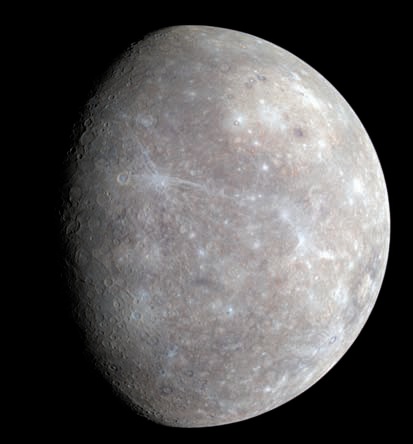
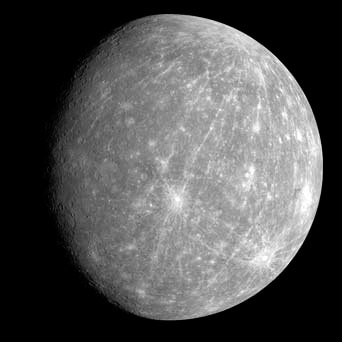
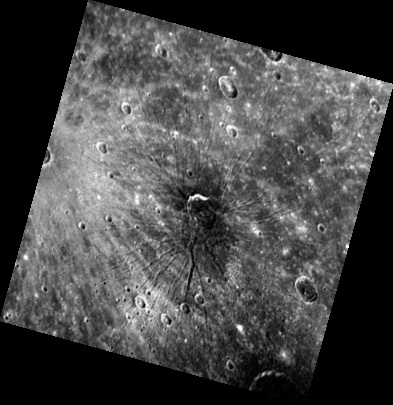
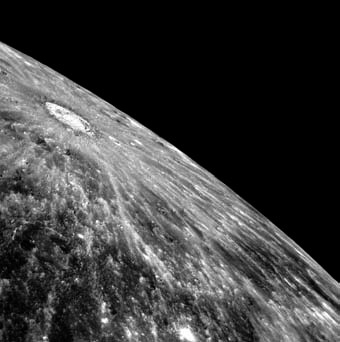
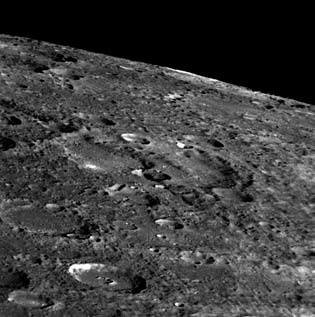
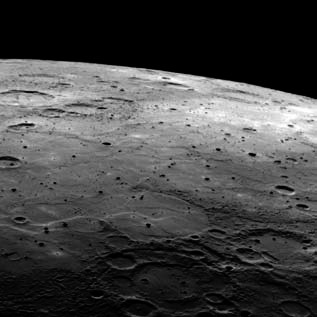
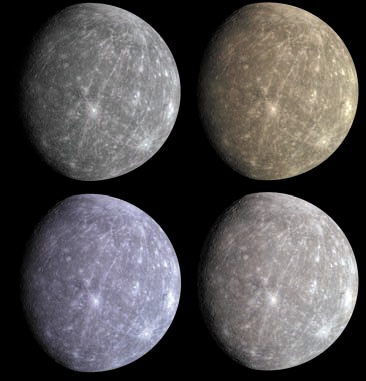
The "ceremonial portrait" is assembled as a mosaic of pictures taken from a distance from 12800 to 16700 km. The picture is given in artificial color, although this can be called with a big stretch: Mercury is essentially black and white and very dark, as, indeed, the moon. But the black and white portrait is very expressive. White rays coming from craters are striking. From one of them (above) the rays go almost through the entire planet, giving it a resemblance to the watermelon. Light rays - streams of thrown breed when an asteroid hit. They are not so bright, just lighter than the rest of the surface, darkening in billions of years from bombing with cosmic rays. This is something unique to Mercury: a system of grooves diverging from one center. She was given the nickname "Spider", and the official name Panteon Fossae - “Fossae” translates as “ditches” or “furrows”. The causal connection with the crater in the center is unclear, on this occasion, planetologists continue to argue. It is possible to crater (its diameter - 40 km) appeared there by accident and later. Regarding the possible nature of the furrows in the NASA commentary, nothing is said. In this picture, the crater, which decorated the rays of the half-Mercury, is shown close-up, its diameter is 110 km. In the last two pictures - two surface areas very different from each other: mountainous and strongly extended with tectonic fault, cutting craters, And more smooth, as if swimming with lava, with a much smaller number of smaller craters. It shows the result of an attempt to choose the planet color scheme based on pictures ^ with three light filters with different processing methods. It is argued that the differences are within the differences in the individual color perception of people.