
Translated material
Nikolai Rubtsov
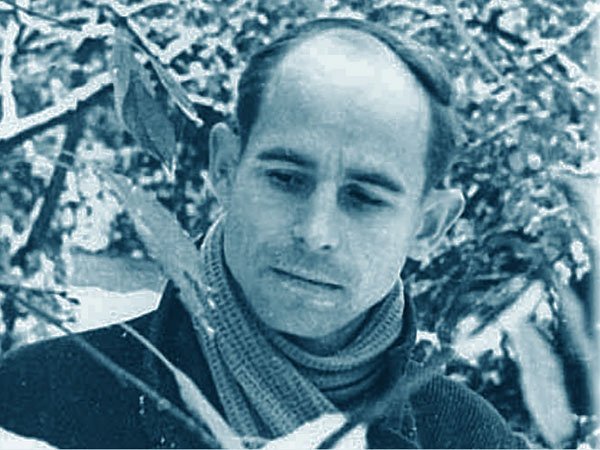
On January 3, 1936, the poet Nikolai Rubtsov was born.
Personal business
Nikolai Mikhailovich Rubtsov (1936–1971) was born in the village of Vemetsk, Kholmogorsky district. Soon the family moved to the district center of the Nyandom. In the summer of 1941, a move to Vologda followed, from where Nikolai Rubtsov’s father was drafted into the army. In 1942, his mother died, and six -year -old Nikolai ended up in an orphanage. After graduating from a seven -year school, Nikolai Rubtsov studied at the Totemic forestry technical school. Then, for two years, he worked as a stoker on a fisherman in Arkhangelsk, studied again-at a mining and chemical technical school in Kirovsk, but was expelled. From 1955 to 1959 he was military service in the Northern Fleet, was the sailor of the destroyer "Ostrey". After demobilization, he lived in Lambrad, worked at the Kirov factory. He became a participant in the literary association at the factory newspaper Kirovets, Rubtsov’s poems appeared in collections of this first melting association, in the newspaper “Evening Leningrad”. In 1962, Rubtsov released his typewritten collection "Waves and Rocks". In the same year, he graduates from the school of working youth and in August enters the Literary Institute. But in June 1964, Nikolai Rubtsov was expelled from the institute. During these years, Rubtsov’s poems are published in large literary magazines (“Youth”, “October”, “Young Guard”). In 1965, Rubtsov was restored at the correspondence department of the Literary Institute. In Arkhangelsk, a collection of Nikolai Rubtsov “Lyrics” is published. Then the collections of “Field Star” (1967) are printed, “The soul stores” (1969), “Pines noise” (1970). In 1969, Rubtsov graduated from the Literary Institute. He began to work in the newspaper Vologda Komsomolets, received a one -room apartment in Vologda. On January 8, 1971, Nikolai Rubtsov and his bride Lyudmila Derbina submitted documents to the registry office. On January 19, 1971, Nikolai Rubtsov died in a drunken fight with Lyudmila Derbina.
What is famous
The work of Nikolai Rubtsov receives opposite assessments. The unconditional admirers of his talent call him the “brilliant hope of Russian poetry” (F. Abramov), “the most significant lyrical poet of his time” (V. Kozhinov), “Holy, Highly spiritual, pure” (V. Bondarenko). Reviews of other critics are absolutely opposite: “Pseudo -Ochokreyansky Smerdyakov” (V. Novikov). In the framework of “traditional” poetry, abandoning complex metaphors, Nikolai Rubtsov was able to reach lyrical heights. He felt like a successor not only by many people close to him in spirit with Yesenin’s poets, but also by Alexander Blok, Nikolai Klyuyev, Sergey Klychkov. With Klyuyev and Klychkov, Rubtsov’s poetry is united by a religious cult of nature, an image of a peasant hut as a model of the world, repulsive from urban culture. With these means of scars, it describes the modern Russian village of the 1960s, which appears as an endangered, dying world: an empty temple, a destroyed rural cemetery, a rotting boat. At the same time, the author understands that with the destruction of the village world, something valuable is left from life. It is noteworthy that the landscape lyrics of Rubtsov, apparently, for the first time in long years in Russian poetry, an image of churches appears, however, more often destroyed ("are the ruins of the cathedral, as if former Rus' was sleeping ...".
What you need to know about
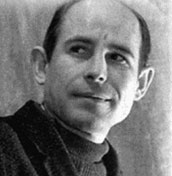 Nikolai Rubtsov
Rubtsov turned out to be mostly posthumously, the leader of the direction of Russian poetry of the late 1960s-1970s, which received the conditional name “Quiet Lyrics”. It arose in many ways in connection with the disappointment, which in the mid-1960s ended the era of the "thaw". The “quiet lyrics” in many ways contrasting the poetry of the “sixties”. Instead of journalism, she prefers elegance, instead of public progress - a return to the origins of folk culture. We can say that if the poets of the early 1960s walked along the “path of Mayakovsky”, then the “quiet lyrics” preferred the “path of Yesenin”, which many of them, including Nikolai Rubtsov, sincerely loved. The poets of this direction are characterized by traditional images of Rus', epic heroes, and an appeal to Orthodox symbols. They refuse experiments in building a verse, preferring an emphasized simple traditional verse. At the same time, it cannot be said that the “quiet lyrics” corresponded to the official ideology of its time. She was much more “soilnic”, in many ways negatively evaluated the destruction of the Russian peasant world in the 20th century and strove for traditional moral and religious values. In addition to Nikolai Rubtsov, Vladimir Sokolov, Anatoly Zhigulin, Anatoly Prasolov, Stanislav Kunyaev, Nikolai Zhanapkin, Anatoly Perevyev, Sergey Drofenko belong to this area of Russian poetry. Very different authors, who were united by the “quiet lyrics”, share common aesthetic ideals and historical and cultural guidelines.
Direct speech
The sad Vologda is asleep
On dark sad land,
And people of the outskirts of ancient
Alarmingly pass in the darkness.
Darling! What else will happen
With me? Native dawn
Tomorrow will not wake me up
Playing in the window and grief.
Funny pipes fell silent
And dancing on the whole floor,
And the door of an empty club
Sadly closed.
Darling! What else will happen
With me? Native dawn
Tomorrow will not wake me up
Playing in the window and grief.
And the restrained dialect is sad
On a dark sad porch.
Everything was fun at first,
Everything became sad at the end.
On a dark detachment of separation
And in a dark farewell car
I hear sad sounds
Which no one hears ...
N. M. Rubtsov "Farewell"
“Rubtsov was one of the first, the main, internal vice of the whole Soviet era - this is a vice of unlucky, godlessness (in the sense of the lack of an intuitive moral law), the image of the ruins of the spirit is seen behind the ruins of the northern village. Behind the seemingly absurdity of Rubtsov’s lyrics, it seems to be a very unpretentious person - just a person, the flesh from the flesh of this very rural world. But the torment that he is experiencing is, as it were, the exposure of that heartfelt flour that goes far beyond the limits of the village world - the torment of loneliness, defenselessness before the chaos of life, the torment of God -confinement and the vigorous longing for holiness and faith. ”
Leiderman N. L., Lipovetsky M. N. "Modern Russian literature: 1950 - 1990s"
4 facts about Nikolai Rubtsov
- Nikolai Rubtsov began to write poetry in the orphanage.
- The first published poem by Nikolai Rubtsov “May arrived” appeared on May 1, 1957 in the newspaper “On guard of the Arctic”.
- According to the memoirs of students of the Literary Institute, once Nikolai Rubtsov arranged a “feast” with the classics: Pushkin, Lermontov, Gogol, Blok, removing their portraits from all floors and collecting in his room. The fellow students found him “clinging”: “Your health, Alexander Sergeyevich! .. YOUR, Mikhail Yuryevich! ..”.
- Rubtsov often performed his poems under the guitar or harmony. Later, a series of poems by Rubtsov became famous songs that performed both pop singers and rock musicians.
Materials about Nikolai Rubtsov
Article about Nikolai Rubtsov on Russian Wikipedia
"The soul keeps." Life and poetry of Nikolai Rubtsov
Site dedicated to Nikolai Rubtsov