
Translated material
Russia Tom Rob Smith
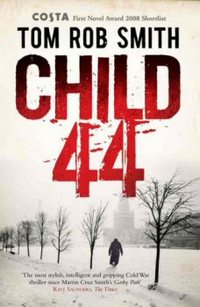 The scandal around the film “Child 44”, supposedly distorting our story, which could not be watched on the eve of Victory Day, so as not to offend the memory of the veterans (although where is the film, and where is the memory and where are the veterans themselves?), Forced to turn to the original source of Tom Rob Smith. The film itself, of course, may be worse or better than the novel, we have not yet seen it for obvious reasons, but, in any case, it will spin around the declared plot and figurative series. Is there something insulting our memory there?
However, before answering this question, you should think: what is a distortion in films or literature? Whether we never caught ourselves thinking that Western cinema, taking up the Russian theme, could not find a balance of reliability in any way, which is why we were strongly in the belief that the Russian theme (like the “mysterious Russian soul”) is not at all the teeth of any Westerners.
It would seem that in “Moscow on Hudson” (1984) he played as much as Savely Kramarov, but did Volodya Ivanov performed by Robin Williams are Russian? He walks wrong, and thinks wrong, and linen, probably, changes every day. Or take “Dr. Zhivago” (1965) performed by Omar Sharif. Everything is good in this film - a forest, winter, a steam locomotive, but why does Omar Sharif come to the village and settle in a fabulous tower? A certain hit on the Russian theme occurred in the Gorky Park (1983), just a great policeman came from William Hert, but Gorky’s park itself is clearly not Gorky Park.
On the other hand, how did we portray the West - by Mark Twain, O'Genry? What westerns were ongoing in the GDR about noble Indians and greedy white, where one Dean Reed was puffed up for all Americans? Was our Zhzhenov strongly similar to Senator Stark (“The whole royal army, 1971), and Klaipeda, where they shot, to America? That is, is there any distortion too?
I still remember a television play about the poor-standing of the poor jumping with Empire-standing, which the cynical photographer-reporter recognized by brilliant boots. And then I cleaned the shoes myself ... I looked at it in that childhood when I still did not know that I would also become a “cynical journalist”, and the Soviet world - the world of the post -Soviet pureless man.
It seems that another Western novel about old Russia (something from the era of Peter, Catherine or Alexander) is still more adequate than Western cinema about Russia of the last century. Although this effect may be achieved only because the “old Russia” is equally defended from us all, and we can reconcile at the consensus myth.
Another thing is when a foreigner is taken to describe the foreseeable Russian past, which still hurts, as the young Englishman (he is only 36 years old) Tom Rob Smith in “Child 44”, the adaptation of which is prohibited for rental today. The Medinsky Starikovs stood on the hind legs: distortion, provocation, slander! Although let's still get into the skin of an ambitious Englishman who needs to explain a lot about Russia. The fact that in truth does not lend itself to any explanation.
So Tom Rob Smith took True Story Andrei Chikatilo and moved her to the Stalinist and post -Talinsky fifties by the will of the novelist. Has the right! And the main character brought Major KGB. And in fact, at the same time he needed to tie the following threads of motives.
First: the nature of the humility of Soviet people in the face of political terror. The second: why did many Soviet people, front -line soldiers were eager to work in the KGB at a time when it was hardly anyone who was unknown that career growth and rotation of personnel were carried out there through denunciations and executions? Third: how could a monster appear in the USSR, like Chikatilo, and what were his internal urge?
At the same time, Tom Rob Smith, of course, is not a sociologist-researcher, not a righteous, obsessed with the truth, but an ordinary commercial writer, who goes for success. And above all, he wanted his books to be interesting to the mass reader and sold well. Therefore, technologically, he tried to make something like a modern series like “24 hours” from this plot, when bad and good heroes change status in short intervals, a brother suddenly discovers, love arises and perishes, the colleague turns out to be a traitor, the dissident is a snout, etc. He himself admitted that he took the “24 hours” technology as a basis and, of course, read a lot on the topic - Anne Appelbaum, Conquest, and Solzhenitsyn. Surely I read Zamyatin “We”, where he got the surreal atmosphere of total control.
To the first question, he answered this way. Because people did not resist the terror that they were terribly afraid, which was why they were in constant depression and apathy. So this, of course, is not so. This is a “distortion of history”. I remember childhood in the fifties in a very diverse palette of colors. People often laughed, joked, and it was even more ominous in their own way than if they were forced, because it discovered the degree of voluntary complicity, moral blindness. They did not notice the unnaturalness of what was happening, as they do not notice much of the unnatural even today.
Tom Rob Smith solved the second question as follows. The front -line soldiers therefore worked in repressive bodies that they had no other choice. Who was planted on cocaine, and who was stupefied by propaganda, again everyone was afraid. As in fantastic anti -utopia, they supposedly all were hypnotized by tyrants. So this is also not entirely true. A modern Englishman clearly underestimates the degree of cooperation and sincere involvement in the totalitarian project. In order to be a Soviet person, cocaine was not at all required.
He quite rightly brought Chikatilo (and this, apparently, infuriated the Medina Stariki) his children's trauma, received during the Holodomor as an illustration of the idea, that the crimes of the regime and through generations give rise to monsters. The true truth, such a motive was really present in the history of the real Chikatilo. I was engaged in this topic in due time, although she was not attached so decisive importance. But it is unlikely that the distant holodor or children's injuries were the root cause of perverted morality and motives, for example, “democratic” riot police, who participated in the dispersal of the demonstration on May 6, 2012, and then helped to falsify the bailiff protest. Other people are shit, just because shit, and this is something from the soil, local air and water ... That's where the mystery is!
Also, to that robe Smith had to somehow explain why Chikatilo was caught and could not catch in any way, and bring the dramatic conflict to the investigation itself. He built this conflict at the statement that the Soviet social theory denied the presence of maniacs as such, and anyone who began to catch a maniac himself became a threat to ideology, that is, a criminal. That is why in the novel they are not catching at all Chikatilo, but by Jack Bauer - an officer who is investigating this case. This thesis of Smith is also an unconditional exaggeration. The presence of terrible criminals by the Soviet doctrine was not denied. Everything is much more prosaic. Chikatilo could not catch, because they preferred good indicators in the reporting, which is why they caught and killed a lot of inconsistent people, mentally ill. But in the press about maniacs they really never spoke before the appearance in the seventies first official maniac named Mosgaz, they simply did not know about their existence for a long time. So this motive-the concealment of the nature of social negativity-could somehow be present, although not in such a sharp form as in the novel.
“Child 44” is a certain version of our past through the eyes of a logical Western man, which is also interesting, and which, of course, does not always coincide with Russia in our feelings. But sometimes it is useful to look at yourself from the side. Moreover, Russia is still absurd, and the ban on cinema is part of this old absurdity.