
Translated material
Three bags of corn
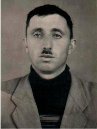 Ruslan Malsagov
Bazaar days in Nazran in the 40s were on Wednesdays. Zaam Aushev left the eight -year -old son of Mohammed with his relatives who lived near the bazaar, and left for Surkhahi, so that, returning in the morning, to sell three bags of corn left here. Corn Zaama and Mohameta had to be sold in small portions, not bags - there were few people here. All night the boy rushed about in a dream, he was tormented by nightmares. That someone tried, without paying, to tear out a bowl of corn from his hands, then he wandered among the masses of strangers in the bazaar, not finding his father, then, by force, getting out of the bazaar crowd, rushed to look for the way home in despair. It was the night from February 22 to 23, on the eve of the bazaar day - Wednesday.
Suddenly something got baked, and he woke up. They knocked on the door, drummed that there was strength.
It was dark outside the window, the dawn barely squeamed. Hearing a knock, Magomet was delighted. "Father arrived!" - flashed through a consciousness that had not yet managed to drive away the fog of painful night visions. “Now we plunge the bags and go to the bazaar,” thought so, the sleepy boy hastily pulled his pants. But in the front of him, it was not his father, but by armed soldiers. Everyone in the house cried: the mother of the Goshi family, grandmother and children, the Owls had five of them. There was no father at home. As it turned out later, he was sent under the escort to the assembly point, supposedly to participate in the "solemn meeting" dedicated to the Day of the Red Army and the Naval Fleet.
Magomet wanted to run out into the street, to see if his father was going. But the military blocked his path, their threatening shouts, apparently, meant something like "Don’t dare to get off!" The boy, who did not know in Russian, tried to explain himself in the Ingush or at least with gestures to explain to these people that he does not live here, in Nazran, and there, far away in Surhaha. But no one listened to him ...
Everyone was loaded into the car. By order of the military, the two bags of corn went to the Ozdoevov (actually, only one bag of cargo was allowed to take for the family), and the third - Mohammed Aushev.
Mohammed did not see either his father or one of his family either that day or then, for a long, long time ... In the car, taking away where, the boy was tormented by such an unbearable grief that his childhood did not know, because he said goodbye not only with his homeland, but also with his relatives ... He could not look at his corn, which people could not look in the car in the car. Magomet was tormented by an inevitable obsession: it seemed to him that it was precisely because of these damned bags that he was separated from his parents.
Bread card 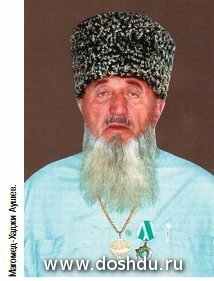 Later, when he had to work with the other boys-saving boys at the collection of coal slag at the Atbasarsh railway station, near which, after a 22-day track, deported were planted from the Caucasus, Mohammed comprehended another blow, deprived him of the last opportunity to survive on his own. A bread card was stolen from him.
What could be worse? In those days, hundreds of immigrants were puffy and died from hunger. He knew that on his card someone would receive 600 grams of bread a day. He also knew that the kidnapper is somewhere here, nearby - one of the peers, those who worked with him. But how do you find out who exactly? Not caught - not a thief. Yes, and it was a shame to find fault with any of them. Everyone barely kept on their feet from hunger.
Yes, although the case of a bread card initially brought the boy into indignation, he quickly realized that it was useless to be angry. Someone tried to survive at his expense. So he had one thing to leave. Go to nowhere, look for your family.
... The second spring was sent. May. Warm. You can spend the night on the street where it got. Without saying a word to those who worked with him, Magomet at lunchtime threw his scoop and furtively jumped up on the first commodity train. He did not care where to go, he did not know where those whom he hoped to find. So he rolled the rack, he was eager for the wind, sitting on the foot of the commodity, recalled the most sweet younger sister, two -year -old Hyadi, about other sisters and brothers, there were eight - three boys and five sisters in the family. From these memories, the alarm was a little released, it became brighter in my soul ...
... In the special barack where Magomet lived, no one was particularly alarmed because of his disappearance. It was a common case: not only children, but also adults often disappeared among immigrants. Someone froze in a winter road caught by a drill; Someone in the spring remained in the field where he went to collect wheat ears: hungry people simply swelled from overeating a slightly fried grain (usually before the start of spring field work in the Kazakhstan steppes they set fire to the stube), otherwise someone brought to insanity a typhoid and man stolenly got out of bed and went to die somewhere ... there were a lot of similar ones. cases. ... And in the meantime, Magomet, he traveled on trefting trains back and forth, not knowing his final stop. It was not possible to meet at least one tribesman. If someone, having become interested in where he came from, the boy answered one thing: "The family disappeared." He did not know other Russian words. After such answers, many personnel showed sympathy for the Chumazoma from coal dust, a half-destroyed little boy and gave something to eat: a handful of seeds, a slice of bread. “And one Russian retired officer, who asked who I was by nationality, when I replied:“ Magomet ”, patted me on the shoulder, pulled out his bread card out of the breast pocket and gave me,” when Magomet -Haji recalls this, tears are still full of eyes. Once met in some kind of railway dead end, the old woman-Kazashka, guessing the face that he was a Caucasian, explained something in an incomprehensible language for a long time, showing his hand to not know where and repeating: “She-Shen”. Mohammed did not know that on the side where this woman indicates, there are Vainakhs. When he moved in this direction, she waved her hands even more temperamental, repeating in surprise: “Wooh!”. Then she carried two tortillas from the kitchen and handed it to him. After four days, Mohammed reached some settlement. It turned out that this is the village of Ozerny, located 100 km from Atbasar. Mohammedu was very lucky: he was sheltered by Abukar Torokhov who lived here. He had many children. The owner advised Mohammed to stay with him until it turns out where his parents are. Abukar was leaving somewhere, asking somewhere for a long time, talked about the boy, about his wanderings and fate, but could not find out anything.
But once Abouk returned, somewhat excited. It turned out that he heard that Aushevs live in one of the collective farms of the Kustanai region.
Mohammed, already accustomed to wander, assured the good Mullah Abukar that he himself would reach this collective farm and find out if his parents are among the Ingush living there. Abukar was afraid to release the boy alone, but then gave up, the adult was painfully asserted, it was not an adult teenager for years.
... Knocking goods with coal, fuel-lubricants, forest and other cargoes towards Kustanaya went regularly. Mohammed could only wander close to the platform that away from the latter, where the accompanying person usually sat with the rifle, he had to beware. As soon as the train touched, Magomet from the back side, imperceptibly jumped onto the bandwagon. He well remembered the name of the station, which Abukar told him about. Two days later, he safely reached the specified collective farm. He did not find his parents, but the two families of Aushevs - Mohammed Sepsoevich and Mohammed Porozoevich, who lived there with other special migrants, accepted him as his own son. It turned out that they were his fellow villagers, expelled from the same village of Surhahi. At first he lived in a large family of Mohammed Sepsoevich. And then he was taken to him by Magomet Prelevich, married to a very kind Georgian ... Magomet Prezevich turned out to be a magnificent tin. His fishing was highly valued on the collective farm. Working as a blacksmith, he complied with orders of local residents. For this, the villagers were brought to him by someone a piece of bread, some of the hand of milk. Therefore, Mohammed, along with other children, did not have to go to collective farm fields to collect wheat spikelets on spring days. 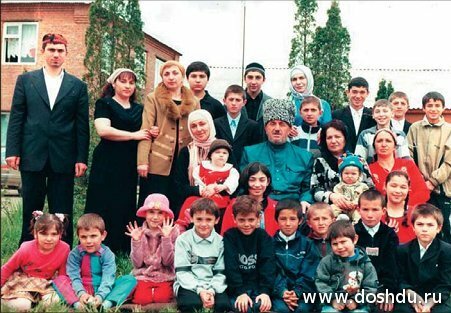 ... There were months, years of separation from the family. Parents were looking for him, he was looking for his parents. And here is a joyful news!
It was on the autumn day of 1947. Someone saw his father in the Karabalyk district of the Kustanai region!
... The door of a low dugout on the outskirts of a farm, folded in a habitat from the adult and covered with poles and a layer of straw, coated with yellow clay on top, was open. There was nobody in the yard. Magomet entered the dugout, as in a dream, and became at the threshold. Father sat at the burning stove, thinking about something, propping his head with his hands. Then, noticing the entered, he turned to him. In front of Zaam stood a long and thin, with sunk eyes, a plague teenager in pants, kneeling. At first it seemed to him that this was a ghost. But when the boy cried and rushed to him, Zaam realized that in front of him Magomed-Haji Aushev was a living person, and not a ghost, and hurried into the house to find something edible for the alien: he thought that the boy had brought hunger to him. The father of his son did not recognize. But Mohammeda did not fail children's memory. He recognized his father as soon as he turned to him ... The family survived, it was a rare happiness in those times. No one died. Mother - Aminate returned to dinner. She, as usual on Fridays, went to the banks of the uy river to make a prayer (prayer), and crying secretly, prayed to Allah for the salvation of the lost son. Although none of his relatives would have hoped for the fact that he would return living home. Zaam did not live long after the return of his son. He was buried in 1949, in April. Everyone else survived ... Today, Mohameta-Khadzhi Zaamovich Aushev is known not only in Ingushetia. His name is pronounced with deep respect in many corners of Russia. Soldiers' mothers told people about his kindness, humanity, disinterested participation in someone else's trouble, who during the war in Chechnya gathered in Ingushetia dozens and hundreds to save their sons, dying in this meaningless war. Magomet-Haji on his Niva went to bus stations, took tired, exhausted women to Surhahs, where the Aushev family warmly received Russians who brought grief and anxiety for his sons here. Aushevs themselves moved to one of the outbuildings, and the entire multi -room house was left at the disposal of the guests who came and left in whole groups. In total, during the war (replacing each other), a shelter was found in this house, free meals and maintenance of more than 300 soldiers' mothers of different nationalities, mostly Russians. Moreover, Magomet-Haji has been in the war zone more than once, helped mothers find their sons alive or dead. Now all this is behind. But it is impossible to forget the feat of this humanist and peacekeeper. And his house is now called the “most hospitable house in Ingushetia”, then the “house of soldiers' mothers”. And although those tragic years are gradually moving away from us, go to history, Aushevs continue to receive letters of thanks and telegrams. Every year on June 4 - on the day of the formation of the Republic - Mohammed Haji, decorating the breasts of the Order of Friendship of Peoples and overtaking an old patterned belt with silver plaques and a family relic - a long -haired long dagger, meets dozens of guests on the threshold of his house. There are no uninvited, its doors are open for everyone who needs help, protection, warmth and human participation. And next to him, his sons Maksharip and Musa, daughter and noisy watga of children. There are 27 of them, and Dadi is their pride, the most important person in their life.
“The future is for the grandchildren - both mine and our whole people as a whole,” says Magomet -Haji, with a joyful look, looking around the children gathered around him. - And the responsibility to help them find the right path in this life - on us, the elders.
Based on materials from Mikail Zangieva