
Translated material
On the air of Koval
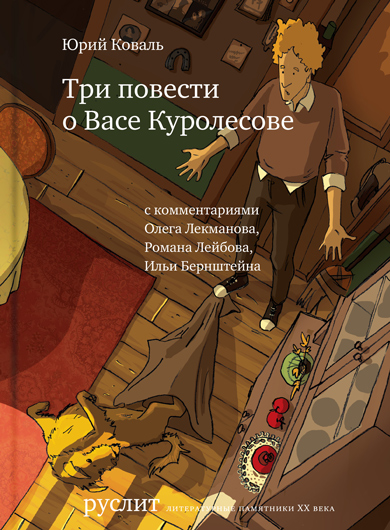
The new edition of Yuri Koval's novels about Vasya Kurolesov is published in the Rusiti series. Literary monuments of the XX century. " The pathos of the series is declared on the first page: publishers are guided by the well -known “literary monuments”, but limit their program of Russian prose of the 20th century and choose a more popular comment style - “with many illustrations, interesting“ contextual ”stories, attracting specialists from related (sometimes not so) with literary studies of areas.”
Comments that three people wrote - famous philologists Oleg Lexmanov and Roman Leibov and publisher Ilya Bernstein - the main reason to talk about this book. A similar collective commentary is a know-how, in which Lekmanov has already participated several times: before that his comments came to Roman Valentin Kataev “My Diamond Crown” (together with Maria Kotova), to the “Egyptian brand” of Mandelstam (together with several colleagues and subscribers of a special LIG community), to the “high illness” of Pasternak (together with Anna (together with Anna Sergeeva-Klyatis) and to the "pure Monday" Bunin (together with Mikhail Dzyubenko). The commentators approached Koval as seriously as Mandelstam - and this gives rise to a certain pragmatic ambiguity. “The Adventures of Vasya Kurolesov” is clearly not the same confusing text as the “Egyptian brand”, and it is difficult to immediately understand who addresses the commentary on it.
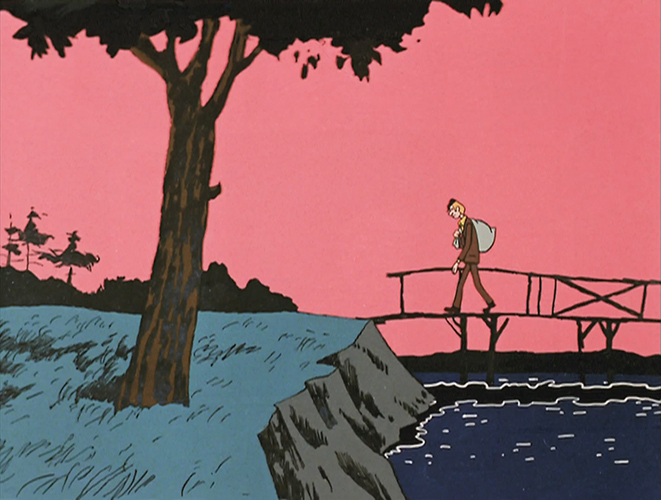
In the eyes of the publishers “The Trilogy of Kurolesov is, first of all, a monument of Russian literature of the 20th century and a brilliant description of the Moscow and Moscow Region of the 1960-1980s”. The assigned status of the monument obliges to scrupulously approach the textology of the works - and in the commentary all the discrepancies with journal publications are taken into account, as well as fragments lowered during the editing. The status of a historical source makes us make, perhaps, the most interesting - at least for a third -party reader - work: to search for the necessary illustrations (for example, Soviet posters about the danger of smoking in bed and archival photographs of a long -demolished umbrella alley in Moscow), explain completely not obvious realities: so, “glass nuts”, which were rained from a broken TV, are absent in modern TVs of radio tubes (the image of such a lamp is given from the side). But Koval’s detective novels have another status: these are popular children's books. Today they are enjoyed by children (specially went to the district Moscow library - here there are “Kuroles” publications of 2013, on the book itself, marking 0+, and the library sticker indicates 12+ - a clear overestimation). The cartoon on the first novel is regularly broadcast on television. And the fact that the book may well fall into the hands of children, forces the text itself, and in the commentary to include explanations of the simplest things: the schoolboy may not know what the Nagan and chopped sugar are, but what is Everest - knowledge available, it seems, to preschool children. The commentators themselves are aware of this disorderly - although they are not in advance to the consideration that the commentary in places “too child”, but to the fact that in some places “too adult” (“recall that such reproaches at one time also spoke to the children's books of Koval himself”).
 © Publishing project "A and B", 2016
However, chopped sugar and Everest are nit -picking, and the shame of addressing (“Who is our commentary on the Yuri Koval trilogy? The answer to this question is very simple: to whom it will be interesting”) is not at all the main feeling of this great work. The fact is that the commented texts themselves have a shameful address. Perhaps the most important thing that the commentary of Lekmanov, Leibov and Bernstein makes, ”the prose writer Yuri Koval draws, and this background is very indicative. It turns out that in his genre - again, the ambivalent - Koval reached the borders of the intertext, accessible to the late Soviet reader. In his prose, the references to the “master and Margarita” and other works of Bulgakov are especially numerous: the institute “Vasya Kurolesov’s adventures” frankly refers to the corresponding scene in the Bulgakov romance, the robbery of the title hero of the “missing of citizen Loshakova” echoes with the beating of Varenuha Behamot and Azazello, a character named Savva Kurlesov (“Savva” and “Vasya” obviously consonant) appears in a dream of Nikanor Ivanovich Bosogo and so on. From the “Citizen of Loshakova”, according to the comment, Koval seized the scene in which “Pontius Pilate was“ to Vasya, a littered druggle, and they discussed the question: who is Kurolesov - a tractor driver or policeman. ” Bulgakov’s apparent student is felt in such passages as “a red -haired spot of tea moved on the wall”. However, the style of Yuri Olesha, Ilf and Petrov is no less important for Koval. “Master and Margarita”, “Envy”, “Twelve Chairs” - books, most likely, are not yet familiar to the student who read, say, “Five abducted monks” in the magazine “Bonfire” in 1976, but they were probably familiar to the parents of this student. Of course, these works, like the “Moscow -Petushki” Erofeev (allusions on this book are also found at Koval), deeper than the context of a certain humorous pantheon of the Soviet reader, but they also fall into this context, where, on the one hand, they are studied at the school of Gogol, and on the other, Leonid Gaidai comedy. Yuri Koval rests on this cultural context with his feet and his head-like Prince Guidon into the bottom and a lid of a barrel floating on the sea-but, in general, does not knock out the bottom and does not go out. Of course, in his stories there are many irony in relation to Soviet reality. It seems that sometimes commentators are specifically striving to find it-for example, the words about the “box of questions and answers pinned to the village council” (“all questions were asked, the answers to them were received, and no one looked into the box”) explain this: “Probably, the idyllic image of the era of Soviet life, which is now retrospectively called the“ stagnation period ”. But Koval Satire is not as interested in as a softening parody ( according to Igor Gulin’s remark , in these detectives “nothing really terrible <...> can happen”). Softness, special idyllism-albeit with puddles, broken tractors, bandits-the atmosphere of the invented city of Karmanov is imbued with, which commentators interpret as a “pocket”, something like a black hole in the Soviet Universe; Russian prose has always been famous for such kartan cities. So there should be a city from the children's book - even the Cardamon’s consonant Karmanov, invented by the turbiery Egner, whose story first came to the USSR in 1974 and could well be familiar. The worst thing that the robbers are doing, ”the tram that has to be abandoned, because the rails are over, and even abduct a harmful aunt, which is ultimately returned, because it stared them with moralizing. So Koval has Karmanov robbers, although they are bottle of a real hairdryer (it affects the fact that the writer’s father was an employee of the threat and gave his son many ideas and plots), they are engaged in things like substitutions of piglets with homeless dogs. Yes, and Moscow colleagues to match - they steal pigeons and TVs. Only one bandit in the “Moklit of Citizen Loshakov” is decided on the real “Mokrukh”, and even then the bullet refuses to kill Vasya Kurolesov. (By the way, the “miss” was written much later than two other stories and, perhaps, not as successful as they - although it has an excellent scene in the billiard room.) The children's detective is akin to “village” - as we recall, policeman Aniskin is investigating the abduction of the accordion in the novel by Vilya Lipatov.
Of course, Koval loves this atmosphere. It resembles a brine where you can get out the cucumber, then peppercorn, then a till twig - a kind of crunchy and spicy part, which will become good (about Koval's love for alcohol cucumbers is said a lot in the comments). Or the ether that physicists spoke about at the end of the 19th century: a substance that permeates the world space. Then it turned out that there was no broadcast, but he apparently remained in the pockets of the universe. In it, all sorts of miracles are performed in it, the poetry of things is performed in it: dovecot, bath brooms, Temp TVs, cologne “Shipr”, electric trains of the Yaroslavl direction. These items are enlarged in it, as in a lens. Of course, the prose of Koval is rooted in Soviet space, but retains the freshness of the idyllic elimination, which, of course, is seductive to perceive as escapism.
We ourselves did not notice how we switched from a conversation about comments on the conversation about the texts, and this is good, because talking about the texts of Koval - light, borderline - is not easy. Despite all the colorfulness and parody of various styles, it is concise prose. In the 1990s, the popular book series “Children's Detective” was published, each book was half a length of “Dog Baskervilles”, and I imagine how long horrors in the spirit of “stood a dark, unreasonable night” their authors would have wrapped up on top of Kurolesov’s adventures. Koval is not needed. The miniature chapters of stories that are quite appropriate in the children's book (when you re-read in adulthood, they seem unusually small)-structural elements that form both the “smallest boat” and the “adult” (with winking) “Survear”. The relatives of this prose are conventional on an “adult” background, but in fact, the innovative children's prose of Harms, first of all, is a story about Kolka Pankin and Petka Ershov.
One of Koval's most important tricks is the presence of a narrator who wants to trust from the very beginning, from the first phrase. “Since childhood, I dreamed of having a vest and golden tooth” - “the lightest boat in the world” I read at eight or nine years, and I remembered forever. (“Golden tooth” is an inversion, one of the techniques that Koval could learn from Bulgakov.) The same intonation, which immediately promises some exotic, is in the first phrase of “Vasya Kurolesov’s adventures”: “What I like in black swans is their red nose.” There will be no Australian black swans in the story, on the contrary, its action will take place in trains, courtyards, and police units near Moscow - but the promise will be magically fulfilled. There is no such storyteller in the “Loshakov’s Layer” - maybe this makes the story the least successful of the trilogy. And in the “Five abducted monks” the narrative is repaired by the autobiographical “Yurka”, which in conversations with other characters cannot pronounce anything but “still”, but at the same time turns out to be imperceptibly glued with the “omniscient author”-it does not cost anything to read the thoughts of the kidnapper and see the events that occur far, far away. So the Kovalevsky broadcast controls the optics. Ultimately, he allows Koval to connect his beloved hero - Vasya Kurolesov - with personal history.
About what this broadcast is composed of, on which his creator and inhabitant grew up, we are told by the comments of Lekmanov, Leibov and Bernstein. They say that the clarification spoils the focus - but, as we recall, Bulgakov's exposure is part of black magic. And Koval and his commentators have part of the bright magic.
Yuri Koval. Three stories about Vasya Kurolesov / with the comments of Oleg Lekmanov, Roman Leibov, Ilya Bernstein. - M.: Publishing project “A and B”, 2016 (Rusolit. Literary monuments of the 20th century).