
Translated material
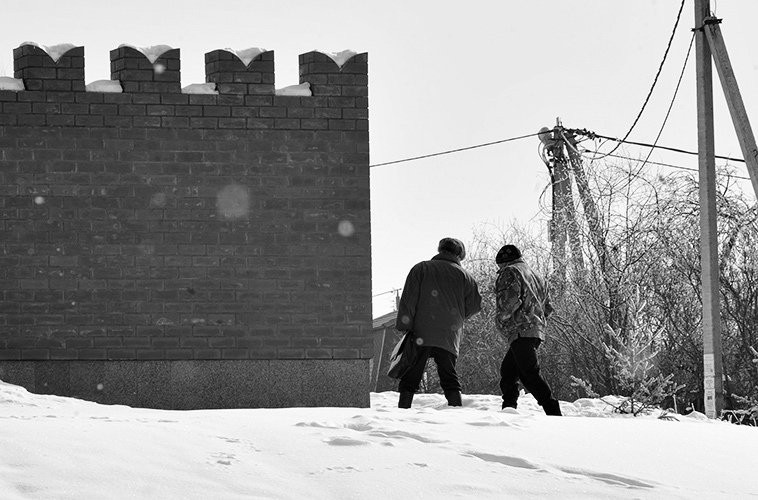
Not a real wall
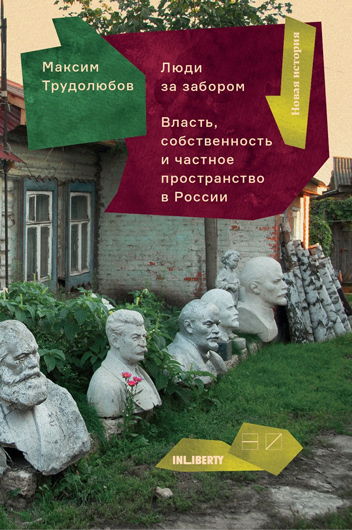
On the eve of the onset of the current old order, in 1999, Richard Pipes published the book “Property and Freedom”, partly research, partly a manifesto. The famous historian wrote that freedom and democracy are impossible without private property, citing examples from all countries and eras, and Russia (beloved object) in its constructions assigned a sad role of the control group. The final remarks to the Russian chapter of the book begin as follows: "History shows that the right of ownership is a necessary, but insufficient basis for freedom." Maxim Trustlyubov argues the long -term editor of the comments of the Vedomosti newspaper, Maxim Trustlyubov, he argues with the Harvard Slavist: in Russia, he believes, property and freedom live in “non -overshooting universes”. His new book, “People behind the fence,” - a long essay on the tragedy of private property in Russia - will stand on the same shelf with books by Richard Pipe.
In 1999, it might seem to people optimistic that the story described by the pipe could make a cheerful sequel that now people have their own apartments, cars, sometimes capital-and a certain amount of freedom. That maybe all this will take root in Russia. But 16 years passed, and it is clear that this did not happen; There is no freedom, property too. Neither the authorities, nor citizens, nor the owners themselves seriously believe that someone owns something, and the more property is more expensive, the more the snakes are right to it. It does not surprise anyone when the state takes an oil company from the owner for free. It does not even surprise anyone when the former minister rejects $ 60 million in a Swiss bank with all his might (she almost wants to believe). Someone rewrites the property to partners and relatives, fearing anti-corruption investigations, someone, on the contrary, got a legal title in all conceivable jurisdictions and won a dozen vessels, but still displays assets just in case. The boundaries between “have”, “dispose” and “lose” are completely erased. Cosmopolitan and Swiss subject Gennady Timchenko sold, fleeing the sanctions, oil and oiling business, rented an old dacha Khrushchev and hung socialist paintings on the walls (there is no morality, clean surges).
 © New Publishing House
Perhaps the worklubs are right and the huge tasteless palaces of Putin's friends (one of them was excavated by archaeologists to the release of the book) - this is an escape from Soviet homelessness, learned 40-50 years ago, the search for a separate corner. Maybe the matter is not only about her: if your palace belongs to you with a probability of 10%, like a timeher, you want it to be more. The tenth of the Taj Mahal near Moscow will pull one worthy house. These two topics - longing for a separate, private life and the tragedy of property, which never appeared in Russia - the main ones in his book.
He only writes her not as a historian, but as a commentator - and one of the best - Russian reality. Each chapter is both a part of an imaginary living space through which the author passes, and a story about another obstacle on the way of the appearance of private space in Russia. The book is mounted as a television movie or a series: the hero goes to the house, but cannot enter it in any way, because he constantly stops, turns to the camera and comments on what is happening through a break in the fourth wall.
The space on the other side of the fence, the imaginary wasteland, is the space of utopia, here the author talks about how Russian revolutionaries read Thomas Mora and how the Europeans who did not read it created comfort. The fence itself is an occasion to talk about the conventions of possessions, the boundaries of which are not set by a formal title, but a physical barrier. Approaching the house, the author talks about the difficult idea of property and how it took the roots in the West for millennia. The site becomes a background for the story about “internal colonization”, and the lock on the door is a metaphor for external and internal threats, which have been nourishing the ruling paranoia for centuries and prevented the state in different guises to allow the appearance of a private one.
The history of the conquest of property (as, for example, in England) is not difficult to put into the narrative, albeit crazy, but consistent. The barons are fighting with the king, the parliament wants to set taxes themselves, the peasants are fighting enclosures; Once every hundred years, victories happen. The history of failure (as in Russia) never has a clear leitmotif. Each government, every Russian state had its own reasons in order to control property and not give people freedoms. Having worked for many years by the editor of the Opinion strip, labor lovers very reliably and soundlessly conveys all shades of bad rhetoric.
There are residents in the house - workers and owners. The chapters dedicated to them are probably the tragic in the entire book. For centuries, workers (that is, peasants) were fixed for centuries on the ground and driven into communities with circular guarantee. The process of emancipation was long, but even having received freedom from the landowners, the peasants could not free themselves from the community for a long time and take their land into personal property. The peasants did not have a tendency to “collectivism and lawlessness,” writes hard work, but no one, of course, believed in it. In the entire Russian society in the 19th century, there was no influential power that would respect private property and wanted to give it to the peasants. Even understanding the inevitability of reforms, all the forces of society filigree learned to declare them untimely.
As a result, the state undertook to stimulate the peasants from the community. But while Stolypin convinced the peasants to allocate plots into private property, it was too late. The war began, and the revolution was behind it. Twice in the book there is a iconic quote from Sergei Frank: “If in Russia private property is so easily, almost without resistance, it was swept away by a whirlwind of socialist passions, then only because the faith in the truth of private property was too weak, and the robbers themselves, indignant at the robbers for personal motives, did not believe in their own right.”
The “owners” of Russia are also not quite free: they receive unconditional property very late and not for long, live not abstract - and this suits them, cleverly learn to adapt. “Workers,” writes Trustlyubov, developed a “moral economy” (the term of James Scott), in which the main value is survival. But the elites, it turns out, also survive. Their possessions are almost as equally and fragile, they are just as little ready to fight for them. Even in the best period, in the last one and a half centuries of the existence of the Russian Empire, noble property is under moral burden. Alexander Herzen deduced capital from Russia, also received from “baptized property”.
Let the whole Russian history not be too kind to the private space, the catastrophe happened in the 20th century. The property has disappeared, the great relocation of the peoples began, hundreds of thousands of people settled into someone else's housing, its corner became privilege. Housing acquired a “moral dimension”, writes work lovers. An important episode of the book is to receive an apartment to Mandelstam in Nashchokinsky Lane: “O.M. He cursed the apartment and offered to return it to those to whom she was intended - honest traitors ”(memoirs of N.Ya. Mandelstam).
Mandelstam, of course, was outraged by not architecture, but the status of a newborn house, “ration improvement”, but the difference between stone and paper was not so great. Talking about the Stalinist houses, Trustlyubov writes: "Service and betrayal have become turrets and openwork bars in these houses." This is not a successful path, this is the basis of the author’s method. Invisible to the eye elements of decor, relationships and contracts, words are more weighty than brick walls, he believes; The walls, on the contrary, are sometimes only the apparent. A multi-storey pagoda on the Rublevo-Uspensky Highway is only a hologram, even people living in it do not believe in its reality. A holey shack, which is open to rain, snow and wind, but does not let the king of England - this is actually a fortress. The walls visible to the eye well describe the relationship of a person with space. “People behind the fence” is a guide for inconsistency: “Do not look at this house, it really is not.”
Despite the abundance of sad observations, workist workist: he believes that ownership in Russia will appear, it is only necessary to start and finish work on it. (Pessimists believe that our country has been sentenced.) Housing is already in private hands, but this is still “property without a market”, the habit of their home has yet to appear. To private space, however, our fellow citizens are already accustomed, which means that you can try to slowly build the impossible before the public. Not, of course, the sense in which Sobyanin builds it, but in intuitively understandable: the space of the coexistence of people.
Maxim Trustlyubov. People behind the fence. - M.: New Publishing House, 2015