
Translated material
Doomed games in Petrograd
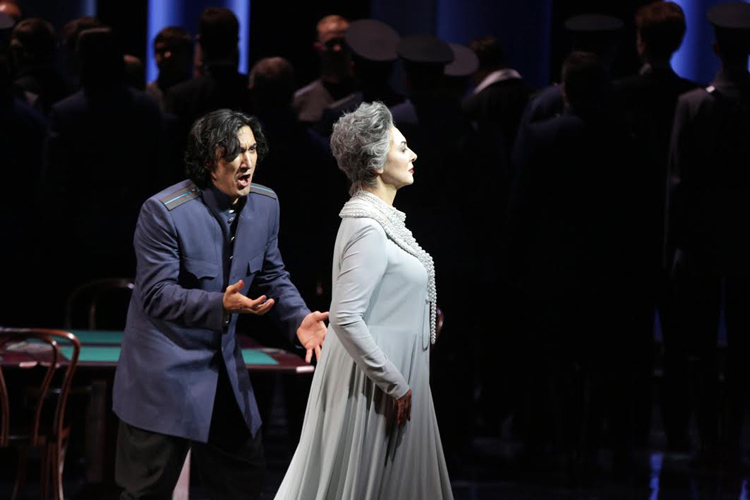
The fact that the new “peak lady” differs from everyone else is heard in the first sounds of the overture. Maestro Alexander Lazarev splashes energy from the orchestral pit and, most importantly, sets such fast pace that it is clear: this is not an error, but a thoughtful concept. The music rushes at all pairs, the soloists are choking in the replicas with which they are transferred, whoever has time and who is not, but the intentions of the staged team of the Stanislavsky and Nemirovich-Danchenko theater are understandable-the fermented mystical thriller must be made closer and more human, to give him conversational lightness.
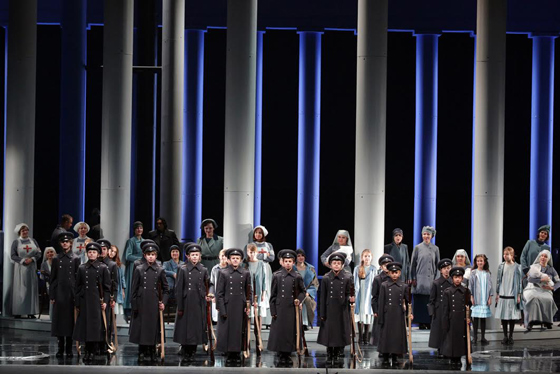
Tchaikovsky wrote his opera in 1890, director Alexander Titel moved it closer to the disaster point. Men walk in the World Warmcoat overcoats, children in the summer garden march underlying Patriotic, their nanny are dressed by sisters of mercy, the main piece of furniture is the Viennese chair, from the recent silver age, the characters of the comedy del art (costume artist - Maria Danilova), which extended the costume of the “sincerity of the shepherd”, after which the guests are respectful Welcome an empty box in which Nicholas II is about to appear. But it does not appear - the directors have a sense of proportion.
 © Oleg Chernous
Petersburg is deprived of ceremoniality (the artist-Sergey Barkhin), he is very cold and soberly shown by the sterile colonnades, the worlds of Kazan and Isaac, as well as quite real puddles in which you can only wet your legs. There is no big water, there is nowhere to drown out, but this is not a problem - doom and so from the very beginning hangs in the air. The intelligent singing of romances under the piano in her room leads to longing better than any nonsense.
There is nowhere to drown out, but this is not a problem.
However, with the intelligibility of the general concept, there are not enough individual works. Only the invited craftswoman Elena Zaremba brings thoroughness. Her countess is still very nothing, has a flexible camp and smokes a cigarette with a long mouthpiece. Herman is perhaps a more sensual relationship with her than with Lisa. Feeling to take three treasured cards to the stranger who came, she receives a kiss from him, pretends to be a doll from the comedy of masks, but still manages to die in accordance with the intelligence of the composer.
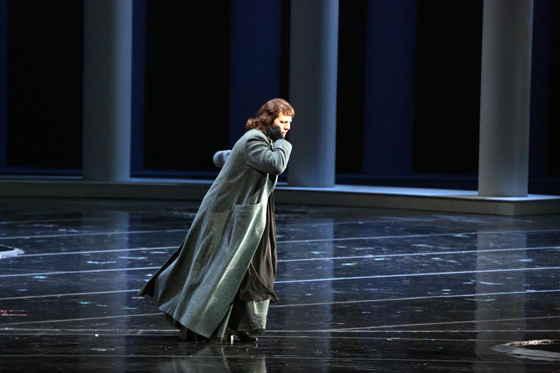 © Oleg Chernous Elena Guseva (Lisa)
The rest of the characters, alas, are much more than one -dimensional and devoid of all stage charm, although, it would seem, the director has good material at their disposal: the soloists of the troupe are young, textured and accustomed to acting. Perhaps over time, they will better get used to the quantities of the conductor and heal the pace of the conductor and heal on the stage in full force. But now it is clear that the theater has a set (and not one) of scarce votes necessary for the main Russian opera. One of the finds is the noble baritone of Stanislav Lee as Yeletsky. Soprano Elena Guseva confidently copes with the party of Lisa, at her most crucial moment - in the aria at the groove - Maestro Lazarev even slows down. Well, the most important ingredient, without which there is nowhere, is German, the theater rightly relies on the sonorous tenor Zazmiddin Mavlyanov. In the play, his final aria “What is our life? Game!" It is presented with a luxurious concert number when the light in the hall is included-when all the answers to the questions are already clear, the director still allows the opera to be slightly bounced again.